
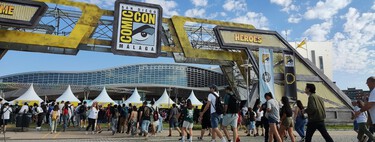
Spanish Artists Thriving in the U.S. Comic Scene
Without a doubt, the most prevalent specimens at the Comic-Con in Málaga are Spanish artists who have successfully built careers in the United States. For many creators born in Spain, it’s a dream to see their visions of Batman, Spider-Man, and other mainstream comic book characters come to life under their brushes. However, the paths to success can vary significantly, and not all journeys are straightforward.
We gathered insights from several of these talented artists, each with their unique quirks and varied backgrounds, and discovered how they managed to work for sought-after major and independent publishers in the U.S. What common thread connects these Spanish artists? Let’s find out.
David López presents a unique case, as nearly his entire career has unfolded in the U.S. He began publishing in Spain in 1998, embracing an entirely indie approach. However, by 2000, he was working with Marvel through an agent. “I entered kind of by luck. My friends had a more American style. While I read American comics, my personal characteristics matched what Marvel editors were looking for at that time,” he states. Since then, he has participated in titles like ‘Catwoman,’ ‘Batgirl,’ ‘X-Men,’ ‘Captain Marvel,’ and ‘Spider-Woman.’
“Once you step in, the doors are generally open. Americans think, ‘if he has worked with us, he must be good,’” he explains. Álvaro Martínez Bueno, known for ‘The Nice House on the Lake’, an Eisner Award winner, shares a similar viewpoint. He acknowledges entering through an agent as well. “These days, with social media, you can directly engage with editors,” he says. Working in the superhero sphere was a vital aspiration for him, though he finds the reality “very unromantic.” Yet, he admits, “The first published pages are exhilarating—filled with stress and nerves, but truly beautiful at the same time.”
Emma Ríos’ journey to the U.S. comic market was more labyrinthine. “It started as usual in these cases—by chance. But with a lot of work behind it, of course. It began when the writer Warren Ellis featured my work on his popular blog, and I received a million visits on my Flickr. The following week, I had an offer from the indie publisher Boom!, with whom I created ‘Hexed.’” They all concur that while luck and being in the right place at the right time are significant, having compelling work to showcase is crucial to winning over Americans.
David Rubín stands out for seamlessly balancing work between the U.S. industry (DC, Dark Horse) and Spain, with works such as ‘El fuego’ and ‘El héroe.’ His breakthrough also involved a series of fortunate coincidences. “It had two phases, one very intentional on my part. I always thought my work in the U.S. would have limited potential, but I was contacted by Paul Pope for publication. Once you start there, it’s like dominoes falling; people start to notice you and reach out. Simultaneously, Astiberri licensed ‘El héroe’ to Dark Horse. It all came together with ‘Beowulf,’ which I created with Santiago García and did well even before the Eisner Awards.”
Finally, Gabriel H. Walta gained recognition in the U.S. thanks to his ‘Vision’ miniseries (two-time Eisner award winner), leading him to draw for ‘Astonishing X-Men’ and ‘Hellboy,’ always retaining his personal style. “After winning the Injuve award, I sought out Torres, who not only writes but also collaborates with publishers there. He sent a sample of mine to IDW, and from there it just kept rolling,” Walta reveals. Aside from ‘The Forest of Suicides’, which released in both Spain and the U.S. simultaneously, everything else has been for the U.S. market.”
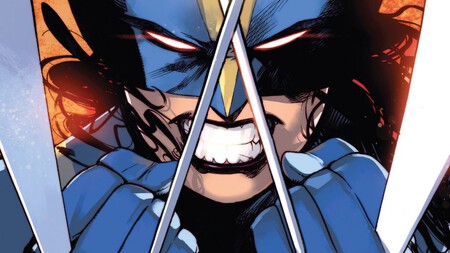
‘Lobezna’, by David López
Understanding the Differences
Entering the U.S. comic scene doesn’t require any magic formula; however, what distinguishes working for Spain from the U.S.? Are there higher demands? Is it true that Marvel and DC are as nitpicky as rumored? Walta dispels this myth: “The larger editorial houses have their big organizational structures. Still, your interactions generally boil down to three or four individuals. If you have a smooth relationship with the editor, there’s no substantial difference from an indie publisher, though in the case of Marvel, for example, Disney influences your work. For instance, when I was assigned the Vision series, it followed a movie. In that regard, it does have an impact. But on a daily basis, there aren’t significant alterations.”
Rubín shares this sentiment, noting that many myths exist, at least from his perspective: “Editors today have changed; they’re not like the old days. They were kind of like characters from a José Luis López Vázquez film—you can now speak with them. For example, I’ve had to pause several times for health issues while working on series like ‘Rumble,’ and there’s never been a problem stopping and resuming when I was better. Javi Rodriguez illustrated a similar experience with his work on ‘Martian Manhunter,’ where instead of forcing filler issues, DC was accommodating and allowed a four-month hiatus so they could work without pressure.”
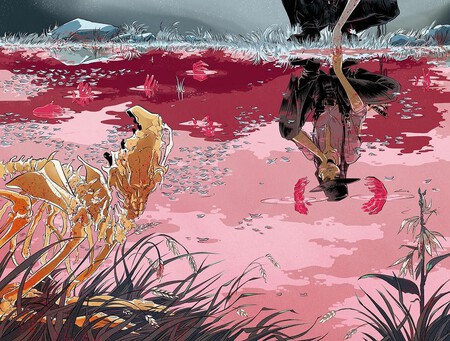
‘Bella Muerte’, by Emma Ríos
However, the experience can vary based on the artist’s personality. For instance, Emma Ríos has worked for Marvel but shows a preference for different projects even within the American market: “I enjoy working with superheroes, but I prefer projects where I have more control. There’s always pressure and limitations… Collaborations are valuable, and while my relationships with writers, like Mark Waid or Kelly Sue DeConnick, whom I work with often, are excellent, I tend to be very hands-on. I like to handle everything myself, but that can take a toll, so I enjoy alternating between solo projects and those with shared responsibilities.”
What remains indisputable is the need to put in the effort: David López asserts that “in the U.S., they value the ability to deliver 24 pages in four weeks. As they work at a frenetic pace, if you can adapt, a remarkably interesting work environment opens up for you.” Álvaro Martínez Bueno chimes in, stating, “Drawing is just drawing. Creating for the U.S. comes with its particularities like insane timelines and working with characters and stories that hold tremendous significance personally. While it adds emotional weight, you still sit down and draw.”
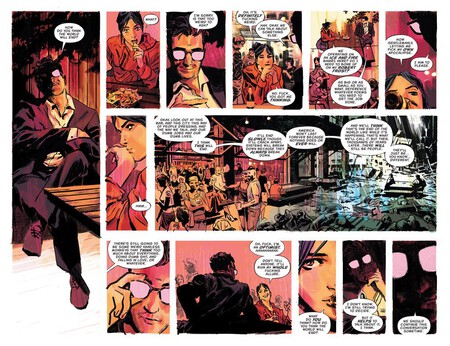
Martínez Bueno, however, also highlights that despite his work for DC, “DC is an entity I hardly know. I know they have offices in Burbank that I’ve never visited, and I’ve shaken hands with a few executives, but I mainly create comics with just three or four individuals. That’s the ecosystem I enjoy working in.” He adds, “You realize you’re a piece of a larger machine. Though much of my work has been for adult lines, superhero projects are often more confined. I set limits for myself and recognize that if I want greater freedom, I can’t find it here. But creatively, I don’t need more freedom.”
From this point onward, each artist cultivates their unique rhythms, customs, and preferences. David López shares that “within the superhero genre, I’ve always managed to cultivate a more intimate facet,” recalling a time when communication via the internet wasn’t as prevalent: “In one of my early assignments for DC, I received physical scripts, rough sketched them, sent them back physically, then they returned them lettered, and I would ink them after that. It took much longer. But I soon transitioned to a more digital format.”
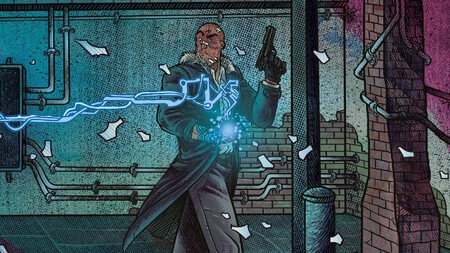
‘Cosmic Detective’, by David Rubín
Walta has similarly adapted to mainstream American restrictions: “I’ve always approached projects with a personal touch, even when they’re superheroes. Given my distinctive style, I trust that I’m called upon when they want to see my interpretation.” Emma Ríos recalls, “Being at Marvel felt like I was back in university, constantly trying to grasp how the American market operates.”
Spain’s Unique Comic Landscape
The comparisons might be uncomfortable, but they are unavoidable. We asked our guests how they view the comic industry in Spain and its international projections. Their responses revealed a disconnected industry. Álvaro Martínez Bueno notes, “The Spanish market is quite limited. Those who thrive in Spain typically do so by also working in the U.S.” He adds, reflecting on the event, “It’s contradicting to see Comic-Con overflowing with people, many buying comics, though likely most wouldn’t buy from a Spanish author.”
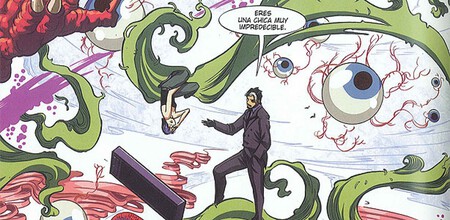
‘Extraño’, by Emma Ríos
David López confides, “I’ve even told Spanish publishers: I trust you so much that I’ll charge half of what I earn in the U.S. for you to publish my comic. They say, ‘That’s a lot of money.’ What’s the issue? Is the effort solely mine for your profit?” Walta acknowledges, “There’s tremendous talent in Spain, but the industry simply doesn’t support so many authors. There are various remarkable artists, from commercial to experimental work. If viable work opportunities existed in Spain, many talents wouldn’t have sought markets elsewhere.”
David Rubín, known for blending his work inside and outside Spain, does so almost out of commitment, even at the cost of his finances. “Sometimes, it’s necessary to opt for publishing in Spain and forfeit some visibility and, of course, money, but if not, we’ll never have an industry. If all of us who are doing well leave, how can a sustainable comic market emerge? The issue lies in authors often conceding on several grounds while publishers don’t compromise much on issues—like the royalties we receive.”
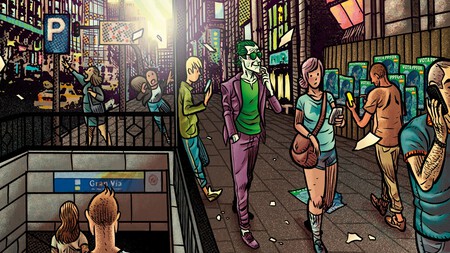
‘Joker: El Mundo’, by David Rubín
He summarizes the situation starkly: “I don’t know of any editor who rents—whether small publishing houses serving a niche or large best seller ones, they all own their houses. In contrast, artists in their 50s grappling with mortgages are few. Comparing salaries, if I work two years in the U.S., I can afford a sabbatical year working in Spain, but only because my finances are secure.”
Emma Ríos broadens the discussion: the challenge both here and there, no matter how buoyant the mainstream economy appears, is there’s no room for newcomers: “Currently, there’s a significant surge in sales, with phenomena like the new Batman. Yet, I feel there’s not a foundation for new talent. I entered Marvel alongside Mark Waid with Doctor Strange, but that route is rare. There’s always a circuit for fanzines and indie works, but they tend to stay outside the mainstream.”
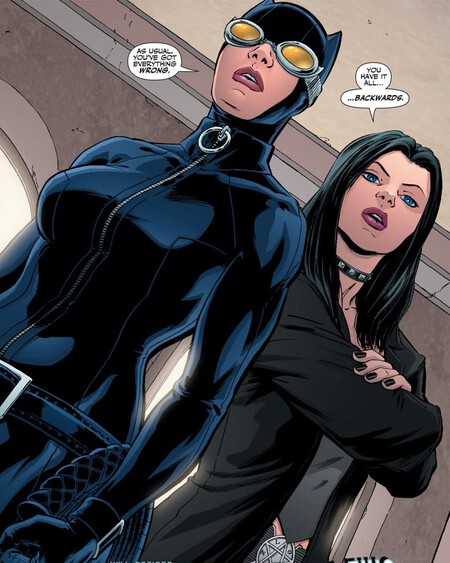
‘Catwoman’, by David López
As we close the conversation, we seek a more hopeful note and ponder whether they have felt perceived differently due to being European. Walta responds firmly: “The Spanish school is that there is no singular Spanish school. David Aja has nothing in common with Belén Ortega or Emma Ríos. I think they view us as Europeans, with experience reading American comics while also having read Superlópez and Moebius.”
In a similar vein, Álvaro observes, “Spanish authors have absorbed international comic influences without insecurities, but the mainstream American model aims for a more homogeneous approach, avoiding straying far from the norm. Spaniards spontaneously embrace diverse influences, evidenced by the fact that even in superhero genres, no two are alike.” David López summarizes succinctly, “Spain has always published a vast amount. Spanish fans arguably own more comics than anyone—many editions encompassing Latin American, Japanese, and European comics. Thus, compared to Americans, we have a more versatile preparation.”
Spain undoubtedly has reasons to consider itself a creative powerhouse, and these artists are only a few examples. Unfortunately, due to its thinly spread industry, emigration remains a persistent survival option for many artists.