

The Global Race for Rare Earths: China’s Dominance in Critical Minerals
As the global demand for rare earths and critical minerals intensifies, a race is underway among nations to secure these essential resources. Unfortunately for many countries, when a promising site is identified, it often already bears the unmistakable stamp of Chinese control. This intriguing dynamic underlines China’s strategic significance in the mineral sector, driven largely by sophisticated technological advances.
The Military Origins of this phenomenon lie in a remarkable facility situated deep within China’s mountainous regions. This installation features a massive antenna system, boasting a 500-kilowatt capacity with a reach extending from 80 to 120 kilometers. Initially developed for military communication with submarines, this electromagnetic giant has repurposed itself as a pivotal tool in mining exploration.
Effectively doubling in size compared to the surface area of New York City , this antenna serves as a scientific and technological weapon that enables Beijing to lead the charge in identifying deposits that were previously unreachable. By emitting signals capable of penetrating kilometers into the earth’s crust, China has cultivated a decisive edge in strategic resource exploration .
Electromagnetic Exploration receives a considerable boost from China’s monopoly on ultra-high power electromagnetic systems . A recent study from the China Geological Survey reveals that all platforms exceeding 100 kW are housed within China, while the most advanced U.S. equipment barely achieves a 30 kW capacity. This disparity is crucial; such technological advancements have allowed Chinese geologists to discover unprecedented mineral sites, including the largest gold deposit on record and extensive lithium reserves . Notably, they uncovered previously unreachable uranium veins .
The research led by Chen Hui emphasizes that these innovations not only reinforce China’s dominant position in electromagnetic exploration but also place it light-years ahead of Western competitors.
The Challenge arises as easily accessible deposits of copper, lithium, and cobalt dwindle, forcing geologists to delve deeper into what is termed the “Second Mineral Space.” This underground zone stretches between 500 and 2,000 meters. In this environment, signals emitted by mineral bodies are significantly weakened and often buried beneath noise generated from urban infrastructure and electrical lines. China’s solution has been profound: increasing transmission power above 100 kW, saturating subsoils with signals that reach depths of up to 3,000 meters with an unprecedented level of clarity.
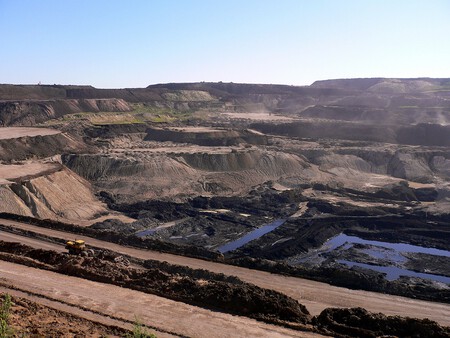
Advances in Subsoil Cartography enhance China’s geological exploration capabilities. Traditional techniques typically employed two-dimensional models unsuited for complex structures, whereas Chinese systems leverage a network of distributed sensors and multidirectional field sources to generate a comprehensive three-dimensional representation of underground landscapes. In notable projects like the Jiama Copper Mine in Tibet , groundbreaking methods such as the Controlled Source Audio-Magnetotellurics (CSAMT) have yielded remarkable resolutions at depths beyond 3,000 meters—all verified through subsequent drilling.
These advancements clearly surpass standard techniques that generally fall short in noisy environments.
The Methods driving this progress are particularly noteworthy. The Electromagnetic Method of wide-field developed by Professor He Jishan allows for the collection of reliable data even in challenging environments. Additionally, time-frequency electromagnetic systems expand the range of information available by assessing not just the resistivity of materials but also crucial parameters like their polarization and permeability —key aspects for distinguishing between various types of deposits.

The WEM Project stands as a prime illustration of this ambition. The Wireless Electromagnetic Method (WEM) features a monumental setup that stretches across central China with two antenna lines nearly at right angles. Originally designed for naval communications, this system has evolved into the first continental-scale electromagnetic transmitter used for resource prospecting.
In a national test conducted in 2023 , signals were detected from Tibet to Inner Mongolia and Guangdong , a staggering distance of over 2,000 kilometers. Instances in specific regions showcased magnetic fields up to seven times more potent than naturally occurring background noise, underscoring the system’s effectiveness against complex interference.
Strategic Advantage emerges from these technological innovations, placing China at the forefront of securing critical minerals necessary for the shift to renewable energy. Resources like lithium for batteries, cobalt for high-resistance alloys, and rare earths for modern electronics are vital, and China’s control over these technologies indirectly positions it as a leader in future industrial frameworks.
Conversely, most Western nations lack comparable systems, and aside from Russia, there is a striking absence of ultra-high power instruments employed in terrestrial prospecting. This dependency highlights China’s technological supremacy, as even the most advanced Western devices trace their innovations back to Chinese origin.

A New Geopolitical Board forms as a result, as China’s capabilities in quickly identifying deep mineral deposits offer not just scientific merit but also geopolitical leverage. With control over these technological resources, Beijing is strategically positioned to dictate the pace of resource discoveries in the decades ahead.
The global energy transition is reshaping value chains, and the entities that control access to lithium, cobalt, and rare earths will largely dictate the industrial future. The amplification of giant antennas and high-powered electromagnetic systems clearly signals China’s intent: it’s not participating in the race—it aims to win it.