

Aena’s Monopoly under Scrutiny: A Call for Competition in Spanish Airports
“Aena should end her monopoly in Spain and head towards a model similar to the British where airports of the same territory compete with each other.” These sharp words belong to Michael O’Leary, CEO of Ryanair, who has long criticized the Spanish airport management system . Although his opinion is consistent, the wind of change is blowing in regions such as the Balearic Islands and Andalusia , where local leaders are starting to advocate for a more competitive model.
The push to end Aena’s monopoly is gaining momentum. Recent discussions from political figures in the Balearic Islands and Andalusia propose that these regions could manage their own airports, encouraging competition against the state-run Aena, which manages 46 airports and two heliports, making it the largest airport operator in the world.
Arturo Bernal, the Tourism Councilor of the Junta de Andalucía, expressed discontent with Aena’s management in his region, stating, “We are not very happy with how Aena is maintaining our airports. We are thinking about making a co-management agreement or entering the shareholding of a company that could develop an Andalusian Aena .” Bernal’s comments reflect a growing sentiment among local governments.
Similarly, Marga Prohens , president of the Balearic Islands, echoed these sentiments by advocating for a co-management agreement between Aena and the regional government. She criticized the efficiency of ongoing works at Son Sant Joan airport, suggesting that current conditions are “quite inefficient.”
Aena, officially known as the Spanish airport management company , has been under scrutiny for its approach. This state-run enterprise , which is 51% public and 49% private, has been charged with maintaining and upgrading airport facilities across Spain. However, concerns about competition and efficiency have prompted local leaders to rethink its structure.
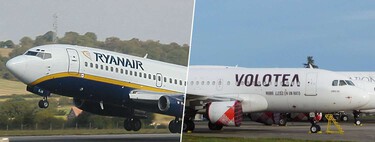
Despite its vast network of airports, Aena faces criticism for its heavy-handed approach to regional management . Specifically, opponents argue that the 49% private equity stake leads to a neglect of smaller airports, with profits from larger hubs like Madrid and Barcelona not adequately distributed to maintain the financial health of quieter, regional facilities.
In the eyes of its critics, the model O’Leary and regional authorities are pushing for could lead to enhanced competition among airports. The ideal scenario would see airports within similar regions vie to attract airlines by offering more attractive terms, thus benefiting consumers with better prices and services.

From a financial perspective , critics argue that Aena’s model effectively allows major hubs to buoy smaller, less profitable airports, thereby maintaining operations that would otherwise be economically unviable. According to supporters of a new model, greater local ownership could result in more effective management that tailors services and investments according to the specific needs of regional airports.
Aena has defended its model, with its president, Maurici Lucena , stating that Spain boasts some of the most competitive airport rates in Europe because of its rigorous regulations. Lucena believes the current structure promotes operational efficiency while also supporting smaller airports with financial backing from more profitable ones.
However, the sentiment among local politicians and pressure from low-cost carriers like Ryanair indicates that change might be on the horizon. The demand for alternative models aligning with regional interests is gaining traction, mirroring calls for examples in nations like the UK, where airport competition is the norm.

With the Spanish government allocating nearly 12.9 billion euros towards airport investments in coming years, local authorities are eager for clarity on how these funds will be distributed, particularly in addressing the perceived inefficiencies prevalent under Aena’s management.
Ultimately, this growing discourse around airport management in Spain highlights a significant shift in attitudes towards public versus private ownership. The ongoing push from diverse regional voices for a restructured system amplifies calls for reform that could lead to an invigorated aviation sector in the country, should politicians heed the calls for competition and localized control. As the debate unfolds, many will be watching closely to see how Aena responds to these pressures and whether real progress toward a more competitive model can be achieved.
Photo | Pop9000 on Wikimedia
In Xataka | Ryanair’s march has left regional airports: 240,000 passengers less and 70% less in one of them