

India’s Ambitious Bet on Semiconductor Manufacturing
India has approved an investment of $18.2 billion to develop ten semiconductor projects aimed at creating a comprehensive chip industry from the ground up. With this initiative, India hopes to reduce its reliance on imports and establish itself as a competitor to leading semiconductor powers like Taiwan and the United States. However, achieving this lofty goal will require more than just financial backing.
Ambition is Disproportionate. Despite being one of the largest consumers of electronic devices globally, India lacks a substantial local chip industry. The country’s strategy aims to build an entire semiconductor supply chain , encompassing design, manufacturing, testing, and packaging within its borders. Among the projects currently approved are two manufacturing plants and multiple test and packaging facilities.
The Opportunity of India. The race for semiconductor supremacy intensified in 2022 when the United States imposed export restrictions on advanced AI chips to China. This created a unique opportunity for India to decrease its import reliance and capture a greater share of the global electronics market, especially as companies look to diversify away from China.
Beyond Money. Stephen Ezell, Vice President of Global Innovation Policy at the Information Technology and Innovation Foundation, emphasizes that India needs much more than just a few semiconductor factories. According to Ezell, leading manufacturers evaluate up to 500 factors before making multi-billion dollar investments in a facility, including elements like talent availability, fiscal policies, labor regulations, technological infrastructure, and customs policies—areas where India still has room for improvement.
The Government Changes Strategy. New Delhi has adapted its original approach. Initially focusing solely on advanced chips of 28 nanometers or less, the government realized that this narrow focus was not conducive to nurturing the nascent local industry. Now, New Delhi covers 50% of the costs associated with all manufacturing projects, regardless of chip size, and also extends financial support to test and packaging units.
Star Projects are Already Ongoing. One of the most significant current undertakings is the semiconductor manufacturing plant valued at $11 billion , being developed by Tata Electronics in Gujarat, in collaboration with Powerchip Semiconductor Manufacturing Corporation of Taiwan. This facility will produce chips aimed at energy management, screen controllers, and microcontrollers, which are crucial for AI applications, automotive technology, and data storage solutions.
Talent Exists, But It is Limited. India boasts a pool of engineers who have been involved in chip design for global firms since the 1990s. Nonetheless, Jayanth BR, a recruiter with over 15 years of experience in the semiconductor sector, notes that international companies tend to subcontract only basic design validation work to Indian firms, with central design efforts being retained in the United States or Singapore.
Intellectual Property is the Great Challenge. Sajai Singh, a partner at JSA Advocates & Solicitors, underscores the importance of overhauling India’s intellectual property laws and application mechanisms. He points out that competitors like the United States, Europe, and Taiwan not only have robust IP laws but also a well-established ecosystem for chip design, which India is striving to develop.
What Comes Next. The next three to four years will be pivotal for India’s semiconductor ambitions. According to Sujay Shetty, General Director of Semiconductors at PWC India, manufacturing plants require locations that are free from flooding and vibrations, along with dependable road networks and suppliers of ultra-pure chemicals. Although India still lacks the capability to produce cutting-edge 2-nanometer chips , it may find a niche in assembly and semiconductor testing—a realm that entails lower capital investments and offers better profit margins.
As India embarks on this transformative journey, the focus will be on building a sustainable semiconductor ecosystem that not only meets the demands of the local market but also positions the country as a *global player* in the increasingly competitive field of chip manufacturing.
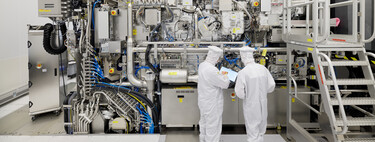
Cover image | Brian Kostiuk and Naveed Ahmed
In Xataka | The undisputed winner of the aggressive competition of TSMC, Intel, and Samsung is a European company: ASML