
John Ternus: The Visionary Behind the iPhone Air
Few have witnessed Apple’s transformation like John Ternus. At 50 years old, the Vice President of Hardware Engineering has spent nearly half his life at the tech giant. He has spearheaded the development of game-changing products like the iPhone , Apple Watch , and iPad . Ternus was also a pivotal figure in Apple’s transition to Apple Silicon and recently unveiled the lightest iPhone yet, the iPhone Air , set to release in 2025.
Ternus isn’t just any executive; he is a mechanical engineer with a remarkable product vision. With extensive knowledge of the company, he is frequently seen as a potential successor to Tim Cook as the next CEO. Therefore, talking to him in Apple’s headquarters in London during the launch of a new iPhone generation is both thrilling and a little intimidating.
The Challenges of Creating the iPhone Air
Developing a device like the iPhone Air must be a significant technical challenge, especially regarding durability and resistance. The current limit is 5.6 mm, but how far do you think this technology can go?
“Well, I can’t say for sure. We’ve wanted to make this product for a long time. We weren’t going to do it unless it could be a great iPhone . That’s why we aimed for excellent battery life, outstanding performance, fantastic cameras, and, of course, the durability you mentioned.”
“To get here, we had to develop multiple technologies, some of which had been in the works for years. Think about Apple Silicon processors . Their efficiency, especially the A19 Pro and the C1X and N1 chips, allows us to achieve impressive battery life in such a slim design.”
“Also, when you make something this thin, resistance becomes a challenge, but that’s where our materials come into play. For the first time, we used Ceramic Shield on the back and Ceramic Shield 2 on the front, offering incredible scratch resistance.”
“And then there’s this beautiful titanium. It looks great, but it’s also highly functional. It provides robustness. So, all these elements had to come together to make this possible, and we couldn’t be more excited about the result.”
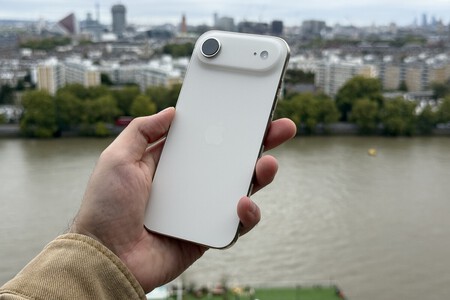
iPhone Air | Imagen: Xataka
Market Demand and Future Directions
This device arrives at a time when the market is demanding more battery life and better cameras. Are we seeing the direction Apple wants to take with the iPhone Air?
“On this table, you see two very different devices,” Ternus points to the iPhone 17 Pro and Air. “The fun part has been that with a brand-new direction like the iPhone Air, we felt free to elevate the Pro models, the 17 Pro and Pro Max, making them even more ‘Pro.’”
“Thus, of course, these models have greater performance, better battery life, improved cameras, and a spectacular design. It’s been fantastic to advance in two different directions with our products.”
The Importance of Apple Silicon
Apple Silicon seems critical to these innovations. With your chips controlling most of the technology inside iPhones, what can you accomplish now that you couldn’t with third-party components?
“Actually, I believe we wouldn’t be able to create this phone without Apple Silicon . Our Silicon team is exceptional at what they do, especially focusing on efficiency. If you create a chip that is highly efficient, you get better performance with less energy consumption.”
“The incredible thing about our workflow is that since we design both the chips and the products, we’re constantly communicating about what we need. We design the chips specifically for the products we want to build, making it possible to pursue what truly matters.”
Collaboration for Innovation
Is the key to your success the combination of hardware and software expertise?
“Absolutely, yes. It’s fantastic because, as I mentioned, from the very beginning, we have the hardware engineering team responsible for the product, the hardware technology team that manufactures the chips, and the software team—all of us work together to figure out what we need to bring a product to life.”
“That collective effort allows each of us to contribute to what makes the product possible.”

iPhone 17 Pro | Imagen: Xataka
The Characteristics of Pro Models
How do you decide which specifications get carried over to the base models? What turns an iPhone into a Pro model?
“For the Pro iPhone, we focused heavily on performance. We achieved that primarily through our processors, particularly the A19 Pro , which is phenomenal. Additionally, we wanted to optimize the thermal management of the product.”
“We chose aluminum over titanium for its better thermal conductivity, which is 20 times better than titanium. This also allowed us to add more battery since aluminum is less dense.”
“The Pro models are crafted to maximize battery life, performance, and camera capabilities—now with 48 megapixels and an 8x telephoto lens, simply incredible.”
Innovation Amidst Challenges
How does Apple continue innovating while companies often focus on quarterly results?
“For us, the engineering team is always focused on building what comes next. We work hard to drive new technologies and designs, and it’s genuinely exciting.”
“So when finally announcing new and incredible products, it brings tremendous joy. But we are always thinking about what’s next, which is what we love to do.”
Balancing innovation with corporate expectations is certainly challenging, but Ternus emphasizes the excitement of meeting customer demands while constantly pushing boundaries.
Conclusion
With a rich history at Apple, John Ternus embodies the spirit of innovation that the company is known for. His dedication to function and form in products like the iPhone Air not only highlights his engineering prowess but also sets the stage for Apple’s future . As he discusses the delicate balance between consumer demands and technological advancements, it’s evident that Apple continues to strive for excellence. Ternus’s insights reveal a company deeply committed to making a meaningful impact on its customers’ lives while maintaining the highest standards of quality and reliability.