
Reading Habits: A Global Perspective
It is not the same to read a lot as it is to read well; just as all books are not created equal. Recent statistics analyzing reading habits in both the United States and Spain reveal intriguing trends. Interestingly, while the global trend in reading seems to be declining, the situation in Spain appears to tell a different story, bringing some positive insights into the future of reading.
Global Decline in Reading
Antonio Ortiz notes in his newsletter, ‘Causes and Azares’, that there has been a noteworthy decline in global reading habits. According to the Bureau of Labor Statistics in the U.S., the average time dedicated to reading for pleasure dropped from 23 minutes in 2003 to just 15 minutes by 2018, marking a significant 40% decrease . This downward trend has continued with only 16% of the population reading daily in 2023, as reported by the New York Times in Spanish. In the United Kingdom, findings from the National Literacy Trust indicate that merely 47% of adolescents reported regularly reading for enjoyment in 2023, a significant decline from 60% in 2005.
The Iberian Contrast
Contrastingly, data from Spain offers a more optimistic outlook. The 2024 reading habits report by the Ministry of Culture of Spain reveals that 65.5% of respondents engage in reading for leisure, the highest percentage recorded in historical series. Furthermore, 70.3% of the population reads books in general. Notably, those aged between 14 and 24 years emerge as the most avid readers, reporting a remarkable 82.1% engagement rate. However, this figure declines among individuals aged over 55, indicating a promising trend of active reading in younger demographics that could cultivate a more literate adult population in the future. This optimistic perspective brings hope for the future of reading in Spain.
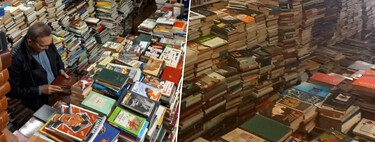
<img alt="More than 200,000 books for 11 euros a year. It is 'The Free Books Club' of Valencia, a paradise for printed paper devotees" width="375" height="142" src="https://i.blogs.es/49ecfa/ps---plantilla-portadas-xtk/375_142.jpeg"/>The Question of Authenticity
Despite the promising data, skepticism arises regarding the veracity of these statistics. Responses to surveys may be influenced by social bias; individuals may tend to over-report “educated” activities like reading while downplaying those perceived as “banal,” such as television consumption or mobile usage. Recent measurements, including findings from the Eurobarometer 2025, indicate that many Spaniards associate reading with being “more cultured and intelligent,” possibly inflating affirmative responses.
Changing Reading Patterns
Further insights reveal a shift in reading patterns, with a pronounced trend towards shorter sentences and simpler vocabulary . The Economist observes that the simplicity of best-sellers has increased over the decades, with sentences now 30% shorter than they were 30 years ago. Academic investigations, such as the COH-Metrix Project from the University of Memphis, show a decrease in average readability, now akin to that of a high school junior (ages 16-17 ), compared to a preliminary university level in the ’60s and ’70s.
On an educational level, data from the National Center for Education Statistics demonstrate that adolescents’ active vocabulary in writing has diminished compared to past decades. Moreover, experts like Maryanne Wolf voice concerns in essays such as ‘Reader, Come Home’, highlighting how fragmented reading online hampers the ability to engage in deep reading.
Perception vs. Reality
The combination of these findings culminates in a contradiction: UNESCO estimates that only 5% of the global population reads a book each month, while 40.3% of Spaniards confess to not reading or doing so infrequently. These statistics indicate a prevalent reluctance to confront our reading habits, revealing a possible exaggeration of personal reading accounts. This discrepancy presents a unique challenge; while many attribute cultural significance to reading, they may not actively engage in it. As we contemplate the present and future of reading, one must question: with such a landscape, who needs influencers like María Pombo?