
The Fascinating History of Light Guns in Video Gaming
Light guns have been a staple of video gaming culture, particularly in the arcade and home gaming markets from the 1980s onward. For anyone old enough to have wielded a light gun, there’s a fond recollection of those early experiences. Many of us imagined that these gadgets operated by firing invisible beams of light that the television somehow detected. Questions arose: Did the gun’s positioning matter? What about distance? Did the glass screen recognize when the target was in sight? The truth, however, is much simpler. The light ray operates in reverse: the gun is actually the receiver.
The Beginnings of Light Guns
The concept of light guns goes back to the 1930s , emerging first in mechanical arcades before evolving into electronics in the 1970s and 1980s . The early versions were basic, but they set the stage for the innovations that would follow. In 1984 , Nintendo pioneered this technology with its video shooting series for Famicom. The design resembled a classic Western revolver, complete with game themes that captured players’ imaginations.
Nintendo Zapper: A Cultural Icon
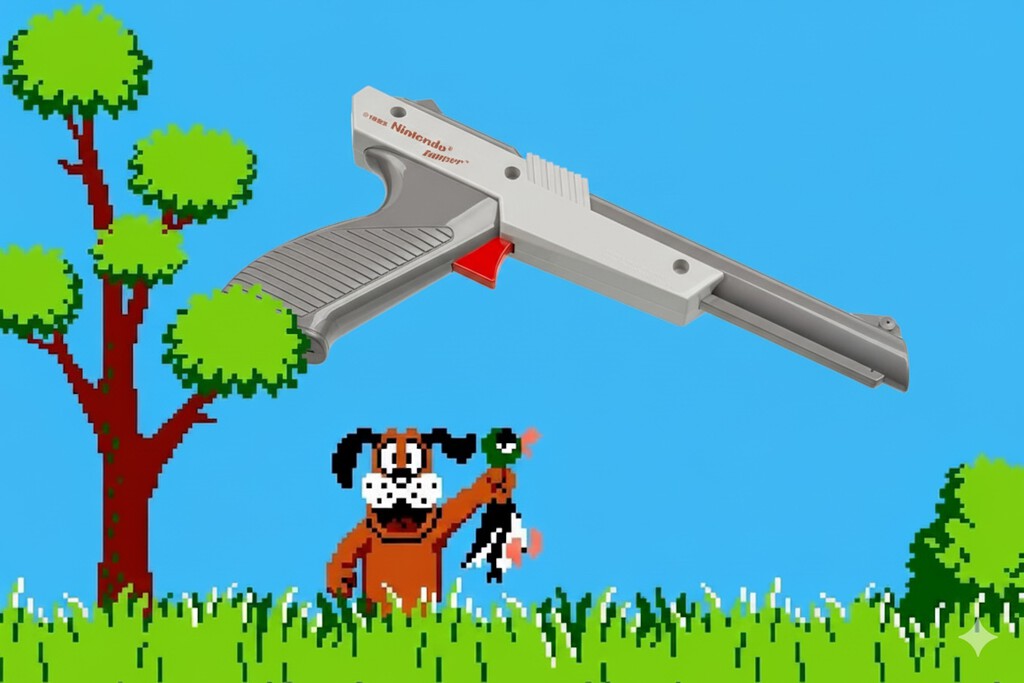
The most iconic light gun, however, remains the Nintendo Zapper for the NES. This device gained immense popularity, primarily due to its association with one of the genre’s most beloved games, Duck Hunt . Originally introduced with the Famicom, the Zapper was rebranded for the NES in 1985 , adopting a sleek, futuristic design that quickly became a pop culture phenomenon. By 1988 , the Zapper underwent a redesign to feature bright colors, making it less reminiscent of a real weapon and complying with emerging laws on toy design. In total, the Zapper supported 17 official games , solidifying its status in gaming history.
Unraveling the Mechanics
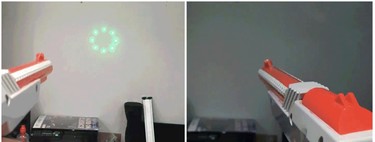
So, how did the Zapper and similar devices actually work? Contrary to popular belief, these gadgets did not emit rays; rather, they served as light receptors. Upon pulling the trigger, the screen would go black for one frame . In the subsequent frame, the targets would appear as white blocks against the black background, while everything else remained dark. This rapid switching was almost indistinguishable to the human eye.
Inside the light gun, a light sensor would measure whether the area being targeted had changed to white. The game’s programming used this information to determine which target was “shot,” based on the timing of the block’s appearance. If the sensor detected the white light within the expected timeframe, the shot counted as a success .
Technology and Evolution
However, there was a catch: this ingenious method was only effective on CRT screens . The technology depended heavily on the characteristics of the cathode-ray tube. With the advent of LCD screens, plasma displays, and other modern technologies, these games became “rare” on contemporary televisions. This shift means that the gun sensor struggles to accurately capture light and location information on newer screens.
Modern Trends and Sophistication
As time progressed, more sophisticated light guns entered the market, especially in arcade environments. Titles such as Operation Wolf utilized technology that measured the gun’s positioning based on its fixed location in the arcade apparatus. This innovative approach provided an engaging experience that blended seamlessly with the player’s actions on screen. Increasingly advanced systems using infrared sensors or cameras have propelled the light gun technology into new realms, yet the nostalgic charm and incredibly innocent design of the Zapper continue to resonate with fans.
In summary, while modern technology offers new ways to engage with interactive environments, the simplicity and ingenuity of the early light guns remind us of a time when video gaming was just beginning to carve its niche in popular culture. The legacy of devices like the Zapper remains unmatched, holding a special place in the hearts of those who reminisced about the golden age of arcade and home gaming.