
China’s Semiconductor Journey: SMIC’s Breakthroughs in Photolithography
In recent years, China has faced significant challenges in the semiconductor sector, but it seems to be making strides toward overcoming these obstacles. The Chinese manufacturer SMIC (Semiconductor Manufacturing International Corporation) is reportedly testing a new deep ultraviolet photolithography (DUV) machine, manufactured by the Shanghai-based startup Yuliangsheng . While these machines are still a step behind the advanced extreme ultraviolet (EUV) technology, the implications of this advancement are profound, potentially reshaping the landscape of the ongoing chip war between the US and China.
Why is this important? According to sources cited in the Financial Times, SMIC’s testing of the DUV machine marks an essential milestone. Success in these initial tests could lead to a substantial victory for China in the semiconductor arena, helping the country to further reduce its reliance on Western technology and enhance the production of advanced chips , including those essential for artificial intelligence applications.
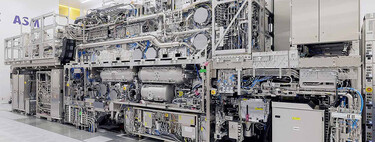
<img alt="The undisputed winner of the aggressive competition of TSMC, Intel and Samsung is a European company: ASML" width="375" height="142" src="https://i.blogs.es/6abf79/asml-ap/375_142.jpeg"/>A significant step for Chinese photolithography. Semiconductor analyst Lin Qingyuan , with the consulting firm Bernstein , indicated that if this DUV machine meets expectations, it could offer a critical advancement for Chinese enterprises. This technological landmark will enable companies to develop increasingly advanced photolithography machines utilizing “ immersion technology ,” a method that is also employed by ASML , a dominant player in this field.
But there are challenges. Despite the domestic production of most components for the Yuliangsheng UVP machine, some essential parts are still sourced from abroad, creating a lingering dependence on foreign suppliers. This issue underscores China’s ongoing efforts to develop indigenous alternatives to mitigate any vulnerabilities in their semiconductor production chain.
The challenge of time. Patience is required in the semiconductor manufacturing sector. Adjustments needed for these UVP machines can take considerable time—often up to a year—to ensure stability and to minimize defects in chip production. This timeframe demonstrates China’s ongoing race to lessen reliance on foreign suppliers.
Understanding the 7 nm process. The UVP machine currently being tested by SMIC operates with 28-nanometer nodes , employing “ multipatron ” techniques that can yield chips down to 7 nm . It’s important to note that when we discuss nanometer measurements, we are not necessarily talking about the physical size of the semiconductors but rather their generational performance and operational efficiency. Although achieving chips with 5 nm technology is a future possibility, the production pace for reliable chips may decline.
China’s ongoing reliance on UVP machines. The YulianSheng UVP machines appear to be more advanced than those currently used by some Chinese manufacturers. Nonetheless, this reliance on foreign technology may restrict China’s innovation potential, as it depends heavily on machines acquired prior to the implementation of international restrictions. These UVP machines are instrumental for producing chips, such as those utilized by Huawei for their Ascend line.
The role of Sicarrier. The YuliangSheng organization is affiliated with Sicarrier , which was established in 2021. This company gained prominence in March of the same year by showcasing advanced machinery for producing microchips that competes with those developed by Tokyo Electron and Applied Materials . Sicarrier is currently working on developing an EUV machine known as “Monte Everest,” which signifies its ambition to elevate China’s position in the semiconductor industry.
The impact of ASML. Historically, Chinese semiconductor manufacturers have relied heavily on advanced photolithography machines from Dutch company ASML . However, the trade restrictions resulting from the conflict between the US and China have significantly limited these manufacturers’ access to this crucial technology, hindering their competitiveness in the market. Although alternatives like Shanghai Micro Electronics Equipment have DUV machines, these are less advanced than ASML technology.
The EUV challenge. While the advancements with DUV machines are noteworthy, the leap to extreme ultraviolet photolithography remains crucial for producing the most sophisticated chips, such as those by NVIDIA . Currently, ASML cannot sell EUV machines to China, highlighting a significant barrier to the country’s technological advancement. However, China is actively pursuing ways to access this coveted technology.
Not being able to acquire EUV machines poses substantial limitations to China’s innovation capacity. Companies like TSMC already utilize ASML’s EUV machines, enabling them to work with 2 nm photolithographic nodes, which enhances chip density and boosts the efficiency and performance of diverse processors, including AI accelerators.