
The Controversy Surrounding the 2025 Vuelta a España: Politics Intruding into Sports
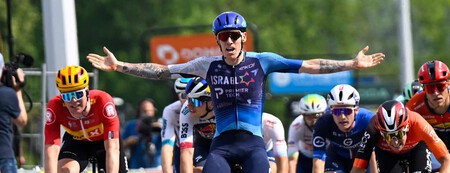
The 2025 Vuelta a España has stirred intense debates that extend far beyond the realm of professional cycling. This year’s event is framed as a political battleground , showcasing how sports can become the stage for broader geopolitical issues. While cyclists like Jonas Vingegaard compete for glory, the underlying tensions related to the representation of pro-Palestinian sentiments and the participation of the Israel-Premier Tech (IPT) team have cast a shadow over the competition.
Backdrop of Protests and Pedal Power
The Vuelta a España is known for its challenging routes and stunning landscapes. However, the 2025 edition has notably become a focal point for protests against IPT, managed by Sylvan Adams , a Canadian billionaire with strong ties to Israeli politics. The team’s involvement has sparked outrage, particularly given the ongoing humanitarian crisis in Gaza. Protests marked several stages of the race, from Bilbao to Madrid , where activists expressed their discontent through symbolic interruptions that often impeded the race.
Impact on Cycling’s Image
For many, cycling is a unifying sport that transcends political affiliations. Yet, the undeniable intersection of sports and politics in the case of the Vuelta a España has raised questions about the integrity of the sport itself. The inclusion of IPT, often viewed as a tool for sportswashing , complicates perceptions among international audiences. The race’s managerial team has faced immense pressure to expel IPT, but regulatory frameworks have kept them within the competition.
Escalating Tensions and Call for Change
The protests escalated to extreme measures in various cities, including instances where police protection could not quell the unrest. The cycling community has seen calls for riders to denounce IPT publicly, yet these actions have resulted in isolated statements rather than a unified front. Despite threats from cyclists, IPT’s efforts to change its image have been inadequate to placate protesters. The director of the Vuelta has voiced that the only solution might be for IPT to withdraw voluntarily, but Adams has remained resolute.
The Role of International Media
The Vuelta’s controversies have attracted international media attention , further amplifying the discourse on the relationship between sports and politics . A series of articles … have scrutinized the inherent ethical dilemmas presented by IPT’s participation. Brands and media outlets are now being called upon to evaluate their sponsorship ties, especially when political affiliations may lead to reputational risks.
Tricky Terrain for Sponsors and Teams
Other professional cycling teams, like UAE Team Emirates and Team Bahrain Victorious , navigate similar waters. Their sponsorships often reflect political allegiances, which can alienate fans and create a polarized viewing experience. The financial backing from controversial states adds an unsettling dimension to the world of professional cycling, questioning how sport can maintain neutrality when entwined with politics.

The Future of Sports and Politics
As sports organizations strive for political neutrality , the Vuelta a España exemplifies the challenges they face. A statement from the Union Cycliste Internationale (UCI) emphasizes the importance of upholding political independence in sports, but this remains a complex issue. The potential for protests will inevitably be linked to the presence of controversial teams, especially as international tensions escalate.
Adams himself recognizes the media landscape as a battleground for opinions on Israel, albeit entangled with the controversial image of sportswashing. Netanyahu’s public support for IPT amidst the protests further complicates matters, as the line between sports and politics continues to blur. The ongoing scrutiny from media outlets may prompt the IPT to reconsider its strategies moving forward, especially with substantial events on the horizon such as races in Quebec .
With the world of professional cycling in flux, questions remain: Can cycling maintain its essence, or will the increasing politicization of sports force it to evolve into something unrecognizable? The 2025 Vuelta a España serves as a poignant reminder that in our globalized world, every race, every team, and every cyclist carries a narrative far beyond the pedals they push. The future of cycling may indeed depend on how effectively it separates itself from the significant shadows of politics.