
The Current Crisis Facing the Canarian Banana Industry
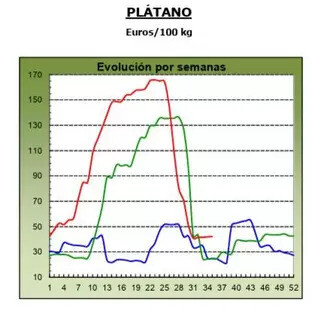
To understand the current problem of the Canarian banana industry, two figures highlight the crisis: the first is 0.42 —the average price that producers will receive per kilo for their highest-quality fruit—and the second is 0.75 —the production costs for that same kilo. This disparity underscores the dire situation facing the Canarian banana growers.
To grasp the full scope of the issue, we need some context. Just a couple of months ago, banana prices on the mainland soared to seven euros per kilo . This stark contrast raises the question: What is actually happening?
According to Roman Delgado , a key figure in agricultural economics, current market conditions are unsustainable. The prices continue to generate losses for producers because they do not cover production costs . Surprisingly, this dire situation does not need to be as bleak as it appears.
The Canarian banana , supported by the EU’s Posei Program , benefits from a sophisticated compensation system. In theory, under current circumstances, the EU would supplement producers with 33 cents per kilo . However, this aid may not be sufficient in many instances to cover rising production costs.
<img alt="From the fever to the crisis of lemon" width="375" height="142" src="https://i.blogs.es/023d80/a-perry--fzmc2endy0-unsplash/375_142.jpeg"/>Interestingly, the prices have not plummeted as feared. This can be attributed mainly to a significant reduction in Latin American banana imports into mainland markets due to weather and logistics issues that have led to relative shortages.
This means that even though everyone anticipated a sharp price decline earlier this year related to diminished institutional demand , the free fall has been less severe than expected.
<span>Map (Via Canarias now)</span>A problem rooted in history… Despite the current preservation of prices, the Canarian banana market is still teetering on the brink. A series of unfortunate circumstances over the years has left key cooperatives in the archipelago facing near bankruptcy. This includes lingering problems stemming from the La Palma eruption , which devastated local agriculture.
… And the future appears uncertain. Experts note that 2025 seemed to be the year of hope, but ongoing issues have left the Canarian banana industry in peril. While the EU’s Posei funding will remain until 2027 , the imminent danger lies in the potential for another three years of poor conditions without a clear solution. Of particular concern is the threat posed by an upcoming trade agreement with Mercosur that could exacerbate existing challenges.
In essence, the Canary Islands, along with the broader realm of Spanish agriculture, must engage in deep reflection about its future. The industry has relied on European regulatory protection for far too long, and as these barriers begin to weaken, it is critical to reassess the path forward. The survival of the Canarian banana sector—and indeed Spanish agriculture itself—may well depend on it.
Image | Brando Makes Branding / Diego Catto