
When I travel for pleasure, I typically take my “old” Olympus OMD M5 Mark II. It’s a light, compact camera with enough versatility so that I do not feel like I’m carrying half a photography studio in my backpack. For work, on the other hand, my usual companion is a Sony A6400, slightly less compact but more versatile for work requiring good photo and video quality.
A few weeks ago, I had the opportunity to travel to Shenzhen, Dongguan, and Hong Kong, invited by vivo to visit their headquarters and attend the global presentation of the Vision Discovery Edition. While packing, I challenged myself personally: leave my photographic equipment at home and rely solely on one device for my trip and event coverage—the vivo X200 Ultra that the brand provided me for the trip. It was a risky decision, but looking back, I believe it was the best one I could have made.
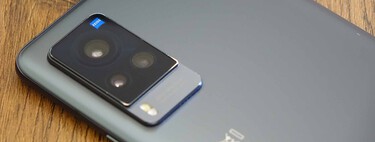
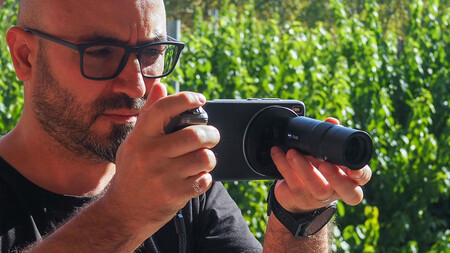
Moreover, the phone came with its photographic kit: an external telephoto “lens,” a grip with an integrated battery, and a case that allows you to attach a detachable lens, extending the telephoto focal length up to 200 mm. What the kit doesn’t include is a warning that when you pull out your phone to take a photo, you are going to become the center of attention, even in China.
A Mobile That Acts Like a Complete Photography System
One thing I have learned over the years of testing various mobile phones is that there is always a “weak point” in the photographic section. Wide-angle lenses that lose consistency, telephotos that barely hold solid with a few steps of real zoom, or excessive processing that ruins the textures or naturalness of the photos.
The first surprise: with the X200 Ultra, I did not encounter any of those compromises in its cameras, at least not in such a blatant way as in other models.
Its photographic proposal stands on three pillars:
- Effective Hardware: a camera system with large sensors and well-chosen, finely tuned focal lengths (1-inch main sensor, 35 mm and 85 mm telephoto lenses, and a high-level ultra-wide angle).
- Optical Precision and Color: the collaboration with Zeiss shows in the T* lenses that vivo has mounted on its recent launches in the X series, as well as in color fidelity.
- AI Processing: here we find one of the big surprises. The X200 Ultra has fine-tuned its editing algorithms even further, applying processing that maintains the natural feel of the image, with very organic blurring and color treatment that makes photographic editing an option rather than a necessity. For the more discerning, the SuperRAW mode allows for custom editing and recovering much more information in shadows and highlights, allowing for greater creative flexibility.

Sample with SuperRAW
Hong Kong: Contrasts and Street Photography
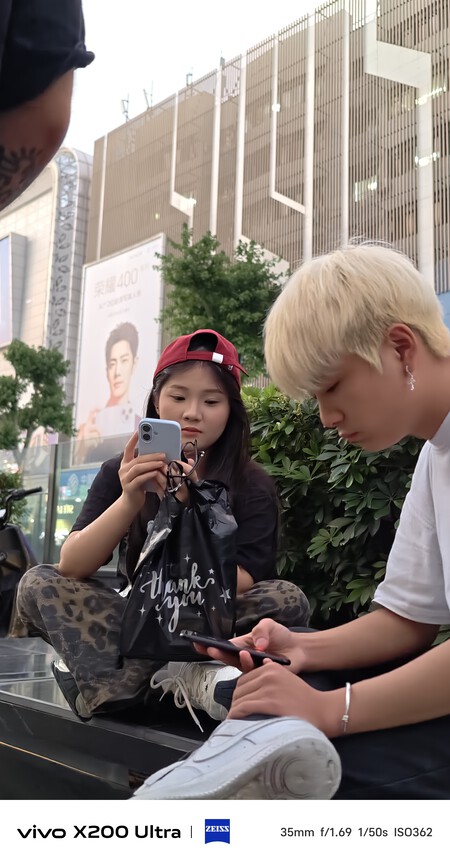
Hong Kong is a chaotic city, bustling and full of contrasts, making it an excellent setting for testing the X200 Ultra in street photography. This discipline demands discretion, speed, and precision (along with a bit of luck). The city and its inhabitants do not stop; there is no time to prepare complex frames or intimidate the environment with a bulky camera.
With the X200 Ultra in my pocket, the dynamic was simple: pull the phone out and use the same gesture to double-click the volume button to open the camera, tap the screen to choose which focal length to use, and shoot almost without time to compose. It’s better to have a slightly tilted photo than none at all.
This simple gesture allowed me to photograph “on the fly” everyday scenes in the markets and streets of Hong Kong, capturing the essence of the moment without the camera’s presence disrupting the spontaneity. Carrying a mobile instead of a camera in this scenario is a significant advantage.
I was frankly surprised that many of the photos I took without glancing at the screen came out with such precision and naturalness. I honestly believe that, under the same “fleeting” circumstances, I would not have achieved those results with any of my cameras.

In this context, having a 35 mm focal length as the primary camera (commonly 24 mm) and another 85 mm telephoto was advantageous. For the main camera, the 35 mm offers a perception closer to what you see with your eyes.
On the other hand, the 85 mm allows a more natural isolation of subjects from the background when used for portraits.
In terms of photographic quality, the native focal lengths of these cameras (35 mm and 85 mm) offer the best performance, and I suspect that the 50 MP Sony sensors and the 200 MP Samsung sensors mounted in these cameras are significant factors.
The levels of contrast, dynamic range, and sharpness resulted in portraits and urban scenes full of detail, importantly maintaining textures in the skin. In summary, images rivaling any interchangeable lens camera.
The X200 Ultra holds its own when forcing a digital zoom step (50 mm and 135 mm respectively) in each of them, but in those cases, searching for detail starts to reveal corrections in processing, and the skin loses some texture or there is a slight focus loss in certain areas that should be perfectly clear. As we move away from that native focal length with digital zoom, those small defects become more evident.
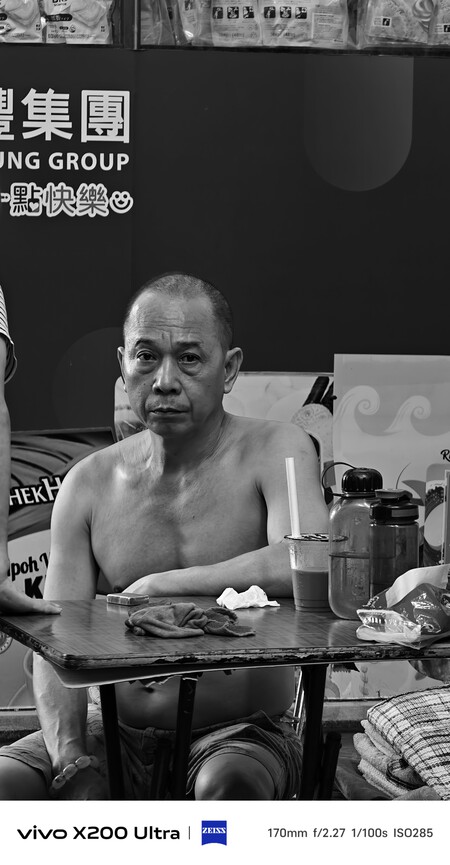
Don’t get me wrong; we are undoubtedly looking at what is likely one of the best cameras in a mobile phone for 2025, and these details will go unnoticed by 90% of users. However, my challenge was to achieve the same results as with an interchangeable lens camera.
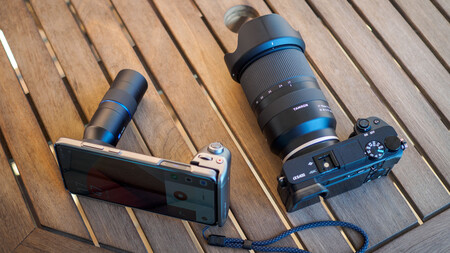
In this sense, if I had used the Tamron 17-70 mm f/2.8 that I usually mount on my Sony A6400, I would have obtained an optical focal length across the range with the quality of image that implies. Something that, no matter how good the AI processing of the vivo is, will never be achieved digitally. Despite this, being able to reduce my photographic gear to fit in a pocket instead of carrying 700 grams around my neck was worth it.
At this point, I must give a special mention to the grip included in the photographic kit, which also enhances the phone’s autonomy, acting as a 1,500 mAh power bank. It provides the necessary grip and hand positioning that was lacking, making the device feel closer to a camera rather than a mobile, thanks to the buttons and controls for zoom and exposure that the additional controls offer.
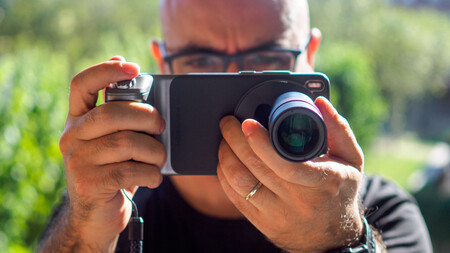
Vivo X200 Ultra with the photography kit installed: Telephoto, grip, strap, and mounting case
The Big Surprise: A Wide Angle That Doesn’t Falter
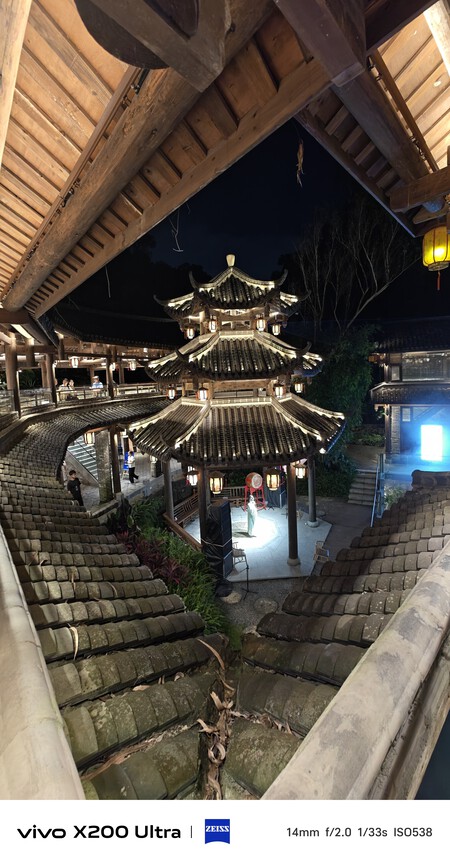
The wide-angle camera is always a headache for manufacturers. However, I didn’t find that the wide-angle on the X200 Ultra was a “secondary camera” that one tends to avoid. The 50 MP Sony sensor delivers performance on par with the main cameras, providing colorimetry consistent with the other cameras. This consistency makes the shift between cameras only noticeable in focal length, not in color treatment, creating the impression of changing lenses on a mirrorless camera.
The most surprising aspect was its ability to keep geometric distortion at bay, a common issue in this type of lens, as well as maintaining focus even at the edges of the image. However, as with the other cameras, the sweet spot of the wide-angle is its native focal length. Venturing into digital zooms (like 24 mm) progressively compromises that precision in focus.
In this sense, having a 14 mm focal length in cities like Shenzhen or Hong Kong, filled with towering skyscrapers and surrounded by lush subtropical forests, allows for photographing large buildings and natural landscapes without soft corners distorting the spectacular skylines of those cities.
The optional photographic kit for the X200 Ultra also includes a very interesting accessory: a filter holder ring that allows you to install polarizing filters to improve light filtration when photographing landscapes or reducing shutter speed without overexposing the photo.
This ring installs on the case containing the telephoto bayonet, allowing 67 mm polarizing filters to be attached just like with professional camera lenses.
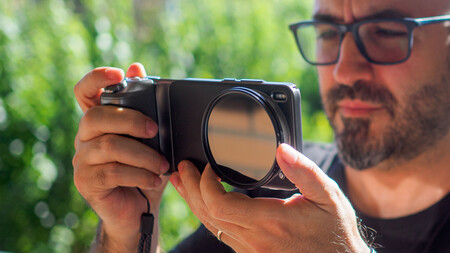
Vivo X200 Ultra with a polarizing filter installed
A Telephoto Lens Attached to a Mobile
The ultimate test occurred during the presentation of vivo’s mixed reality glasses. The event took place in a stadium near the brand’s headquarters, with the press positioned over a hundred meters from the stage. Typically, this would have posed a challenge: any mobile would have been limited to testimonial photos, too distant and lacking sufficient detail for proper coverage.
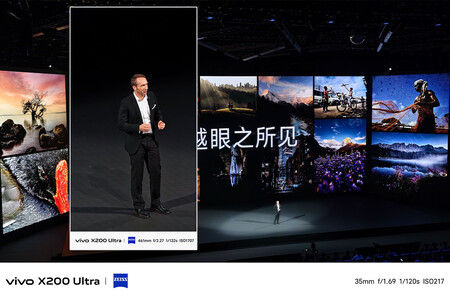
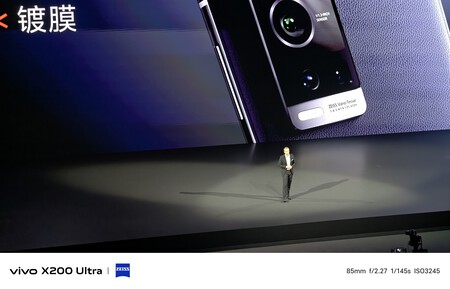
The integrated 85 mm telephoto camera provides this perspective
In that setting, ideally, one would want a long-range telephoto lens, like the 14-150 mm f/4-5.6 that I use with my Olympus camera. Being micro four-thirds, that focal length becomes equivalent to 28-300 mm in full-frame format but in a pocket-sized format. Nevertheless, it’s worth noting that that gear was left at home.
In this scenario, the native telephoto of the X200 Ultra came into play, along with the photographic kit and its detachable lens that attaches to the mobile via a bayonet case. It’s not discreet—it’s bulky and you must accept that you will become the center of attention when mounted on the mobile—but it transforms the mobile into a camera with a focal length equivalent to 200 mm, expandable to reasonable results beyond the 400 mm focal length with digital zoom.
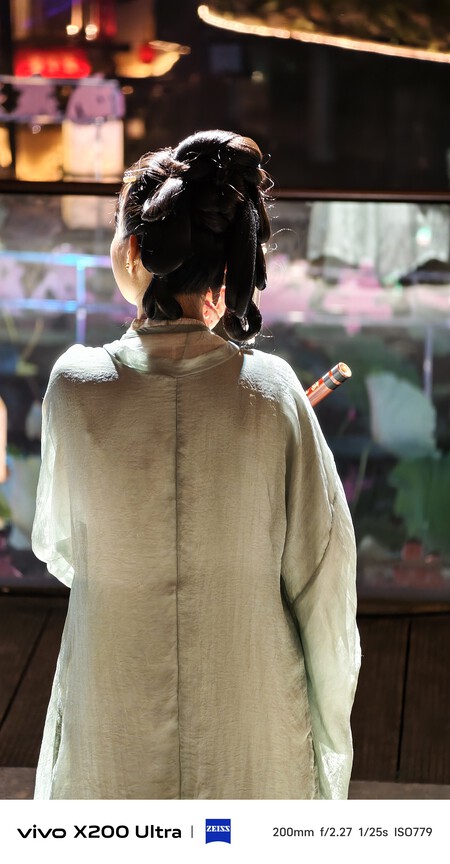
The result was images with very good sharpness and without those artificial watercolors that usually appear when forcing zooms.
The photo processing convincingly maintains texture and color, to the point that many photos taken from the stands conveyed the same feeling as one might get from a traditional telephoto lens on an APS-C camera.
Obviously, by mounting this external lens, the mobile’s digital zoom range extends to more than 2,400 mm, although photos obtained within this range are more testimonial than usable due to the intense processing they require.
It is also worth noting that one of the things I found disappointing about this kit is that the lens is fixed despite its size. It acts as a magnifier that complements the integrated telephoto lens on the X200 Ultra to enhance its optical zoom to 2.35x up to 200 mm, but does not allow expanding this optical range because its internal lenses are fixed.
This accessory has its downsides as well. When mounted on its bayonet, it overrides the other cameras. Its length means the lens intrudes into the frame when switching to the main camera or wide-angle, forcing you to remove it to use them.
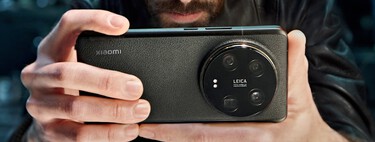
Moreover, to use it, you need to select the Telephoto Extender mode available in the camera shooting modes. If this mode is not enabled, the image appears inverted and out of focus since the mobile does not apply lens correction in the other modes.
The anchoring mechanism of the lens to its bayonet uses the same clicking system as interchangeable camera lenses, providing a solid mount that doesn’t feel like it could easily come loose. However, as happens with cameras, carrying a 12 cm protruding lens from the mobile increases the risk of impacts that could damage it.
With this challenge, the X200 Ultra proved to me that a mobile can be useful not only for urban photography or landscapes but also for covering events where distance is a challenge, something previously almost exclusively territory for cameras with interchangeable lenses.
The Less Shiny Side of the Experience: The Software
If there is one aspect that slightly tainted the experience, it was the software. The X200 Ultra I tested came with OriginOS 5, an operating system tailored to the Chinese market.
As an operating system, it performs as well as its counterpart FuntouchOS in the models vivo brings to Europe, as seen in my reviews of the X200 Pro and X200 FE. Particularly because it is supported by the power of the Snapdragon 8 Elite and 16 GB of RAM.
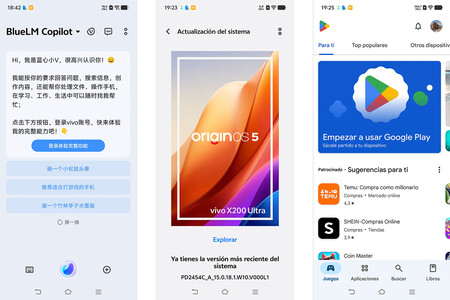
However, its critical point is that, not being adapted, many of its functions and applications were not translated and appeared in Chinese, limiting integration with common services in Europe.
As is common with mobile phones from the Chinese market, it also does not come with Google apps pre-installed, but you can install them from vivo’s alternative app store. Some AI-integrated functions also weren’t translated, which prevented me from testing them. Learning Chinese remains one of my unfinished tasks.
In addition, the device does not offer eSIM compatibility, which posed a significant inconvenience during a trip like this: being without connectivity was not an option, and relying on a physical SIM limited the possibility of fully utilizing its capabilities as a smartphone.

Despite these limitations, the device proved completely operational and allowed me to work without any setbacks. But it’s evident that without real adaptation to the western market, this mobile will hardly unleash its full potential outside of China.
On the other hand, maintaining focus on photographic performance, in addition to possessing a native camera app full of options (sometimes even so many that it becomes difficult to find them), the X200 Ultra also includes an additional mode that vivo calls Humanistic Camera, accessible by swiping up from the native camera app.
This mode changes the interface’s appearance and simplifies access to certain functions like manual adjustments in Pro mode or camera processing filters. My impression while using this camera is that Zeiss has had (even more) influence on the settings to apply a more organic treatment to photos, reducing the aggressiveness of noise reduction filters to approach results more akin to a mirrorless camera.
However, despite the camera’s handling being simplified (especially useful in street photography) and the results being more “photographic,” I haven’t found myself comfortable using this mode.
Firstly, the slightest swipe on the screen causes the mode to close, reverting to the native interface, which generates frustration by closing while you’re using it. Additionally, this option, theoretically more oriented towards advanced photography, does not allow configuring raw shooting directly from the app, unlike the native camera modes.
Life After the X200 Ultra
I confess that before traveling, I had doubts. It seemed too risky to leave my mirrorless cameras behind and trust everything to a mobile. Today, however, I ask the opposite: if I had a mobile of the caliber of the X200 Ultra in my pocket, why should I take any of my cameras next time?
As a photography and technology enthusiast, what I lament most is that the vivo X200 Ultra is unlikely to reach the Spanish market. After this experience, I feel like I’ve used the best photographic mobile I’ve tried in years.
Recognizing that the photographic kit isn’t for everyone, especially since not everyone needs to use a 200 mm zoom in their everyday life or a filter holder, unless they know beforehand that they will find themselves in a situation where they’ll need them, like I did during the presentation.
Elements like the grip (and its strap) or the case from this kit are much more useful for using the mobile as a camera substitute. Ultimately, it is up to the user to decide whether to pay the approximately 350 euros that this kit costs.
Beyond these considerations, it is said that one only misses what one has had. I already miss the X200 Ultra.
In Xataka | Editing your photos with a mobile and making them look “professional” is possible: these are the best tricks
Images | Xataka