
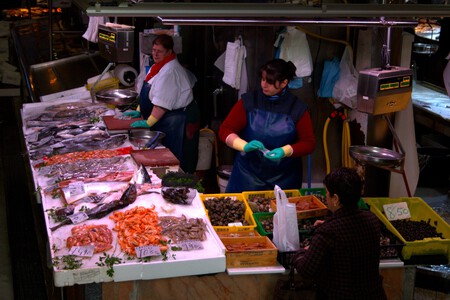
The Diminishing Role of Fish in Spanish Homes
Spain has long been celebrated for its rich gastronomic tradition , largely centered around fish. Despite its extensive coastline and the economic benefits generated by its fishing industry, Spaniards have drastically reduced their fish consumption at home. This trend is reflected in the staggering number of fishmongers that have closed their doors, signaling a significant shift in the nation’s culinary preferences.
Statistics Highlighting the Decline
Recent data shows a 32% decline in per capita fish consumption in Spain over the past decade. According to figures from the Ministry of Agriculture, in 2014, each Spaniard consumed an average of 26.4 kilograms of fish annually. By 2024, this number plummeted to 17.9 kilograms . Notably, in 2009, consumption levels were still around 30 kilograms , indicating a concerning downward trajectory.
Challenges Facing the Fishing Industry
Falling consumption rates have severe consequences for the fishing industry . The recent statistics reveal that Spaniards spent an average of 17 euros on fish in May 2024, consuming only 1.48 kg per capita. This indicates a shift in dietary habits compared to previous years—in 2015, the average consumption was 2.13 kg and 2.33 kg in 2005.
Moreover, the decrease in demand has led to the closure of 5,000 fishmongers across the country. “A third of the 15,000 fishmongers that existed in 2007 has been lost,” notes Fedepesca, the organization representing fishmongers. This decline has also resulted in job losses, with the number of individuals employed in the sector dropping from 26,237 to 18,396 since 2007.
What Is Behind the Declining Consumption?
The decline in fish consumption in Spain can be attributed to several factors, including cultural changes and the growing perception of fish as a luxury rather than a staple. More Spaniards are opting for international cuisines such as sushi and poké bowls when dining out, further distancing fish from their home-cooked meals.
Interestingly, while fish consumption plummets at home, it thrives in restaurants and bars. According to Mercasa , a reported 150 million kilograms of fish were consumed outside homes in 2023, a 2.6% increase from the previous year. The rise in ‘extra-domestic consumption’ indicates that more consumers prefer to enjoy fish when dining out rather than preparing it at home.

Types of Fish in Demand
While overall consumption has decreased, certain fish species are witnessing a growth in demand . The latest report from the Ministry identifies trout (19.4%), lubina (18.4%), and salmon (11%) as specific types that have become increasingly popular among consumers. The growth in demand for smoked trout and salmon, with increases of 25% and 12% respectively, underlines this trend.
Perceptions and Consumer Behavior
The changing landscape of fish consumption isn’t merely a matter of dietary preference. The perception of fish prices has undergone a transformation, with many consumers reluctant to dedicate budget to home-cooked fish meals. Businesses have adapted by exploring new avenues, including pet food production, as traditional sales plummet.
Interestingly, other influences are contributing to this change. The rising popularity of Asian cuisine has driven demand for ingredients such as salmon, prompting a notable increase in its consumption. From sushi to sashimi, the transition to dining outside the home signals that fish has increasingly become associated with leisure rather than a daily dietary necessity.
While Spain grapples with declining fish consumption at home, the factors influencing this phenomenon are complex. However, the growing trend toward enjoying fish as part of a leisure experience outside the home seems to offer a lifeline for this traditional culinary staple. As lifestyle and cultural preferences evolve, the future of how Spaniards interact with fish—both as a food source and a part of their social experiences—remains a fascinating area to observe.