
Apple has set the stage for an impeccable global launch of its newest device, the iPhone Air. However, China is a market that has chosen to hold back , contrasting sharply with the rest of the world. Apple’s total commitment to eSIM technology is currently facing coordination hurdles with local operators and regulatory approval. What should have been a smooth rollout now involves complexities that could hinder the anticipated launch.
In 2022, Apple took a bold step in the United States with the launch of the iPhone 14, which was notable for the absence of a SIM card slot. In contrast, models sold outside the U.S. continued to include a physical SIM tray. This move essentially transformed the U.S. market into a testing ground for the transition to eSIM technology . Now, with the iPhone Air, Apple has taken a significant step forward: this model does not come with a physical SIM card slot worldwide. Apple announced on September 9 that consumers could begin reservations on the 12th, with the device hitting stores on September 19 across over 63 countries and regions.
The Total Commitment to eSIM Stumbles in a Complex Yet Important Market
Continent China remains the only market where the iPhone Air has not adhered to the announced schedule. Apple clarifies that only the A35181 model supports eSIM in China, and its use is contingent upon regulatory approval . To activate this feature, customers must visit a physical store operated by one of China’s major telecommunications companies—China Mobile, China Telecom, or China Unicom—and present an official identity document. Notably, customers are restricted from installing eSIM profiles from other providers while their phones are in China.
Despite recent fluctuations, the Asian giant represents a crucial market for Apple. In 2024, iPhone sales in China reached 38.5 million units , boasting higher average prices and a robust, loyal customer base. Additionally, sales experienced a year-on-year growth of 8% in the second quarter of 2025, marking the first rebound since 2023—largely spurred by discounts and government incentives that favored iPhone 16E sales. However, Apple still holds only the fifth position in market share, trailing behind local giants like Huawei, Xiaomi, Vivo, and Oppo .

<span>Apple website view in China: original text (above) and automatically translated version with Google Lens (below)</span>The removal of the SIM tray not only enhances user experience; it has also enabled Apple to redesign the interior of the iPhone 17. This redesign has resulted in a larger battery capacity for models sold in the United States, translating to greater battery life compared to international versions that retain the SIM slot. As noted, the iPhone 17 Pro and Pro Max sold outside the U.S. reportedly offer two hours less usage compared to their American counterparts. This strategy highlights how the shift to eSIM has broader implications beyond connectivity.
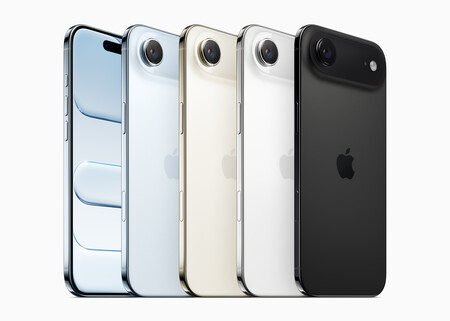
<span>The new iPhone Air</span>As China grapples with its regulatory processes, the rest of the world is moving ahead unbothered. Apple confirmed on September 9 that the iPhone Air will officially launch on September 19 in over 63 countries and regions , with reservations already open since the 12th. Initial markets include Spain, the United States, Japan, and Mexico, thereby bolstering the overall global appeal of the device. This launch also signifies a crucial step toward the widespread adoption of Digital SIM technology .
<img alt="Apple succumbs to the iPhone 17 Pro before what was resisted for years: megapixels do matter" width="375" height="142" src="https://i.blogs.es/16202b/pro_camera_system_v02_statics_endframe__hwtzkm6umyaa_large_2x/375_142.jpeg"/>The launch of the iPhone Air in China now hinges on how quickly regulators can approve eSIM support and how effectively operators can ensure seamless activation. Apple has indicated that it is collaborating with authorities to expedite distribution as soon as possible. The official page currently maintains the message that “Sales information will be updated later,” leaving potential buyers in suspense. Thus, the outcome will determine whether this technological transition can successfully consolidate without major setbacks.
Images | Apple + Photoshop | Screen capture
In Xataka | Movistar Swap is official: all the details of the new program to renew your iPhone.