
Submarines are often the unseen guardians of the sea, operating beneath the waves while influencing naval strategy above. Their unmatched ability to conduct stealthy, prolonged underwater operations allows them to protect strategic areas without detection . This silent presence compels adversaries to invest heavily in anti-submarine defense systems , diverting valuable resources to sensory technology and patrols. In a world where geopolitics are continually shifting, the presence of submarines has become a factor that changes the game entirely. Those without submarines live in constant fear, while nations equipped with them can compel rivals to operate under uncertainties, knowing that threats may lurk unseen.
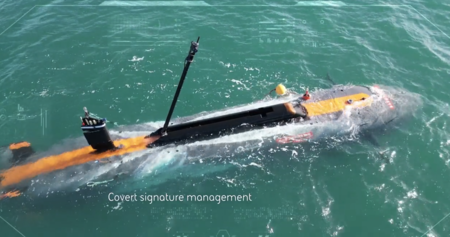
However, the landscape is evolving with the advent of autonomous submarines . These innovative platforms, designed to operate without human intervention, promise to broaden the scope of military missions, effectively removing the risks associated with manned operations while lowering logistical costs. Autonomous submarines excel in conducting lengthy missions in silence, allowing for coverage over vast territories and capable of undertaking hazardous tasks that manned vessels cannot. In this context, BAE Systems has made strong strides with its “Herne,” an advanced autonomous submarine vehicle aimed at strengthening underwater security and addressing escalating threats below the ocean’s surface.
BAE Systems’ Ambitious Vision for Autonomous Submarine Operations
In September 2025, British defense contractor BAE Systems and Canadian firm Cellula Robotics announced an exclusive 10-year partnership to design and launch the autonomous submarine named Herne. According to Reuters, BAE aims to roll out a commercially viable product by late 2026 , following rigorous trials scheduled for 2024 in both the UK and Canada. Preliminary tests have already demonstrated the prototype’s capabilities in carrying out pre-programmed missions for intelligence gathering, surveillance, and reconnaissance, utilizing the BAE’s autonomous control system, Nautomate. The company proudly states that the project has accelerated from concept to testing on water in a remarkable timeframe of just 11 months.
Designed as an extragranden autonomous submarine vehicle (Xlauv) , Herne offers unparalleled flexibility and modular configurations. BAE emphasizes its capacity for various useful loads, simplifying maintenance and allowing for adaptable mission parameters. This revolutionary submarine can be launched from ports, ships, or even larger submarines, utilizing advanced materials to minimize its acoustic signature. Herne boasts tested navigation systems, secure communication protocols, and rapid configuration options. As highlighted by The Register, Herne can dive down to 5,000 meters, traverse approximately 5,000 kilometers, and operate continuously for up to 45 days , all neatly fitting within a standard 40-foot shipping container .
BAE envisions Herne as a versatile tool for a broad spectrum of naval operations. These missions encompass intelligence and reconnaissance efforts, anti-submarine warfare, and protection of critical underwater infrastructure. The manufacturer underlines that Herne’s autonomous capability will enable it to maintain a sustained presence in areas of strategic interest, working collaboratively with manned platforms to expand operational reach. This approach aligns seamlessly with the long-held strategic role of submarines in supplementing deterrence strategies while leveraging unmanned systems to enhance operational capabilities.
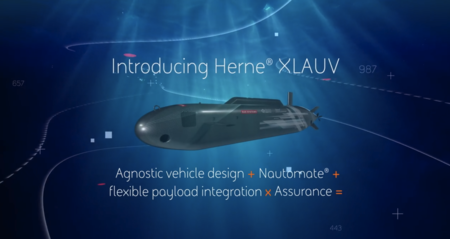
With an ambitious timeline ahead, BAE expects Herne to be ready for sale in 2026 and aims to produce between 10 and 20 units by 2027 . The company also collaborates with Cellula Robotics to enhance Herne’s power systems with hydrogen-based energy solutions, although initial tests have utilized traditional battery systems.
Herne isn’t the only autonomous submarine in development. The UK’s Ministry of Defense is also working on the Excalibur , a comparable-sized autonomous submarine designed for conceptual testing. Concurrently, the Royal Navy has enhanced its anti-submarine capabilities through upgraded sonar technology. Ultimately, the operational deployment of Herne will depend on the success of future trials and integration into this increasingly advanced technological ecosystem. One thing is certain: the era of advanced autonomous submarines is on the horizon, and it’s reshaping the future of naval warfare.
Images | BAE Systems