
Kim Jong-un’s Unusual Travel Companion: A Personal Toilet
When one travels, their luggage typically includes essentials like clothes, a camera, and perhaps a laptop for entertainment. However, for Kim Jong-un, the Supreme Leader of North Korea, travel logistics take on a rather unique twist. Among his belongings is something that most people wouldn’t consider packing: a personal toilet.
A Diplomatic Visit to China
Kim Jong-un recently made headlines with his visit to China to attend the ceremony marking the 80th anniversary of Japan’s surrender during World War II. The visit featured numerous photographs and noteworthy interactions with global leaders such as Xi Jinping and Vladimir Putin. This was a chance for Beijing to showcase its military might and diplomatic stature , but it also spotlighted the extreme measures taken by Kim’s entourage when it comes to maintaining his privacy.
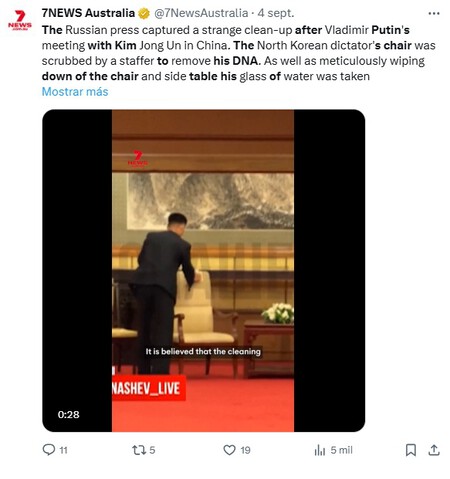
During a public interaction with Putin, a member of Kim’s team was spotted diligently cleaning the chair Kim had just vacated. This observation highlighted not only the meticulous nature of Kim’s officials but also sparked curiosity regarding their motivations. In a video released by CNN, an assistant was seen wiping down the armchair just moments after Kim had been seated, an act indicative of the extreme security measures surrounding the leader.
Personal Toilet: A Status Symbol?
A recent report by Nikkei revealed an intriguing aspect of Kim’s travel arrangements: he brings along his own toilet. This piece of information offers insight into a deeper concern regarding personal security and intelligence. When traveling, Kim carries a personal toilet not just on luxury trains but, according to sources, also when he visits military bases and factories back home. The personal toilet serves a dual purpose: comfort and the prevention of unwanted intelligence collection. During high-stakes meetings like the 2018 summit with South Korea or the historic encounter with the U.S. in Singapore, Kim’s team mobilized a toilet to ensure that no biological remnants could be accessed by foreign powers.
The Need for Secrecy
One might wonder about the rationale behind Kim Jong-un’s insistence on having a designated toilet. The underlying concern revolves around intelligence gathering. Any sample—be it sweat, hair, or other biological traces—left behind could be exploited by intelligence agencies to ascertain physiological health information. North Korean officials believe that even minute details can present vulnerabilities, thus the extreme precautions.
Are Such Measures Unique?
No, these security protocols are not exclusive to Kim. Such measures date back to his father’s era and are reportedly common among global leaders. A report by Reuters suggested that even Vladimir Putin has an entourage responsible for removing waste during his travels. This quirk has not gone unnoticed, with various outlets investigating the security behaviors surrounding leaders such as Kim and Putin.
The potential information contained in waste materials is significant. Discarded items can be sources of vital intelligence. The anatomy behind the moves is not just eccentricity , but rather a carefully orchestrated effort to maintain health and security secrets. A journalist from Reuters summarized that Kim’s extreme measures are a culmination of the need for complete privacy and control over any data that could expose vulnerabilities.
The Psychological Impact
This obsession with privacy goes beyond simply avoiding traces; it can also extend to Kim’s interactions. Ever since a viral video in 2019 depicted Kim smoking, measures have been introduced to ensure that even his DNA remains under wraps. Kim’s sister has been seen holding an ashtray during public appearances, showcasing the lengths to which they go to avoid leaving any genetic markers behind. Reports indicate that items such as pens are also utilized solely by Kim for signing off on documents to prevent any trace of his characteristic biometrics.
Experts suggest that the meticulous care exercised by Kim’s team—whether through the use of personal toilets or cleaning up after him—reflects deep-rooted apprehensions about exposure and vulnerabilities in a world where every detail is monitored. These actions can be viewed as encapsulating the essence of Kim Jong-un’s character, which is steeped in paranoia and a profound desire to retain power amidst the ever-watchful eyes of both friends and foes.