
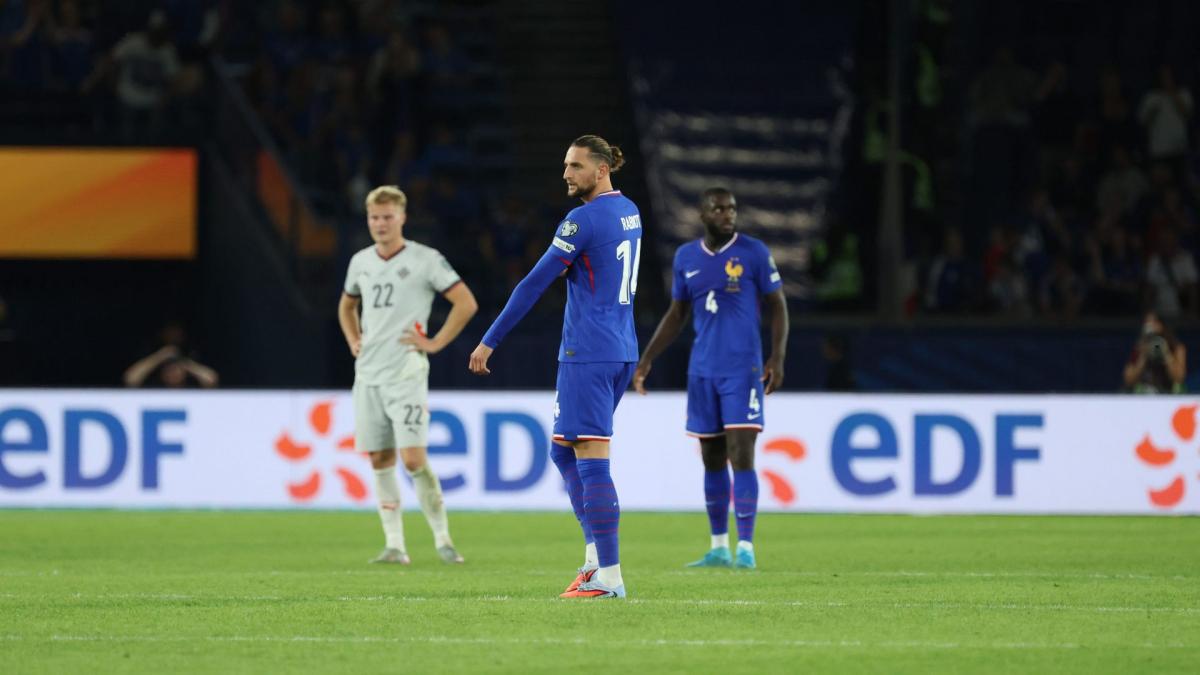
Adrien Rabiot’s Emotional Return to Parc des Princes
Adrien Rabiot recently made headlines as he returned to the iconic Parc des Princes for the first time since the much-discussed PSG-OM match at the start of the year. This fixture had captured the attention of football fans, not only for the game but also for the heated atmosphere surrounding Rabiot. The midfielder was met with a chorus of insulting banners from Parisian supporters directed at him and his mother, Véronique Rabiot. Though he was donning the Blues’ jersey during the France-Iceland match, it was evident that the lingering resentment from the local fans was still palpable.
During the team presentation, it was clear that Rabiot was not going to have an easy night. As his name echoed through the stadium, the jeers and whistles from the crowd were unmistakable. This negative sentiment escalated when he entered the match as a substitute for Marcus Thuram after a red card was issued to Aurelien Tchouaméni. The hostility resonated with every touch he made on the ball, leading to a challenging environment for both the player and the national team, especially in a tense encounter that ultimately ended in a 2-1 victory for France.
Public Reaction and Deschamps’ Defense
Didier Deschamps, the coach of the French national team, quickly addressed the situation following the match. His comments were direct and highlighted the unacceptable nature of the fans’ reactions. “It is unacceptable,” he stated emphatically in his post-match interview with TF1. Deschamps defended Rabiot’s contribution on the field, explaining that the player’s club allegiances should not overshadow his responsibilities as part of the national team.
“It doesn’t make sense to judge a player based on his club life when he wears the French national jersey,” Deschamps continued, pointing out that Rabiot’s professionalism deserved respect regardless of the atmosphere in the stands. The coach emphasized that such negativity towards any player in the national squad is unwarranted, stating boldly, “No player should undergo that.” His assertion underlined a vital aspect of team solidarity and respect, emphasizing that every individual representing France should be supported equally.
The Broader Impact of Fan Behavior
The tense atmosphere surrounding Rabiot is not an isolated case; hostility towards players based on their club affiliations has been witnessed in stadiums across France. Such behavior raises questions about the role of fans in maintaining a supportive environment for national team players. As supporters, the expectation is to rally behind the country’s representatives, regardless of individual club loyalties.
Deschamps’ response to the crowd’s behavior is likely to resonate both within the squad and among the fans. He stressed the importance of unity, suggesting that the national pride should eclipse club rivalries, particularly when individuals don the colors of the French team. As football continues to evolve, the dialogue surrounding fan behavior and player treatment is becoming increasingly important. Harsh reactions can create an unhealthy environment that not only affects individual players but can also have wider implications for team morale and performance.
Acknowledging Rabiot’s Professionalism
Throughout his career, Rabiot has faced his share of challenges, particularly regarding fan opinions. His journey from the youth ranks at PSG to representing the national team has been marked by controversy and strong sentiments. However, his resilience under pressure can be seen as a commendable trait among professional athletes. He demonstrated remarkable composure during the Iceland match, even amidst the vocal disapproval, focusing on contributing positively to the team’s efforts.
The complexities surrounding Rabiot’s situation highlight a crucial turning point for how stakeholders in football—including clubs, fans, and media—interact with players. The focus should shift towards creating a more inclusive and supportive atmosphere that fosters talent and dedication. Understanding and respecting the emotional and psychological toll that public sentiment can have on players might encourage fans to reconsider their approach during live matches.
The landscape of football is continually evolving, and as the game advances into a more global and inclusive sphere, promoting respect and support for all players—regardless of club loyalty—will be essential in enhancing the experience for both fans and players alike.