
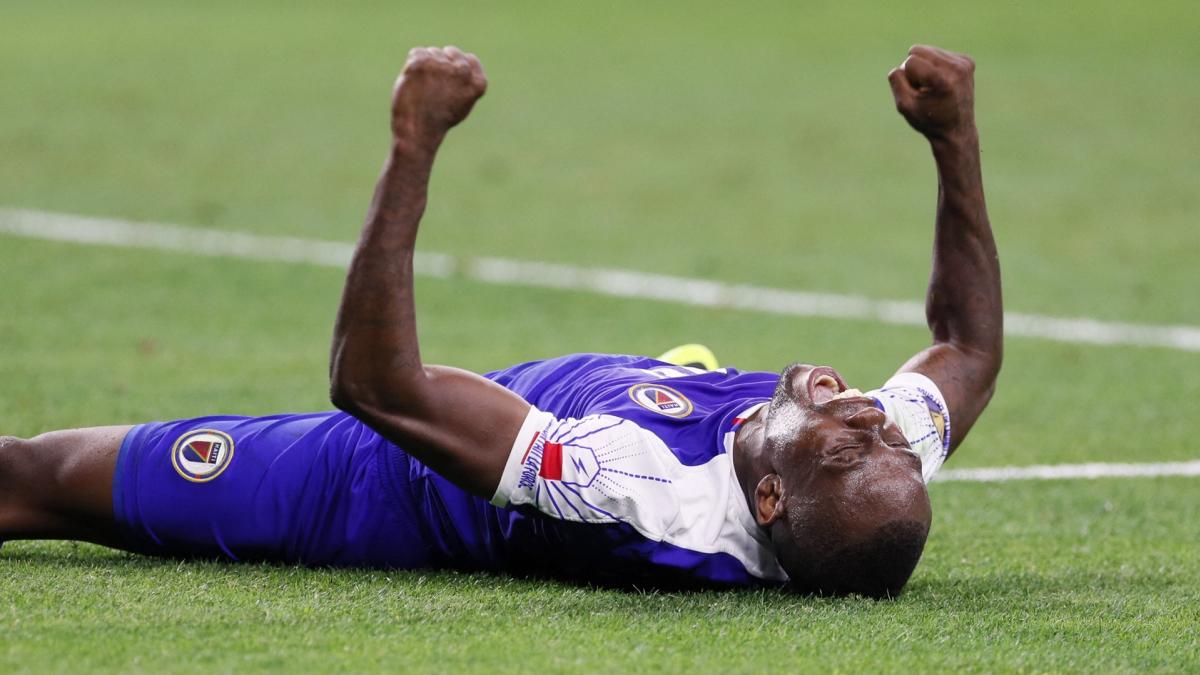
As the world gears up for the 2026 FIFA World Cup , Haiti is navigating a complex landscape defined by political instability , regional solidarity, and a desire to nurture its footballing talent. Since declaring a state of emergency on August 9, 2025, Haiti has faced mounting challenges, primarily due to persistent gang violence in Port-au-Prince. Amidst this backdrop, Haitian football continues to find avenues for growth and success . The nation’s women’s team made history in 2023 by competing in their first World Cup, while the U17 team recently secured a spot for the 2025 World Cup in Qatar. The pressing question remains: how can Haiti capitalize on its footballing prowess amidst such insecurity?
On an institutional level, the Haitian Football Federation (FHF) is currently under the oversight of a governance committee appointed by FIFA, a situation that arose from the fallout of the Yves Jean-Bart scandal. The goal of this oversight is not only to clean up governance structures but also to prepare for credible elections, which are expected to take place no later than November 30, 2025 . To facilitate this transition, the FHF has been working diligently on compliance reforms, which include club licensing and integrity measures. However, the reality on the ground is stark, with nearly 57 clubs and academies officially disbanded in 2025, significantly impacting local football and the ability to foster new talent.
A Rapidly Evolving Landscape
The infrastructure issues plaguing Haitian football are well documented. The iconic Sylvio-Cator Stadium , once the pride of Haitian football, has fallen into disrepair, compelling teams to host matches in the Dominican Republic . For example, Violette AC achieved a stunning victory over Austin FC in the Concacaf Champions League, but this success has occurred far away from home soil. As of now, local attendance at matches is inconsistent, largely due to the lack of a stable football schedule and a secure environment for supporters. Experts emphasize that rehabilitating the stadiums and ensuring safety are essential priorities that need immediate attention for the sport to thrive.
Despite these hurdles, the recent performance of the Grenadières, the Haitian women’s national team, highlights the potential for success. In 2023, they not only participated in their first-ever World Cup but also competed closely with England , further raising the profile of women’s football in Haiti. Young talents like Melchie Dumornay have emerged as international stars, demonstrating the deep well of talent that exists in the nation. With the U17s now qualifying for the 2025 World Cup , there’s a renewed sense of hope and focus on youth development that promises to enrich the footballing landscape.
In August 2025, the Haitian government allocated 100 million gourdes to support the national team’s preparation for upcoming international events. This financial boost, alongside international aid and the support of the Haitian diaspora, presents a unique opportunity for the FHF to restructure and revitalize its footballing initiatives. The FIFA Forward 3.0 program , which offers up to $8 million per association, further underscores the potential for growth if these funds are effectively utilized in developing infrastructure and fortifying training programs.
As Haiti strives for progress, there are clear indications of social and cultural dimensions emerging as vital components of the nation’s footballing narrative. Football operates as a unifying force within Haiti, forging connections among communities across schools, neighborhoods, and the diaspora. The “Grenadières Effect—Demoiselle” has served as a catalyst for inspiring young girls, while Violette AC’s recent achievements have generated pride that transcends borders.
The next steps for Haitian football hinge on transforming potentials into tangible realities. The focus must be on securing safe venues, establishing consistent youth competitions, and creating an environment where players can thrive without fear. If the right measures are taken, Haiti possesses the foundational elements to evolve into a significant player in regional football. Following the 2026 FIFA World Cup , which will boast an unprecedented 48 teams , there exists a unique opportunity for Concacaf nations to shine. As Gianni Infantino , FIFA’s president, noted, the upcoming tournament will allow more countries the chance to compete and showcase their strengths. Haitian football’s challenge lies not in the abundance of talent but in fostering an environment conducive to success.