
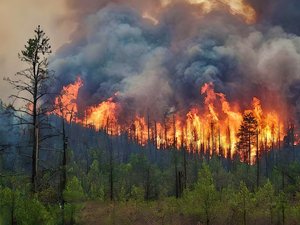
For the first time, more than a million hectares have gone up in smoke in Europe. Spain and Portugal are the most affected.
The relentless impact of global warming has culminated in a tragic record in 2025, as a staggering 1.03 million hectares of land were consumed by fires across Europe. This unprecedented loss is akin to the entire landmass of Île-de-France , representing a sobering increase from the previous record of 988,000 hectares burned in 2017, according to the European Forest Fire Information System established in 2006.
France, a country often associated with lush landscapes and expansive forests, has felt the heat of these devastating fires. Notably, the Corbières fire has claimed approximately 17,000 hectares , marking it as the largest wildfire in the Mediterranean region in the last five decades. Overall, 35,600 hectares of forest have been sacrificed to flames in France this year, a notable reduction compared to the 72,000 hectares destroyed in 2022, when the Massif des Landes alone accounted for 30,000 hectares of loss.
2.8% of Burned Portugal
Among European countries, Spain bears the brunt of this catastrophe, with over 400,000 hectares reduced to ashes due to 287 wildfires this year. This represents 0.8% of its total land area, underscoring a national disaster that has claimed four lives. The political ramifications have been immense, with both government and opposition parties exchanging accusations of negligence regarding fire management and disaster preparedness.
In Portugal , the situation remains dire although it did not exceed its distressing record of 563,530 hectares burned in 2017. This summer, 274,000 hectares have been engulfed in flames, leading to the tragic loss of three lives, which constitutes 2.8% of the country’s total area. Meanwhile, Romania has also faced significant losses, with 126,000 hectares consumed by flames. Other nations, such as Cyprus , Germany , and Slovakia , have recorded the highest levels of burned areas in the past twenty years, illustrating a concerning trend across the continent.
The consequences of these fires extend beyond the immediate devastation of landscapes. The health of populations in afflicted areas is also at stake. The fires have released unprecedented quantities of carbon dioxide into the atmosphere. In Spain alone, the infernos have emitted 18 million tonnes of CO2, surpassing the annual emissions generated by an entire country, such as Croatia . In Portugal, this figure rises to 11 million tonnes , contributing further to environmental degradation. These toxic emissions have also drifted across borders, impacting air quality in nearby regions like France.
It is clear that we are entering an era where such devastating wildfires will become increasingly common. The intensifying effects of global warming are expected to exacerbate heat waves, making the conditions ripe for wildfires to ignite and spread uncontrollably.
The necessity for comprehensive strategies aimed at tackling climate change has never been more urgent. Policymakers must focus on enhancing fire management practices and improving community preparedness to combat the reality of these environmental challenges. Additionally, reevaluating land management strategies, investing in renewable energy sources, and implementing stricter regulations on emissions could mitigate the adverse effects of climate change.
Moreover, fostering international cooperation to share best practices and innovative technologies in fire prevention and management can prove invaluable. It is crucial for affected countries to collaborate and learn from one another to prevent further loss of life and land.
As the world faces the grim realities of climate change, individual actions also play a vital role. Encouraging sustainable practices in daily life, promoting reforestation initiatives, and increasing awareness of fire risks among communities can lead to meaningful change. Each effort, no matter how small, contributes to a collective movement aimed at protecting our planet.
As we reflect on these shocking statistics and the resulting devastation, it becomes increasingly evident that immediate action is essential to curtail the frequency and severity of wildfires in Europe and beyond. The fires that have ravaged the landscapes are not mere statistics but represent lost ecosystems, disrupted lives, and an escalating call for change. Sustainable actions and adaptive measures across sectors are necessary to combat the realities wrought by climate change and prevent future catastrophes.