
The Controversy Surrounding the Italy-Israel Match: Beyond Football
As the 2026 World Cup qualifiers draw near, Italy faces a significant controversy ahead of its scheduled meeting with Israel in Debrecen, Hungary. This conflict transcends mere sporting events and enters the realm of political and moral considerations. The ongoing situation in Gaza has sparked intense debate within Italy about whether the match should proceed as planned.
Calls for the postponement or outright cancellation of the return match, set for October 14 in Udine, have surged in recent days. The mayor of Udine, Alberto Felice of Toni, publicly condemned the fixture as “inappropriate,” expressing hope for its postponement. He emphasized that the final decision rests with the Union of European Football Associations (UEFA), the Italian Football Federation (FIGC), and the Udinese club, which owns the stadium.
These sentiments are not isolated. A group of 44 parliamentarians from the Democratic Party and Centro-Sinistra has launched a movement aimed at banning Israel’s participation in all international sports competitions. Their initiative found unexpected support from the Italian Association of Coaches (AIAC). Renzo Ulivieri, the association’s president, stated that suspending the Israeli team would not only be symbolic but also “necessary” in response to a “moral imperative.”
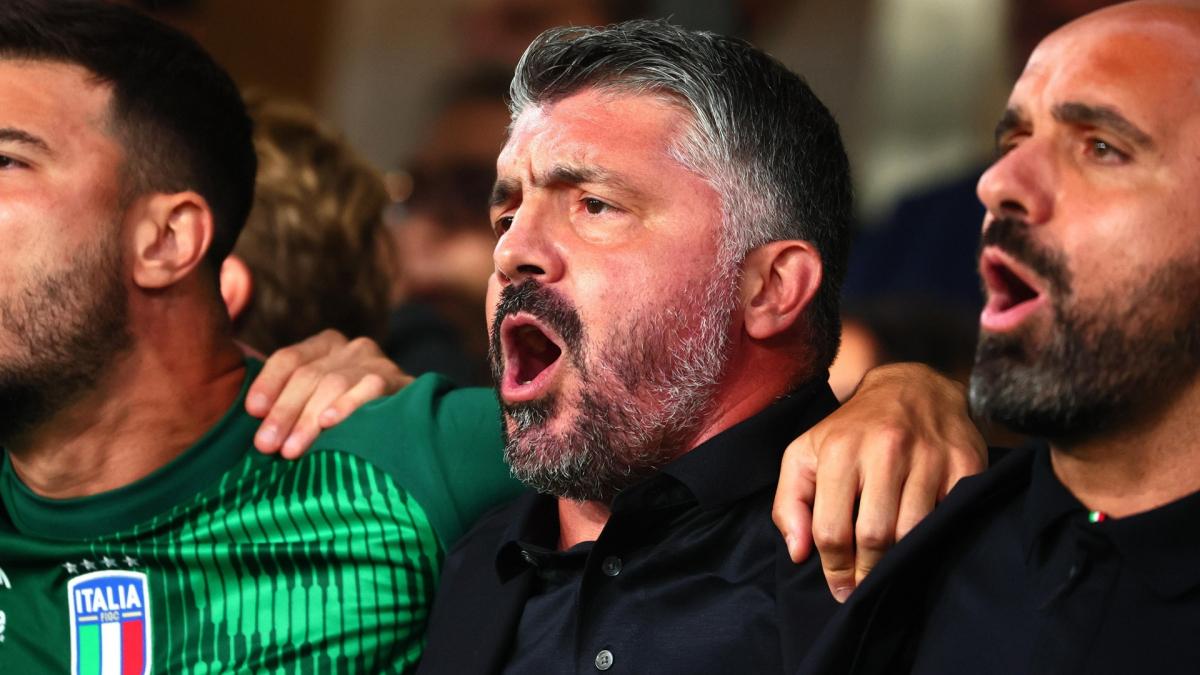
Notably, a petition named Stop The Game has amassed over 22,000 signatures, amplifying the pressure on Italian and European sports institutions. The urgency behind these appeals is palpable, particularly in light of the rising casualties in Gaza. After Italy’s recent victory over Estonia, the team’s coach expressed his conflicting feelings regarding the upcoming match: “I am a man of peace… but we have to play the game.”
A Historical Context of Sporting Exclusions
The current outcry is rooted in a larger historical precedent. The mayor of Bari, Vito Leccese, previously rejected Israel’s participation in a sporting event, forcing the FIGC to seek an alternative venue in Udine, which had hosted the match last year in the League of Nations. This sequence of events has empowered figures like Mauro Berruto, former coach of Italy’s volleyball team and current Democratic deputy, to ramp up calls for urgent actions against Israel in international sports.
Berruto has openly encouraged the Italian Olympic Committee (CONI) and the FIGC to advocate for FIFA and UEFA to suspend Israel’s participation in all global competitions. He emphasized the emotional toll of the ongoing conflict: “It’s painful to see people and children lose their lives. We have to play the game, and that is why we are there.”
The movement draws parallels to historical precedents where nations have been suspended from international sporting events. Germany and Japan were excluded after World War II, while Russia faced similar repercussions following its invasion of Ukraine in 2022. Advocates for the suspension argue that neglecting the current violence in Gaza while taking decisive action against other nations represents a grave inconsistency and an instance of “double standards.”
Former President of the Chamber of Deputies, Laura Boldrini, currently leads the House Human Rights Commission and has initiated an online petition demanding Israel’s suspension from all sports competitions. However, the Italian government, particularly the Minister of Sports Andrea Abodi, has defended Israel’s position by asserting that it was the victim of attacks, contrasting it with Russia’s status as an aggressor.
The Response from Local Communities and Public Sentiment
Despite government resistance, local pressure continues to escalate. Last year, the streets of Udine witnessed over 2,000 demonstrators from around 80 local associations protesting the match, highlighting growing tensions surrounding the issue. Law enforcement deployed armored vehicles and barricades, reflecting the heated atmosphere surrounding this contentious fixture.
As the return match in Udine approaches, it appears likely to be an event overshadowed by public dissent and escalating tensions. Critics argue that this Italy-Israel showdown has transformed into a national embarrassment that extends beyond the realm of sports. “I am a man of peace, and it breaks my heart to see civilians and children affected,” remarked Gennaro Gattuso, the team’s coach, highlighting the human cost of the conflict.
This ongoing discourse signifies the intersection of sports and significant social issues, with the eyes of the public firmly fixed on Italy in the coming matches. It remains to be seen how the situation will unravel, but one thing is certain: this controversy is far from resolved, and the ramifications will extend well beyond the pitch.