
The Dark History of Cannibalism
Cannibalism has been a fascinating yet horrifying subject throughout history, often portrayed in horror films and sensationalized media. This act of consuming human flesh evokes both fear and intrigue, pushing the boundaries of what societies consider acceptable. But the reality of cannibalism is far more complex than what is merely depicted on screen.
Cannibalistic Practices: Historical Context
The practice of cannibalism dates back millennia, with varying motivations across different cultures. In some societies, it served as a means of supremacy, where warriors would consume their enemies to absorb their strength. In other instances, cannibalism was tied to religious beliefs or desperate circumstances where survival was paramount. Interestingly, today’s nutritional assessments suggest that the practice is largely viewed as nonsense, particularly considering the health risks associated with consuming human flesh.
The Allure of Cannibalism in Popular Culture
In recent years, cannibalism has resurged in popular culture, often linked to erotic fantasies. Notorious figures such as Jeffrey Dahmer and Dorángel Vargas are examples of individuals who committed these ghastly acts, motivated by twisted desires of possession and control. Their actions are often discussed in tandem with magical rites, indicating a blend of horror and mysticism associated with the act.
The Legal Landscape of Cannibalism
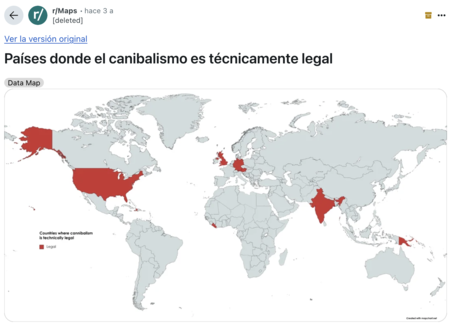
Despite its gruesome reputation, cannibalism is not universally illegal. A viral map on platforms like Reddit suggested that some countries lack explicit laws against it, stirring debates about the legality and morality of cannibalistic acts. While some jurisdictions may not criminalize cannibalism itself, related actions such as murder, desecration of corpses, and illegal exhumation are punishable by law. This creates a substantial legal gray area.
For instance, Armin Meiwes, famously known as the “Cannibal of Rotenburg,” was convicted of murder rather than cannibalism, as his victim had allegedly consented to the act. This raises ethical questions about consent and legality—a tantalizing conundrum for lawmakers and ethicists alike.
Controversial Cases and Artistic Expression
Cannibalism’s legal status can lead to controversies, particularly in cases that border on artistic expression. A notable example occurred in 2010, when Norwegian artist Alexander Selvik consumed his own flesh as part of an art project, followed by Dutch television presenters who did the same on air a year later. Although their acts were investigated, they faced no criminal charges due to the lack of specific laws against cannibalism in their respective countries. These incidents raised significant ethical debates regarding the impact of art on societal norms and legal boundaries.
Calls for Legislative Action
In light of ongoing discussions about the ethical implications of cannibalism, various initiatives have emerged urging lawmakers to consider making cannibalism a distinct crime. In Spain, although some voices have called for legislation, no significant measures have been proposed. Conversely, a petition in the United Kingdom garnered only 38 signatures against a target of 10,000, demonstrating the complexities involved in changing laws around this taboo subject.
The petition articulated concerns over the ethical dangers of cannibalism, advocating for a minimum prison sentence of five years for violators, irrespective of consent. This illustrates a growing awareness of the moral implications surrounding such acts, even in the absence of explicit laws.

Global Perspectives on Cannibalism
Countries like Papua New Guinea have experienced fluctuating legal statuses surrounding cannibalism, often influenced by local customs and conflicts. In regions afflicted by war, cannibalism has manifested in tragic and complex ways, complicating efforts to establish a universal legal framework. For example, in Canada, while not explicitly categorized as a crime, cannibalism can lead to charges under laws prohibiting outrageous interference with human remains.
In the United States, the legal terrain is similarly murky. Although the majority of states lack specific laws against cannibalism, Idaho uniquely identifies it directly in its legal code, punishing it with up to 14 years in prison regardless of consent. However, even there, cannibalism may be excused under extreme conditions of survival.
Cannibalism remains a taboo topic fraught with ethical, legal, and cultural complexities. While it’s stigmatized in most societies, the conversation surrounding it opens a myriad of questions about morality, consent, and the law. As long as human history continues to intertwine with the macabre, cannibalism will likely remain both a source of fear and a topic for fascination.