
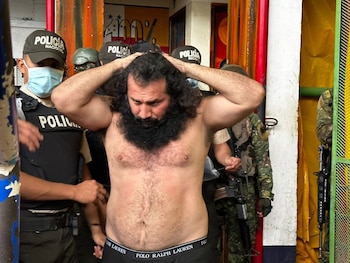
The Rumors Surrounding President Petro and Fito
The recent wave of rumors regarding an alleged meeting between Colombia’s President Gustavo Petro and the Ecuadorian drug trafficker José Adolfo Macías Villamar , commonly known as *Alias Fito *, has incited an intense debate across international media and public opinion in Latin America. This controversy has highlighted the increasing complexity of the drug trade in the region and the dialogue between government officials and notorious criminal organizations.
Initial reports suggested a meeting occurring during President Petro’s official visit to Ecuador on May 24, 2025 , for the inauguration of Ecuadorian President Daniel Noboa . This speculation gained momentum after Petro traveled to Manta, a city notorious for its high crime rates. Manta has historical ties to the Choneros , the criminal group previously led by Fito until his capture, which further fueled the conjecture of a potential encounter between the two figures.
Denial from President Petro and Government Officials
In the wake of the speculation, President Petro categorically denied any connection to the drug trafficker. He remarked, “I have no idea who Fito is. As the president visiting a foreign country, I am always permanently secured, day and night, by the public force of that brother nation. Enough of the falsehoods from the extreme right,” according to *Semana*, a Colombian news outlet.
Supporting Petro’s claims, both the Colombian Ministry of Foreign Affairs and the Casa de Nariño — the presidential palace — stood firm in their rejection of the alleged meeting, stating that these rumors were entirely unfounded. This united front against speculation aimed to restore credibility in the government’s commitment to tackling drug-related issues in the region.
Official Statements from Ecuador’s Government
Further reinforcing the narrative that there was no meeting between Petro and Fito, Ecuador’s Interior Minister John Reimberg addressed the matter in an interview with a local radio station. He explained that following the inauguration ceremony, President Petro went directly to a residence in Manta, where he remained out of sight for two days. Reimberg stated, “I cannot say who he met with during that time. However, I can confirm that there is no evidence suggesting he met with Fito,” emphasizing the lack of substantiation for the rumors.
The swift spread of these allegations, coupled with Fito’s notorious reputation—often drawing comparisons to Pablo Escobar —magnified the speculation. As a fugitive with a $1 million reward for his capture, any insinuation of a meeting with a high-ranking official raised eyebrows and demanded scrutiny.
The Impact of these Allegations on Public Perception
The implications of such rumors could severely damage public trust in governmental institutions, especially given the ongoing challenges faced by Colombia and Ecuador in addressing the drug trade and related violence. Social media platforms have been abuzz with discussions, both supportive and critical, reflecting a deeply polarized environment where political narratives can quickly gain traction.
This situation underscores the intersection of politics and crime in the region and highlights the serious challenges that leaders in Latin America face when confronting both organized crime and public sentiment. The reaction by Petro and Ecuadorian officials serves as a crucial damage control mechanism, aimed at aligning public perception with their commitments to national security and integrity.
As this narrative unfolds, it remains vital for both governments to reassure citizens of their commitment to transparency and security. Engaging in open dialogues with the public, along with collaborating against drug trafficking , will be key in restoring credibility and trust.
In conclusion, the allegations surrounding an alleged meeting between President Gustavo Petro and the notorious drug trafficker Fito have sparked intense debate and concern in both Colombia and Ecuador. As officials have denied these allegations, it’s essential to consider the broader implications of such rumors on public trust in government institutions. The dynamics between politics and crime present ongoing challenges for leaders in the region, making public reassurance of security and integrity more crucial than ever.