
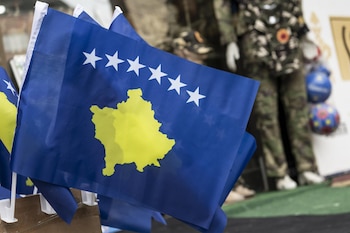
On Friday, the Constitutional Court of Kosovo made a significant announcement, declaring a prohibition on any parliamentary activities until the end of September. This includes the potentially crucial formation of a new government, following a complaint made by the Serbia List , the principal group representing the Serbian ethnic minority in the region.
Implications of the Court’s Decision
The Court’s decision was reached unanimously, and it prohibits “any action of the elected deputies of the Assembly of the Republic of Kosovo” as well as any procedures related to the formation of a new government. The restriction is effective immediately and will remain in place until September 30 . According to the Court’s statement, this precautionary measure aims to “avoid irreparable risks” linked to the creation of government entities and decisions that may contravene the Kosovo Constitution .
During this interim period, the Court will examine the legality of several Assembly sessions that took place in late August, particularly noting the absence of a vice president from the Serbian community as stipulated by existing legislation. This analysis aims to ensure all constitutional protocols are adhered to, safeguarding the rights of minority groups in Kosovo.
The Context Behind the Ruling
This ruling unfolds against a backdrop of political uncertainty in Kosovo. Just a week and a half prior to this announcement, Kosovo’s Parliament had introduced a new Chairman, Dimal Basha , associated with Prime Minister Albin Kurti ‘s party, Self-Determination . This appointment, which followed months of political stagnation, seemed poised to pave the way for the formation of a new government. However, the latest Court ruling has starkly altered this trajectory.
The relationship between Kosovo’s ethnic Albanian majority and Serbian minority has historically been tense, and the Serbia List’s complaint reveals the ongoing complexities and fragilities within Kosovo’s political framework. Minority rights and representation remain critical issues, and the current court ruling exemplifies how legal interpretations can directly influence the political landscape.
The Reaction from Political Leaders
Responses to the Court’s decision have been mixed. Supporters of the Serbia List view it as a necessary safeguard to ensure their representation and rights are maintained. Conversely, many within Kurti’s governing party express concern that the ruling undermines democracy and stalls progress. This division underscores the ongoing struggle for political stability in a post-conflict society, where dissent and differing opinions can escalate into broader confrontations.
Albin Kurti, a long-time advocate for Kosovo’s self-determination and independence, has been vocal about his commitment to building a unified Kosovo. However, the challenges ahead remain significant. The Constitutional Court’s ruling is a reminder that legal frameworks must be diligently navigated to uphold the democratic ideals Kosovo seeks to establish.
The Path Forward
Looking ahead, the Kosovo Assembly faces a daunting task. The upcoming weeks will likely be critical as the Court reviews the legality of prior parliamentary sessions. Political leaders must engage in dialogue to address grievances and work towards a consensus that allows for productive governance and stable institutional development.
The international community watches closely as Kosovo seeks to navigate this tumultuous period. Kosovo’s relationships with neighboring countries and international organizations remain crucial for its future. Support from the European Union and other allies will be vital as Kosovo strives for democratic reforms and socio-economic advancement.
As the proverbial clock ticks down to the end of September, all eyes will be on the Kosovo Constitutional Court’s findings and the political ramifications that will inevitably follow. The upcoming weeks will be decisive in determining whether Kosovo can chart a course towards unity and effective governance or whether it will remain mired in political impasse.
General News – 2