
China’s Solar Energy Leadership and the Industry Crisis
China stands as the undisputed leader in global solar energy production, boasting factories responsible for nearly 90% of the world’s solar cells. This dominance has rendered competitors in Europe and the United States nearly irrelevant. However, the overwhelming scale of production has led to a monumental crisis : plummeting prices, massive financial losses, and a surplus of solar panels far exceeding market demand. As a response, Beijing is contemplating a strategic shock plan to recalibrate its solar industry.
The Solar Bubble Bursts
The recent years from 2020 to 2023 have seen China divert resources from real estate into what the government terms “the three new growth industries”: solar panels, electric vehicles, and battery manufacturing. This shift resulted in a flood of factories and unprecedented production levels. A recent report by the Financial Times indicates that China produced 588 GW of solar cells in the previous year, surpassing the 451 GW in global demand.
The immediate ramifications were stark: significant price downturns led companies to sell below cost to offload inventory, resulting in losses exceeding $60 billion . Notably, the price for polysilicon—a key premium material—dropped to approximately 50 yuan per kilogram. Socially, the impact was equally severe, with the five largest photovoltaic companies reducing their workforces by 31% , equating to about 87,000 layoffs .
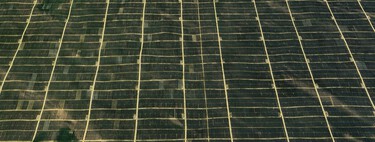
Revitalized Landscapes: One of the most arid areas in China is now green, thanks to a plant with seven million solar panels.
From Success to Collapse
The diagnosis of the industry’s condition is clear: overcapacity and fierce competition. What was once hailed as a successful model— hyper-competitiveness and mass production—has devolved into a detrimental race to the bottom. Analyst Bo Zhengyuan articulated this shift, stating, “The same ‘animal spirit’ that propelled the industry forward is now its undoing.” This transition has been further exacerbated by state strategies, where the central government promoted factories and solar parks as primary growth engines while provincial governments resisted closing underperforming plants due to their dependency on employment figures.
Attempts at self-regulation have also faltered. In 2024, industry giants such as Longi, Tongwei, and Ja Solar attempted to form a “self-discipline” pact to curb production, akin to OPEC’s approach. However, the agreement lacked enforceability, leading many companies to boost output to capture market share, resulting in an unprecedented oversupply and deteriorating balance sheets.
Beijing’s Strategic Intervention
With the sector floundering financially, Beijing has stepped in with a robust intervention strategy. Reports from Bloomberg suggest that significant producers, supported by the state, plan to establish a fund of at least 50 billion yuan (around $7 billion ) aimed at acquiring and closing over one million tons of polysilicon production capacity.
The immediate goal of this initiative is to stabilize prices. Ming Yang, Financial Director of Daqo New Energy , stated that the sector has “already hit rock bottom” and is poised to return to profitability by the end of the year. This optimistic outlook contributed to a surge in solar stocks, with Daqo’s shares climbing 14% in Shanghai.
In parallel, Gcl Technology has proposed shutting down a third of industry production capacity. Their financial director indicated to Reuters that while there are no guarantees about when these reforms will roll out, signs indicate a rise in spot prices following governmental signals to curb “excessively low” pricing.
The Ministry of Industry has also convened executives from 14 companies to advocate for closing underutilized factories , promising stricter controls on new environmental projects and regulations, as highlighted by the Financial Times .
Geopolitical and Technological Implications
This Chinese solar reset carries profound economic , political, and geostrategic implications. According to the Financial Times , the surge in cheap exports has strained relations with the United States and Europe, while simultaneously enabling Beijing to boost sales to developing nations as part of its Belt and Road Initiative .
<pDespite the challenges, the sector continues to prioritize technological innovation. In the first half of 2025, the six largest companies invested an impressive 3.4 billion yuan in research and development, employing nearly 17,000 individuals in this area. Remarkably, the conversion efficiency of solar cells has improved from 20% to 30% in just five years, according to a UBS report cited in British media.
Nevertheless, there’s an evident paradox: analysts contend that the capacity reduction required for profitability demands cuts of 20-30% , a move that clashes with the interests of provincial governments reliant on employment and investments, complicating the execution of proposed reforms.
The Contradictions of Solar Leadership
China has rapidly established its solar hegemony through speed, scale, and cost efficiency, but it now finds itself navigating the consequences of these very strategies. The country is at a crossroads: continue with an open policy that jeopardizes its solar champions or enforce a painful adjustment through factory closures and price stabilization.
In no other sector does China exert such dominance , as noted by economist Alicia García-Herrero in the Financial Times . Recognizing this, Beijing appears inclined to implement a strategic reset of its solar industry, highlighting the necessity of preventing what was once its most promising narrative from becoming another cautionary tale of excess.