
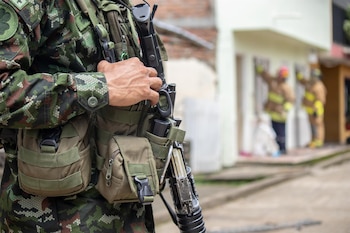
Brutal Attack on Soldiers in Putumayo: A Disturbing Incident Amidst Anti-Drug Operations
On the afternoon of September 3, 2025, a shocking incident unfolded in the small village of Siloé, located in the Villagarzón municipality of Putumayo, Colombia. During an army operation targeting drug trafficking , two soldiers were brutally attacked with gasoline while executing their duties.
The operation, executed by the 27th Brigade of the National Army, intended to dismantle a clandestine laboratory involved in the production of coca base paste . The mission aimed to curtail the drug trade , which has plagued the region for decades and fueled ongoing violence. However, the soldiers’ presence triggered a violent response from a group of civilians, allegedly coerced by local drug trafficking gangs.
Now you can follow us in Facebook and in our WhatsApp Channel
Upon learning about the military’s operation, a mob, allegedly manipulated by the CDF Border Command and the National Coordinator of the Bolivarian Army , launched an assault against the soldiers. In a horrifying act, they drenched a sergeant and a soldier in gasoline and set them ablaze. Quick-thinking fellow soldiers managed to intervene, evacuating the injured personnel to a medical facility in the city of Florence, located in Caquetá province, for emergency treatment.
In response to these shocking events, the Ombudsman’s Office issued a statement condemning the attacks against the Armed Forces. Their public condemnation highlighted the severity of the attack and expressed outrage over the violence that has become increasingly prevalent in regions battling drug-related crime .
“The Ombudsman’s Office categorically and energetically rejects the events that occurred in the Siloé village, in Villagarzón (Putumayo),” the statement read. It continued by detailing the circumstances: “Reports indicate that during military operations, civilians, pressured by commands from the CDF Border, set fire to two members of the National Army, causing them severe burns.”
Additionally, the statement from the Ombudsman’s Office urged the National Government to reconsider any ongoing peace negotiations with such violent criminal organizations. “We strongly advise the Government to halt any peace processes with illegal armed groups until there are explicit commitments regarding the repudiation of these violent actions and assurances against future incidents,” it emphasized.
The incident adds to a long list of violence against soldiers and law enforcement agents operating in drug-trafficking hotspots across Colombia. Despite the government’s efforts to negotiate peace with various armed groups, events like this raise significant questions about the sincerity of these organizations and their willingness to engage in non-violent dialogue.
The Colombian government faces immense pressure to restore order in these regions, particularly those with a strong drug-trafficking presence. Violence against public servants only complicates an already challenging situation, requiring more substantial and urgent responses from authorities. As discussions around military operations and peace agreements continue, it remains crucial for the government to ensure the safety of its personnel and the communities affected by narcotics-related violence.
As the Colombian public continues to grapple with the implications of both drug trafficking and armed conflict, this incident serves as a stark reminder of the challenging landscape that law enforcement must navigate. The tragedy not only impacts soldiers and their families but also reverberates throughout communities trying to break free from the cycle of violence and fear.
In conclusion, the attack on the soldiers in Putumayo has raised significant alarm over the escalating violence in Colombia’s fight against drug trafficking. It reflects the ongoing tensions between military forces and armed gangs, complicating efforts towards peace and stability in the affected regions. The call from the Ombudsman’s Office for caution in peace negotiations highlights the intricate balance that must be maintained to ensure justice, safety, and the potential for lasting change in Colombia’s tumultuous landscape.