
The Rise of Chinese Vacuum Robots: A Game-Changer in the Industry
In the segment of vacuum robots, the iRobot Roomba once ruled the market with an iron hand. However, recent developments have reshaped the landscape, with Chinese manufacturers emerging as the new power players. This shift not only signals intense competition but also represents a significant transformation in how these smart devices are perceived and integrated into households around the world.
What Happened?
According to recent data from the IDC consultancy, the first quarter of the year saw the first four global vacuum robot manufacturers hailing from China. This astonishing revelation indicates that these companies have successfully dethroned the traditional market leader, iRobot , which has long been synonymous with robotic vacuum cleaning.
The market trailblazers now include Beijing Roborock Technology (19.3% market share), Ecovacs Robotics (13.6%), Dreame Technology (11.3%), and Xiaomi (9.9%). Together, these companies commanded a whopping 54.1% of the total units distributed in that timeframe, showcasing not just a consolidation of market power but a notable increase from the previously reported 47.2%.
iRobot Sinks
In stark contrast, iRobot is experiencing a significant decline . Last year, they held the top spot in distributed units, but their market share has plummeted to just 9.3% . This decline is accompanied by a staggering 30.6% drop in global sales compared to the same period in 2024. The brand that was once synonymous with robotic cleaning is now facing uncertainty, especially after Amazon attempted to buy the company for $1.4 billion , which is now a fraction of its former value.
The Aspiring Robots are Fashionable
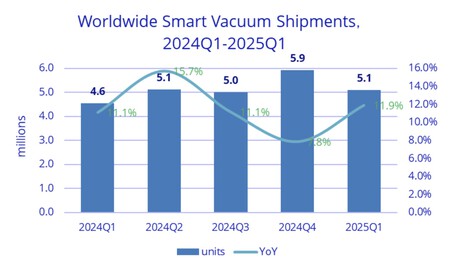
The rise of Chinese robots is also supported by a positive global trend. The first quarter of this year saw 5.09 million units distributed , marking an 11.9% increase over the same quarter in 2024. This growth indicates that consumers are increasingly leaning toward these innovative solutions for home cleaning.
And the Commercial War, What?
Interestingly, China’s leading market players have benefitted from a rather unexpected aspect: the United States remains their largest consumer. The ongoing trade war and tariffs haven’t had a significant impact on this booming segment. Export tariffs on these products have been reduced to 30% , although negotiations between the two nations continue, with a deadline for any resolution set for November 10 .
Fierce Competition in China
Inside China, competition is incredibly intense. Analysts like Claire Zhao from IDC note that local manufacturers struggle to make substantial profits due to the fierce competition. New entrants, such as DJI —renowned for its drones—are also transitioning into the vacuum segment with robots that leverage air navigation technology. Additionally, Narkal Robotics , a startup from Shenzhen, raised $100 million in April from investors like Tencent, underscoring the flurry of investment and innovation in this space.
Roborock, The Market Leader
Roborock has emerged as the market leader, announcing a significant increase in revenue from international markets. Their revenues for the first half of 2025 have surged by 79% compared to the same timeframe last year, achieving $1.1 billion . This remarkable growth can be attributed to enhanced sales channels and an expanded geographic footprint.
Ecovacs Follows Closely
In the second position, Ecovacs has also seen impressive results, with sales experiencing an 86.5% growth in the second quarter compared to 2024. This growth is largely fueled by the demand for robots outside of China and the opening of new production lines to meet that increasing demand.
Innovation at Its Core
One of the standout features of the Chinese vacuum robot market is its commitment to innovation . Manufacturers continuously introduce new models and technologies. For instance, Ecovacs has launched models like the X11 , equipped with advanced mopping systems and corner-cleaning technology, priced at $840 in Shanghai but reaching $1,500 in the US , a price significantly impacted by tariffs. Roborock is also not resting on its laurels; its R&D division has grown by 73.5% in the past year, now employing 1,364 individuals focused on enhancing product capabilities.
With rapid advancements, fierce competition, and a proactive approach to breaking into new markets, it’s clear that the vacuum robot industry is undergoing a critical shift. As Chinese manufacturers continue to innovate and meet global demand, they are not just challenging the status quo but are rewriting the rules of the game in the smart home appliance sector. Growing acceptance and market diversification show that these products are not just a trend but a vital part of modern home technology.