
Javier SánchezEnviado especial Nueva York
Enviado especial Nueva York
Actualizado

Enviado especial Nueva York
Actualizado
Every Grand Slam is distinct, characterized not only by the players but also by their training environments . At Wimbledon , practice courts are secluded, accessible only to players and their teams. In stark contrast, at the US Open , training courts are lively, bustling with fans, music from nearby bars, and the whirring of cameras surrounding the athletes.
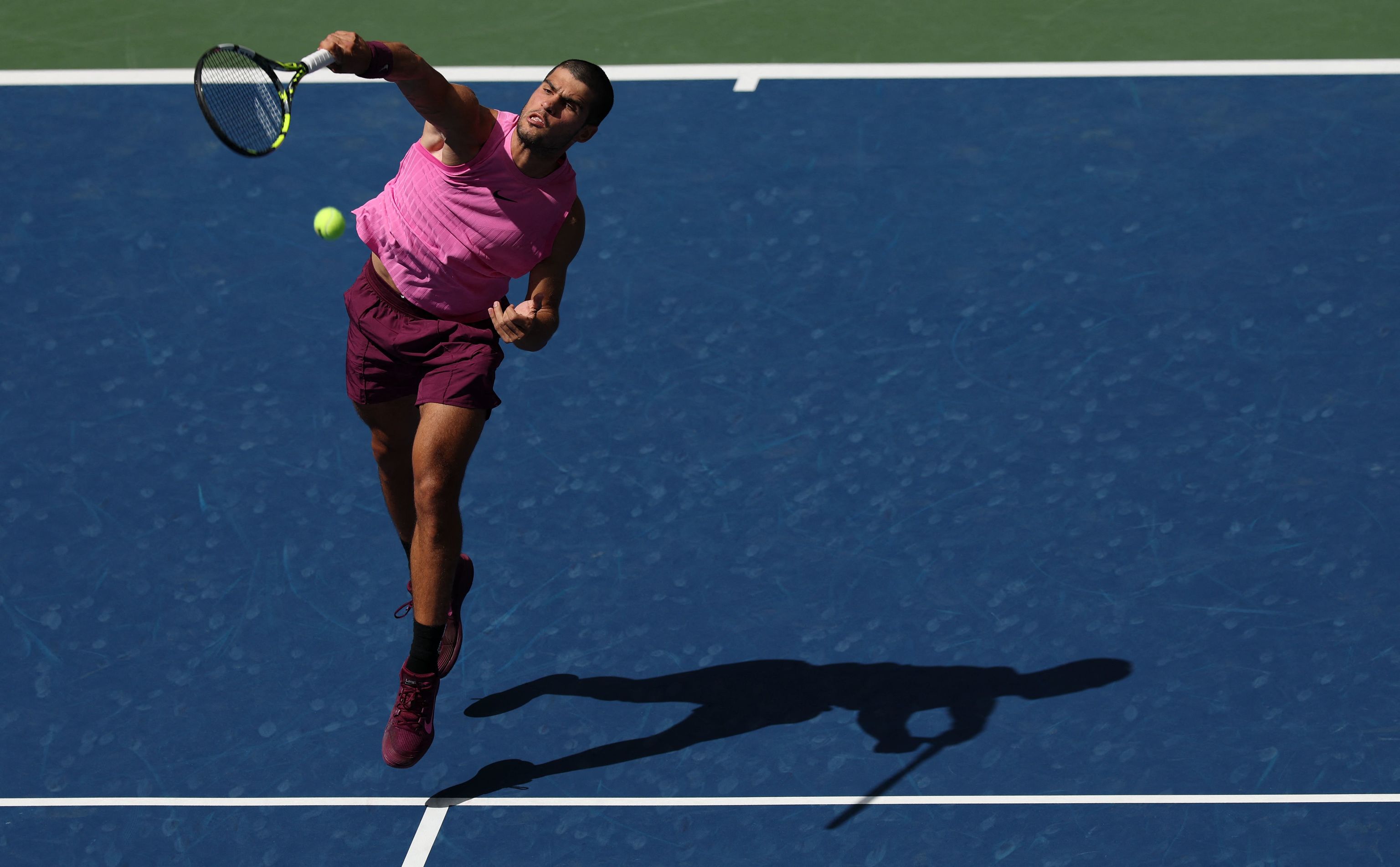
During his training on Wednesday, just a day before his semifinal match against Novak Djokovic , Carlos Alcaraz earned roaring applause while practicing with his brother Álvaro . However, there was a moment of intense silence, a collective breath held as Alcaraz unleashed his serve. The sound echoed across the court, signifying not just power but an elegant harmony that underscored his mastery. Questions linger: has Alcaraz transformed into a serving specialist ?
So far in this Grand Slam, Alcaraz’s serving stats have been nothing short of impressive. Out of 69 service games, he has dropped just one, a solitary slip against Luciano Darderi while managing a knee issue. While his serve may not be the fastest—reaching a top speed of 212 km/h, placing him 31st in that regard—it’s arguably the most effective. Only Giovanni Mpetshi Perricard , a towering figure at 2.03 meters, surpasses Alcaraz’s first serve success rate. In comparison, before his quarterfinal match with Lorenzo Musetti , Jannik Sinner had already conceded three breaks and displayed lower percentages overall.
CLIVE BRUNSKILLGetty Images via AFP
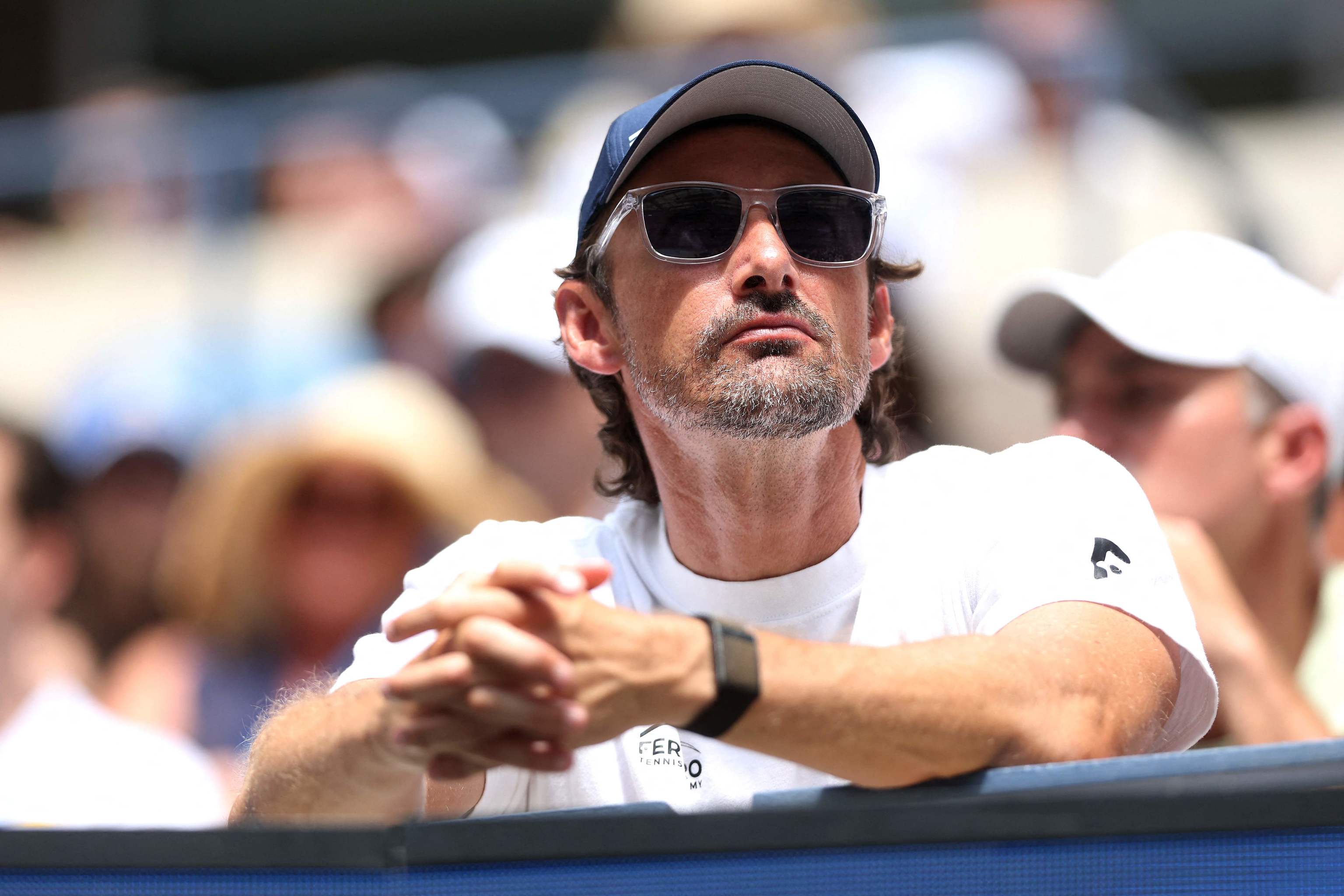
“This is a result of years of hard work,” claims his coach, Juan Carlos Ferrero , responding to questions from EL MUNDO during a press interaction in New York. “We’ve been fine-tuning small details and now Carlos feels very comfortable with his serve. He’s found his rhythm, and both his arm and wrist are fluid,” analyzed the coach regarding Alcaraz’s progress.
Three years ago, when Alcaraz won his first Grand Slam at the US Open, his serve was viewed as a critical flaw. During challenging matches from the round of 16 against Marin Cilic , he faced numerous breaks, making it necessary to push through to the fifth set. “His serve leaves much to be desired,” remarked expert Andy Roddick at the time. However, even then, Alcaraz and his team were actively working to improve.
The most noticeable change now is the fluidity of his serve. In 2022, Alcaraz often halted his serving motion, but by 2023 and 2024, he refined his approach to a single pause between flexion and extension. This season, he has adopted a continuous motion. Further adjustments include a straighter back, a looser grip on the racket, and increased separation of his right arm from his body.
With extensive winter training alongside Samuel López , who now assists Ferrero, Alcaraz has experienced fluctuations in his serve percentages throughout the year, ultimately culminating in his current excellence. For instance, during his second-round defeat at the Miami Masters 1000, his serve was a key concern. The subsequent clay-court tour deemed service less crucial, while his confidence on grass and hard courts has now surged.
MATTHEW STOCKMANGetty Images via AFP
“Now he has a lot of confidence, and it becomes self-reinforcing,” Ferrero concluded. “If you’re not being broken, you feel more secure, and that security translates into better serving. Against Novak, as well as players like Jannik, this will be a crucial weapon. Facing such challengers, securing free points is vital.”