
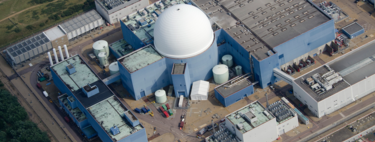
The Economic and Political Dimensions of Nuclear Plant Closure in Spain
The shutdown of nuclear power plants in Spain is not merely a political decision; it poses significant economic challenges that the nation must navigate. The dismantling bill and the management of radioactive waste have now exceeded 20.3 billion euros, igniting a complex debate involving energy companies and the government. This situation underscores the intricacies of transitioning to a sustainable energy framework while grappling with the legacy of previous energy policies.
According to a report from Enresa, the public company responsible for dismantling, the projected costs have reached a staggering 20,367 million euros. This amount largely reflects the dismantling of the reactors—tallying nearly 17,520.5 million euros. On the other hand, managing the waste and spent fuel, often referred to as the “electric rate,” adds about 2,846.8 million euros to the overall bill. Other activities, such as managing the Enusa fuel factory in Salamanca, complete this substantial financial obligation.
The financing mechanism for these operations relies heavily on contributions from the electricity sector, which accumulated 8,677 million euros by the end of 2024. Notably, this figure follows a 30% increase in the valuation rate since July the previous year. However, this fund covers only 43% of the planned costs, leaving an alarming gap of 11,690 million euros that still needs to be financed.
In late 2023, a pivotal change emerged with the approval of the 7th General Radioactive Waste Plan (PGRR). This new framework marks a significant shift away from the originally proposed Centralized Temporary Warehouse (ATC) project in Villar de Cañas. Instead, the plan emphasizes independent temporary stores (ATI) at each nuclear facility, awaiting the deep geological storage (AGP) to become operational by 2072. The PGRR now extends its forecasts to 2100, delaying the total closure of the nuclear park until 2035, with the Trillo and Vandellós II plants as the last to close. Legal provisions require an annual review of these forecasts, adjusting costs in line with inflation and new technical conditions.
The Clash Between Electric Companies and Government
Leading energy firms, notably Iberdrola and Endesa, have voiced their concerns regarding the current operating cost structure, deeming it untenable. Both companies have filed lawsuits against the 30% increase in the Enresa rate, claiming substantial compensation while urging the reopening of the closure calendar. They argue that an extension on the useful life of reactors could alleviate pressure on the electrical grid.
A report by the consultant EY, mentioned by Nuclear Forum, illustrates that Spain faces the highest nuclear fiscal burden in Europe, with costs amounting to 27.3 euros per megawatt-hour in specific encumbrances. This reality places Spanish companies at a distinct competitive disadvantage against their counterparts in other countries.
Conversely, the government maintains a firm stance, asserting that the costs associated with dismantling and waste management will not be shifted to consumers. Sara Aagesen, the Minister for Ecological Transition, has outlined three conditions for any potential extension of the nuclear plants’ operational lives: no added costs for citizens, guaranteed supply security, and strict compliance with the Nuclear Safety Council (CSN) standards.
Joan Groizard, Secretary of State for Energy, encapsulated the government’s perspective: “They want part of the dismantling costs to be paid among all, and we will not transfer it to the whole citizenship.” This ongoing tension reveals broader questions about energy strategy in Spain.
Looking Ahead: Uncertainties and Future Plans
The financial landscape for nuclear plant closures remains fraught with uncertainties. The situation in France serves as a cautionary tale; in 2025, the Andra agency revised the cost of their AGP, estimating between 26,100 million and 37,500 million euros—a shocking potential increase of up to 60% compared to 2016 figures.
In response, Enresa has prepared the 9th R&D Plan (2024-2028), allocating 31 million euros for research aimed at developing containers, confinement materials, and methods for recovery of fuel. While this budget may seem modest compared to the billions at stake, it plays a crucial role in preparing for the future AGP of 2072 and reducing long-term risks.
Spain also faces its unique timeline within a European context. Countries like France, Sweden, and Switzerland are pushing to extend the operational life of their reactors or even invest in new projects. In stark contrast, Spain’s PGRR pursues a progressive closure plan without any scheduled extensions.
Amidst these challenges, a broader debate looms regarding the stability of the electrical system. This past summer revealed a paradox; while solar energy production hit record highs across Europe, skyrocketing prices were reported due to inadequate storage and the reliance on gas during nighttime hours. In this scenario, nuclear energy has been a stabilizing force, but its eventual departure only postpones inherent issues related to costs and the management of waste.
The core dilemma remains: can Spain effectively transition to a fully sustainable energy grid before needing to eliminate nuclear power? The government posits that the answer lies in accelerating the adoption of renewables, storage solutions, and interconnections. Conversely, energy companies contend that extending nuclear operations is vital for ensuring grid stability and cost-effectiveness.
In navigating these vastly different approaches, Spain finds itself at a critical crossroads with the future of its energy landscape hanging in the balance.