
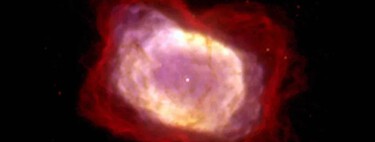
The Groundbreaking Discovery of Capers-LRD-Z9: A Glimpse into the Universe’s Past
The James Webb Space Telescope (JWST) has continuously astounded the astronomical community with its discoveries, pushing the boundaries of our understanding of the cosmos. The latest breakthrough, involving the discovery of Capers-LRD-Z9—the most distant black hole observed to date—challenges long-held beliefs about the universe and provides insights that may help answer some of astronomy’s most perplexing questions.
The Distant Black Hole: Capers-LRD-Z9
Capers-LRD-Z9 is located a staggering 13.3 billion light years away, allowing astronomers to observe it as it existed just 500 million years after the Big Bang. The implications of discovering such a massive black hole this early in the universe’s history are profound, fundamentally altering our understanding of how black holes grow and evolve.
The Method of Discovery
Finding such a distant object is no simple feat. Astronomers utilized data from the Capers (Candels-Aea Prism Epoch of Reionization Survey) program, specifically designed for exploring the universe’s farthest reaches. The research team, led by Anthony Taylor, emphasizes the significance of this finding: “When looking for black holes, this is the farthest that can be reached in practice. We are really expanding the limits of what current technology can detect.”
Confirming a Black Hole’s Existence
Using spectroscopy, a technique that analyzes light based on different wavelengths, astronomers were able to identify signs of an active black hole. They searched for specific evidence: gas moving at extreme velocities. When viewing a black hole, gas moving away appears red-shifted, while gas moving towards us appears blue-shifted. The NIRSpec Spectrograph on the Webb managed to detect a remarkably wide hydrogen emission line, confirming the presence of a significant gravitational force stirring the gas around it at speeds reaching 3,500 km/s.
More Than Just a Black Hole
Initially, scientists identified Capers-LRD-Z9 as a single point of intrigue in Webb’s images. However, it turned out to be part of a new class of objects known as Little Red Dots (LRDs). These galaxies existed within the first 1.5 billion years of the universe and are characterized by their compact size, brightness, and notably red appearance.
This unexpected discovery caught the attention of Steven Finkelstein, a co-author of the study, who stated, “They didn’t look anything like galaxies seen with Hubble.” This finding sheds light on two prominent mysteries in the field of astronomy.
The Brightness of LRDs
The unusual brightness of these galaxies suggests an unexpected number of stars for such an early universe epoch. The study confirmed that the luminosity stems from a supermassive black hole that is actively consuming surrounding matter. As this black hole devours material, it generates intense heat and light, resulting in enormous brightness.
The Distinct Red Hue
Another intriguing aspect of Capers-LRD-Z9 is its color. The most plausible explanation for its redness is that the black hole is enveloped in a dense, neutral gas environment. This gas cloud absorbs blue light while allowing red light to pass, giving the entire galaxy its characteristic color. Researchers plan to verify this through comparisons with other similar celestial objects.
An Enormous Black Hole
One of the most startling aspects of Capers-LRD-Z9 is its size. Estimates indicate that its black hole could possess a mass of up to 300 million solar masses. To put this in perspective, this black hole could represent over 4.5% of the total mass of its host galaxy, significantly surpassing the average of 0.1% found in contemporary galaxies.
Questions About Its Growth
The sheer size and mass of Capers-LRD-Z9 leads to a critical question: how could it have grown so rapidly and to such an extent? This discovery challenges existing models of black hole development in the early universe. Finkelstein summarizes the implications: “This adds to the growing evidence that primitive black holes grew much faster than we thought were possible. Or they began being much more massive than our models predict.”
Exploring Theoretical Models
Scientists have proposed two competing theories to explain the nature of Capers-LRD-Z9. The first suggests that the black hole originated not from a star but from the direct collapse of a primordial gas cloud, giving it a head start in mass accumulation. The second theory posits that it developed from one of the universe’s earliest massive stars, rapidly consuming material at a Super-Eddington rate, thereby exceeding established theoretical limits.
The Future of Black Hole Research
As more observations from the James Webb Space Telescope are conducted, researchers anticipate unraveling the secrets that Capers-LRD-Z9 holds. As Anthony Taylor notes, “We had not been able to study the early evolution of black holes until recently, and we are excited to see what we can learn.”
The discovery of Capers-LRD-Z9 not only expands our knowledge of the universe but also compels us to reconsider foundational concepts in the field of astronomy. As the James Webb Space Telescope continues its explorations, we eagerly await further revelations that may reshape our understanding of cosmic evolution.