
Understanding the Ongoing Conflict in Ukraine: The Zaporiyia Attacks
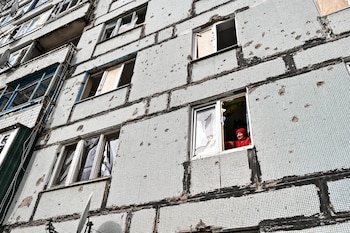
On Monday, the ongoing conflict between Russia and Ukraine escalated as attacks by the Russian army in the Zaporiyia province led to tragic consequences. Authorities confirmed that at least two individuals lost their lives as a result of the bombardment in the small town of Omelnik , situated within the Polyhivski district. Reports from the governor of Zaporiyia , Ivan Fedorov, indicated that the victims were a couple, underscoring the civilian toll of a conflict that continues to ravage families and communities.
Governor Fedorov conveyed his sentiments on social media, emphasizing the brutal nature of these attacks by labeling Russia a ” terrorist state. ” His comments resonate strongly within a broader narrative that has emerged throughout the war, as Ukrainian officials repeatedly highlight the targeted assaults on civilians and infrastructure in regions heavily impacted by the conflict.
Zaporiyia , along with Donetsk , Lugansk , and Jersón , is one of the four provinces that Moscow has declared as annexed following its aggressive military campaign initiated in February 2022 . This annexation—a move condemned by the international community—follows the earlier seizure of the Crimean Peninsula in 2014 . Despite these declarations, global leaders continue to reject the legitimacy of Russia’s territorial claims, increasing diplomatic pressure aimed at holding the Kremlin accountable for its actions.
The Zaporiyia province itself is significant not only for its strategic location but also because it houses one of the largest nuclear power plants in Europe. The potential risks associated with military operations in such proximity to nuclear facilities have raised alarms about safety and environmental consequences, further complicating an already dire situation.
As the conflict rages on, humanitarian issues continue to mount. Civilian populations are increasingly trapped in a cycle of violence, with many lacking access to necessary resources like food, water, and medical care. The consequences of this humanitarian crisis are dire, pushing local and international organizations to provide assistance wherever possible, albeit under increasingly perilous conditions.
Reports suggest that displacements are rampant, with thousands fleeing their homes in search of safety. Many are undergoing difficult journeys to reach neighboring countries or safer areas within Ukraine. The plight of the displaced adds an additional layer of urgency to resolving the conflict through diplomatic means.
Ukrainian armed forces have made considerable efforts to reclaim occupied territories, but the battle is fierce. The resilience of Ukrainian troops is being tested daily as they face not only Russian soldiers but also significant weaponry, including artillery and airstrikes. Experts note that the international community’s support , encompassing military aid , financial assistance , and humanitarian relief , plays a crucial role in sustaining Ukraine’s defense efforts and countering the aggressions of the Russian army.
In the wake of Monday’s attacks, calls for accountability and justice continue to grow. Activists and politicians are urging international bodies to take stronger actions against Russia, advocating for investigations into potential war crimes. The United Nations and other global entities are tasked with the difficult role of mediating peace while navigating the complex landscape of international laws and territorial sovereignty.
The situation in Zaporiyia serves as a tragic reminder of the ongoing suffering inflicted by war. As the conflict continues, the attention of the world remains focused on the resilience of a nation fighting for its sovereignty and the urgent need for a peaceful resolution. Every life lost is a stark reminder of the urgent imperative to find pathways to peace, justice, and stability in a region fraught with turmoil.