
The Airbus A380 was born as a huge dream , almost a declaration of intentions of the European industry in front of the Boeing’s historical domain. It was the passenger plane bigger in the world with two full decks, space for bars and suites, and a silence in the cabin that turned the flight hours into a different experience. For Airbus, the program was not just a commercial project; it was tangible proof that Europe could stand up to the United States in the field of civil aviation, raising a colossus capable of marking a significant change in the skies.
Initially, it succeeded. Each A380 landing turned an airport platform into a spectacle. Thousands flocked to see that giant of 73 meters long and 24 meters high , a flying wonder that cast a shadow resembling a building on the tarmac. It was a continental pride, an engineering triumph , and a symbol of what could be achieved when various countries aligned resources, knowledge, and ambition. Yet, this pride soon coexisted with an uncomfortable question: How could a plane that seemed perfect experience such a short operational life?
The Dream of the Global Hub and the Change of Market Direction
When Airbus conceived the A380, it did so under a clear premise: the future of aviation would gravitate towards increasingly saturated megahubs . Their strategy leaned into a “Hub-And-Spoke” model, wherein passengers would converge at large airports before distributing on connecting flights. The A380 was to be the key piece of that puzzle: a gigantic plane capable of reducing congestion by transporting more than 500 people at once. In theory, this business model was sound. Airbus estimated that over 1,000 units of these very large capacity aircraft would sell in the following two decades. However, reality unfolded differently: The market fragmented towards smaller airplanes with more frequencies, undermining the very foundation that justified the A380.
Moreover, a technical revolution altered the rules of the aviation game. Advances in long-range bimotor aircraft meant that almost any intercontinental route could be serviced by just two engines. Models like the Boeing 777 and subsequently the Boeing 787 proved that similar autonomy could be achieved as a four-engine aircraft, but with less consumption, lower maintenance costs, and increased operational flexibility. Consequently, while the A380 was efficient per seat in high-occupancy situations, it depended on filling hundreds of seats to be truly profitable. In a market that preferred frequent flights with smaller planes, the A380 began to lose relevance.
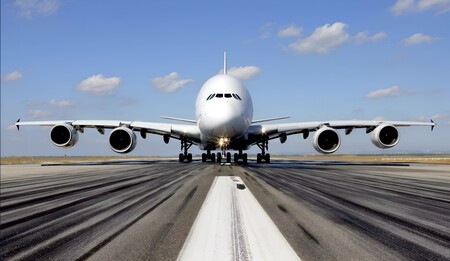
Infrastructure also worked against the A380. It was classified under the F Code (65-80 m wingspan), obligating many airports to invest in specific gates, double catwalks , and adapted taxiways. The A380’s compatibility manuals detailed these demands. For major hubs like Heathrow or Dubai, such investments made sense; for others, these requirements were often difficult to justify. Even in equipped airports, turnaround times remained more complex than with smaller aircraft, which further lowered efficiency against more adaptable models. Thus, the aircraft that was destined to be the undisputed king of the skies ended up as an occasional visitor to a limited number of global airports.

Operational economy posed another challenge. With occupancy rates nearing 100%, the A380 presented a competitive cost per seat, but whenever demand dipped, the model became a financial burden. Additionally, its cargo space flexibility lagged behind that of competitors like the 777-300ER and A350-1000, which optimally combined passenger and freight capabilities. In practice, while the A380 proved a technical marvel, it remained vulnerable to demand fluctuations and other external factors beyond airlines’ control.
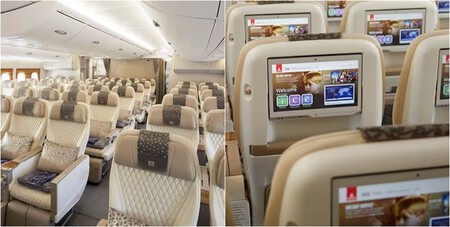
Despite these difficulties, the program persisted thanks to a lone supporter: Emirates Airlines. They made the A380 their flagship, accumulating over a hundred units. However, this dependency proved detrimental. In 2019, Emirates significantly reduced its A380 orders, pivoting to the A350 and A330neo. Airbus officially acknowledged this shift with a stark admission: without Emirates, there weren’t enough orders to sustain production. The decision was final: on February 14, 2019, the A380’s production was announced ceased, and the last unit was delivered in 2021. The two-deck giant concluded its story with merely 251 copies manufactured, a far cry from initial projections.
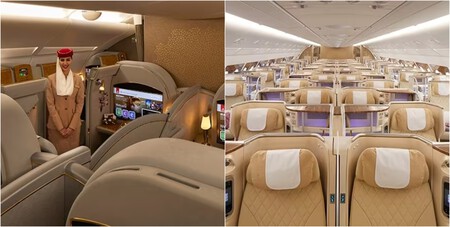
The outcome produced an obvious paradox. Passengers adored the A380; its flight experience was unparalleled, and its presence generated excitement wherever it landed. However, airlines generally viewed it as a liability on their balance sheets. Liquidity problems in the second-hand market confirmed this: The first A380 returned by Singapore Airlines ended up being scrapped for parts, a strange fate for such a young aircraft.
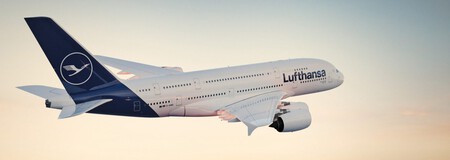
The outbreak of the pandemic in 2020 appeared to seal the fate of the A380. Many airlines retired it to extended storage , and some even announced their final withdrawals. However, the resurgence of international demand and delays in deliveries of newer wide-body aircraft, like the Boeing 777X, altered this narrative. Emirates invested billions into refurbishing its fleet, introducing new cabin designs, while Lufthansa reactivated some units. Airlines like Qantas, Singapore, and Etihad also awoke parts of their A380 fleets. The aircraft found a renewed purpose, operating in high-demand routes and at slots-constrained airports; however, its long-term future remains uncertain.
The A380 is not alone in navigating these treacherous waters. The Boeing 747 , historically the epitome of the “Jumbo Jet,” also saw its production line closed. The difference lies in the fact that the 747 has found a more robust niche in the cargo market, thanks to the cargo capabilities of the 747-8F. Passenger versions, however, are fading, with only a few units remaining in the fleets of airlines like Lufthansa and Korean Air, whose days also appear numbered. The transition is underway: newer generation bimotor aircraft such as the Boeing 777X and the Airbus A350-1000 now fulfill the roles once occupied by these iconic giants.
The Airbus A380 stands as a pinnacle of engineering and a testament to European industrial collaboration but also serves as a cautionary tale. The market analysis fell short, the flexibility of bimotor aircraft emerged victorious, and dependence on certain key clients became an insurmountable risk. The largest passenger aircraft in history will be remembered as a marvel that likely did not find its place at the right time. Although it will continue flying in the hands of Emirates and other airlines for some years, the lesson catalyzed by its journey is already clear: in modern aviation, size is not everything.
Images | Airbus | Engine Alliance
In Xataka | South Korea no longer wants to ask for permission in air defense: his bet is called KF-21, and is almost ready for real action