
The very high productivity of Vaca Muerta, a geological formation of “unconventional” hydrocarbons with its epicenter in Neuquén, led Argentina to achieve record-breaking oil production figures. In July, the country reported an impressive 807,127 barrels per day —the highest output since 1999 , according to recent data released by the National Ministry of Energy. This development signifies a notable triumph, surpassing the last record set during Carlos Menem’s second presidency and closing in on the all-time high of 853,829 barrels per day , achieved in May 1998 .
Remarkably, production in July was up 17.9% compared to the same month in the previous year. Vaca Muerta alone contributed 508,800 barrels per day , accounting for nearly 63% of Argentina’s total production and a staggering 96% of Neuquén’s oil output. Additionally, the region broke records in natural gas production, exceeding 159 million cubic meters per day —a 10.5% increase from the same month in 2024. This surge can be attributed to enhanced transport capacity, notably the completion of compressor plants on the Perito Moreno gas pipeline , which had previously constrained Vaca Muerta’s production capabilities. The “Shale Gas” segment from the Neuquina formation contributed an impressive 91 million cubic meters , equating to 57% of the gas produced across all of Argentina’s gas basins.
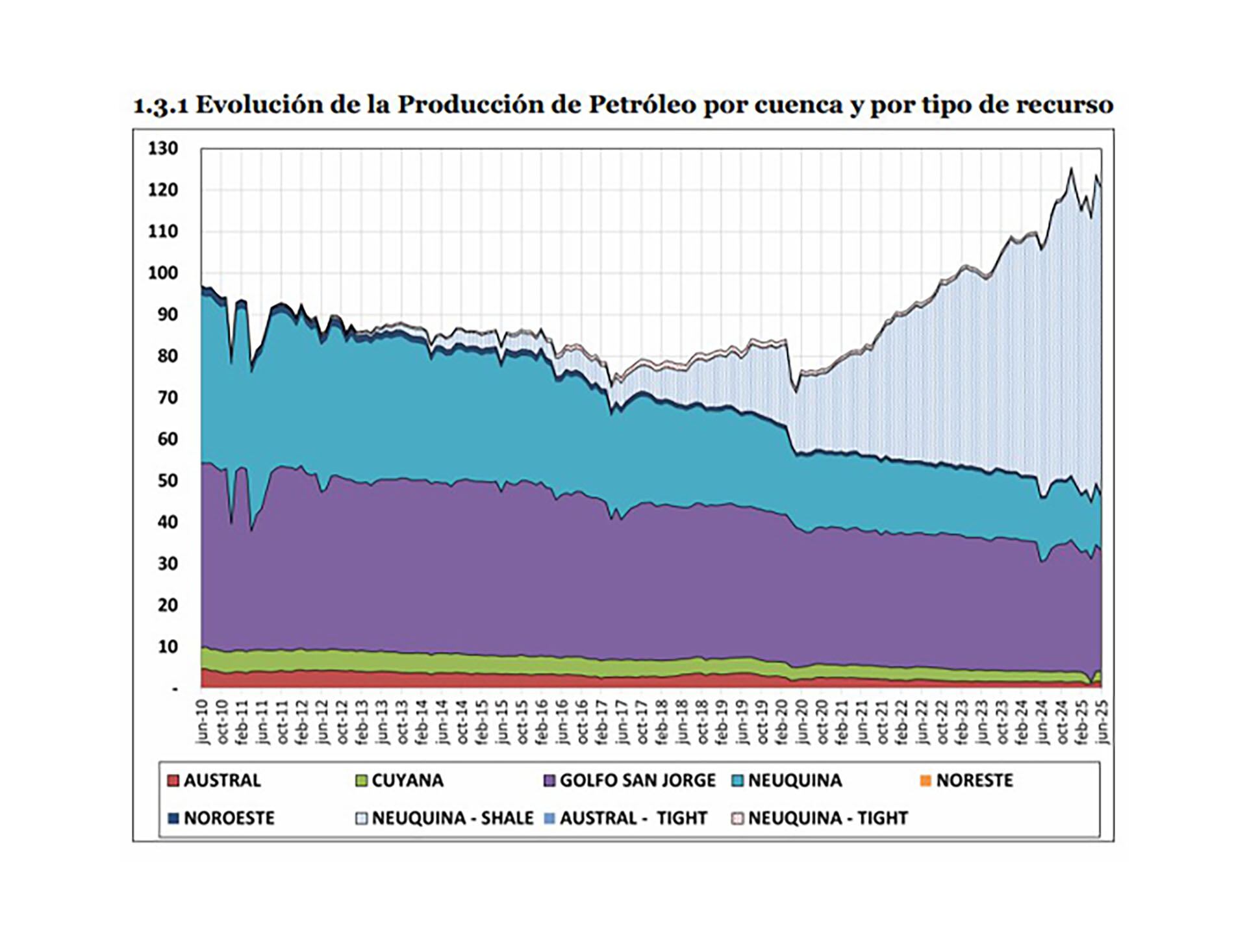
Graphic representations illustrate the robust performance of the “unconventional” sector as conventional gas and oil production undergoes a steady decline. The Institute of Energy of the Universidad Austral provided a monthly report illustrating the increasing dominance of the Neuquina basin in the country’s hydrocarbon production landscape over the past 15 years .
This remarkable achievement can be traced back to the extraordinary productivity of the Jurassic-era geological formation initially described by American geologist Charles Edwin Weaver in 1931 . The ongoing exploration and extraction efforts have significantly contributed to Argentina’s commercial surplus. According to a report from an economy and energy consultancy, Argentina’s total exports rose 4.6% in the first seven months of the year, while imports surged 31.7% . The resulting surplus stood at USD 3,751 million , based on the latest figures from INDEC . Particularly noteworthy is the rise in energy exports, which increased by 8% , while imports for this sector fell by 23% , leading to an impressive energy balance of USD 3,959 million . Without this energy trade surplus, Argentina’s overall commercial balance would reflect a deficit of USD 208 million within the same period.
For the first time in this century, in July, oil production exceeded 800,000 barrels per day , marking a monumental shift from the dominance of conventional production methods seen in the late 20th century.
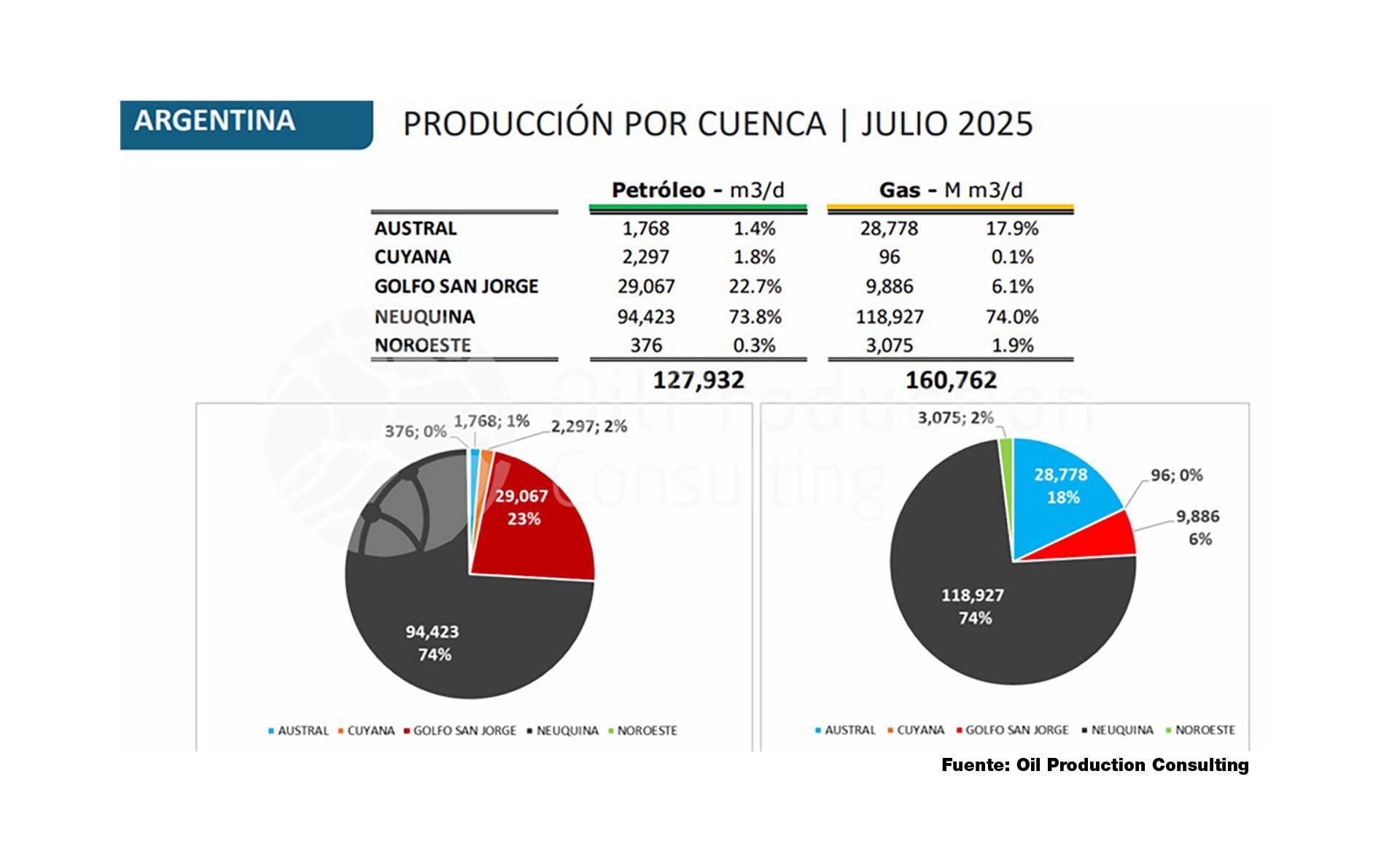
Recent data from OIL PRODUCTION CONSULTING , based on the Ministry of Energy’s figures, showcases the dominant role of the Neuquina basin in hydrocarbon production. While other basins, such as Austral for gas and San Jorge Gulf for oil, contribute to production, their impact pales in comparison to Neuquén’s contributions. Over the last decade, the emergence of Vaca Muerta has effectively counterbalanced the decline of conventional production methods, pioneering an increase of over 1,000% in the unconventional sector since 2015 . This remarkable growth has also led to significant increases in oil royalties for the province of Neuquén , generating fiscal income exceeding USD 4 million per day for the region.