
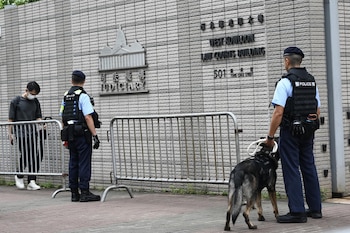
The trial against the former magnate of the Hong Kong media Jimmy Lai , accused of conspiring with foreign forces and publishing seditionist material , has reached a critical juncture. On Thursday, the case was seen for sentencing after the conclusion of final arguments from both the Prosecutor’s Office and Lai’s defense team before the West Kowloon court.
Overview of the Trial
Judge Esther Toh announced, “We will inform the parties (of the verdict) in due course,” following the final allegations that commenced on August 18 . The trial had originally started in December 2023 , although it faced multiple delays due to various factors, including severe weather conditions and medical issues affecting the accused. Lai’s health, particularly a heart problem, had postponed proceedings.
Allegations Against Jimmy Lai
The Prosecutor’s Office alleges that Lai, who has been in pretrial detention for over four years since his December 2020 arrest , utilized the newspaper he founded, the Apple Daily , to spearhead a campaign against Beijing and to rally for international sanctions against the Chinese government. The charges focus on allegations that Lai conspired to solicit foreign intervention regarding Hong Kong’s political situation during the height of pro-democracy protests.
Defensive Claims and Context
In his defense, Lai acknowledged that during a significant meeting in July 2019 , he had asked then-Vice President Mike Pence for support regarding the protests occurring in Hong Kong. However, he clarified that he “never” requested Pence to impose retaliatory measures against China or its territorial authorities. Lai firmly claims that his intentions were purely for the sake of democracy and freedom of expression in Hong Kong.
Political Implications
Lai is not only a businessman but also a political figure deeply involved in organizing the substantial protests of 2019 . These demonstrations highlighted the increasing sovereign ambitions of Beijing over Hong Kong, undermining the territory’s autonomy guaranteed under the “one country, two systems” framework. Lai’s case has drawn international attention, spotlighting the contentious issue of freedom of speech and human rights in the region.
Controversial Background
Throughout his career, Lai has been a staunch critic of the Chinese government’s policies and has faced various forms of intimidation and legal challenges. Currently, he is already serving a sentence for a fraud case, which he alleges is yet another facet of the ongoing political persecution against him. He argues that the Hong Kong government is using the legal system as a tool to silence dissent, aiming to instill fear among those who oppose Beijing’s increasing grip on the territory.
Global Reactions and Future Outlook
The international community is watching this trial closely, as it raises significant questions about the future of freedom of the press and civil liberties in Hong Kong. Many human rights advocates and foreign governments have expressed concern over the charges against Lai, perceiving them as part of a broader strategy to curb dissent and repress opposition voices. The outcome of Lai’s trial may set a crucial precedent for future media freedom and the protection of political dissent in Hong Kong and beyond.
As the world watches these events unfold, the implications of Lai’s trial extend far beyond his individual case, potentially shaping the landscape of freedom in Hong Kong for years to come. From media freedoms to civil liberties, the verdict will undoubtedly carry substantial weight in defining the future of Hong Kong’s democratic aspirations and its relationship with mainland China.