
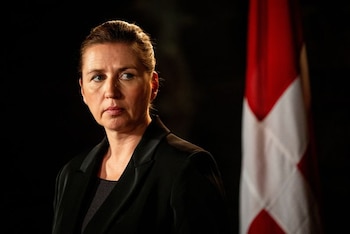
The Prime Minister of Denmark recently delivered a long-awaited apology to Greenland regarding a scandal involving Danish doctors who placed contraceptive devices in women, some as young as 12 years old. This practice persisted for decades, often without informing patients about the procedures. Many only discovered years later that they had been subjected to such treatments when facing serious health complications, with some women becoming infertile for life.
This deeply troubling scenario is infamously known as the “Spiral case”, referencing the shape of the intrauterine devices used. It remains a painful emblem of what many in Greenland view as generations of abuse by Danish authorities. Denmark has colonial roots in Greenland, having occupied the island for over three centuries. Today, it remains a Danish overseas territory. During her statement, Prime Minister Mette Frederiksen recognized the historical context, stating, “We cannot change what has happened. But we can assume responsibility. Therefore, on behalf of Denmark, I want to apologize.”
Additionally, she mentioned that an independent investigation initiated in 2022 is approaching completion, highlighting that the government is aware of “other dark chapters that involve systematic discrimination against Greenlanders.”
Prime Minister Frederiksen’s apology extended to other grievances related to Denmark’s colonial past, although she did not elaborate on specific issues. The predominantly indigenous Inuit population of Greenland had long sought such an apology. However, the response from local leaders was one of dissatisfaction. “It’s too late and it’s not enough,” said Jens Frederik Nielsen, Prime Minister of Greenland.
Following the apology, several Greenlandic politicians shifted the conversation towards reparations. With Denmark assuming responsibility, they now demand compensation for the women affected. “It’s time for Denmark to pay,” urged Mute B. Egede, the former Greenland Prime Minister and a current member of Parliament.
The involuntary sterilization campaign began in the 1960s and impacted thousands of women in Greenland, gaining wider awareness only recently. At that time, Danish doctors oversaw the Greenlandic healthcare system and implemented surgical procedures aimed at controlling the island’s birth rate through the insertion of intrauterine devices.
While the campaign reportedly saw its end by the 1990s, numerous women have come forward to recount that they were still subjected to forced contraceptive measures after that period.
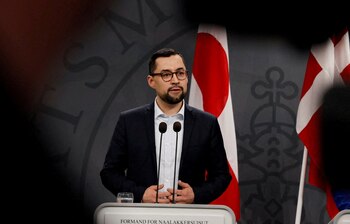
In a poignant statement, the Greenlandic government also issued its apology, taking responsibility for cases of forced contraception that occurred after 1991, when the Greenlandic health system became semi-autonomous. “We apologize to those who have been subjected to procedures they did not request nor have control over,” said a statement from Nielsen, Prime Minister of Greenland.
One of the many individuals affected, Uullat Bach, 63, a retired teacher from Nuuk, shared her painful experience. At around 13, she underwent involuntary placement of an IUD. Following intense pain, she was hospitalized, during which the doctors removed an infected device. “That was when I learned that they had put it on me,” she recalled. Years later, the physical ramifications of the procedure manifested when her attempts to conceive were thwarted due to scarring from the device. “I feel recognized; instead of staying silent, they have acknowledged the harm done,” she expressed. “This is a great day for me.”
© The New York Times 2025.