

O2’s Strategic Shift: The End of 300 Mbps Plans
This week, O2 has made a significant change that, while seemingly minor, highlights the operator’s evolving strategy in the competitive telecommunications landscape. The removal of the 300 Mbps plan from its catalog marks the end of an era for O2’s pricing strategy. With it goes the option for consumers to secure a fiber and mobile package for just 30 euros per month . This removal signals a shift that could have ramifications across the market.
Goodbye to 300 Mbps
In a move that has left many surprised, O2 has discontinued its 300 Mbps fiber combined with two mobile lines, offering 10 GB and 30 GB respectively. The only remaining option for consumers wanting this speed was the 300 Mbps fiber combined with a mobile plan featuring 50 GB for 30 euros per month . However, this option also met its end this week, leaving customers with no choice but to opt for faster speeds.
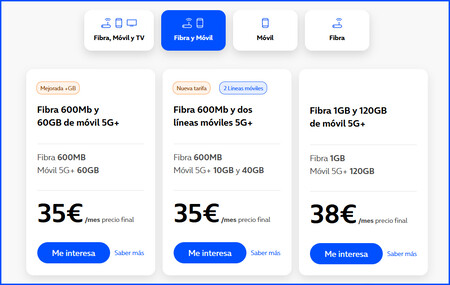
As of now, the minimum speed offered by O2 has risen to 600 Mbps . This means that whether consumers are interested in fiber alone or a fiber and mobile combination, the old 300 Mbps option is gone for good. O2’s remaining plans now reflect 600 Mbps or 1 Gbps , aligning more closely with services provided by Movistar.
Higher Entry Prices
With the elimination of the previous 30-euro package , the least expensive fiber and mobile combination available from O2 is now 35 euros per month . At this price, customers have a couple of options:
- 600 Mbps + 60 GB mobile.
- 600 Mbps + Mobile 10 GB + Mobile 40 GB .
While these offerings provide significantly higher speeds and increased data compared to the now-removed plan, many users may still prefer the more affordable 300 Mbps option. The removal of the entry-level plan often results in consumers facing increased costs for essential services, which is not ideal for anyone looking for value.
No Price Increases in Sight
For its customer base, O2 reassures users that it intends to keep prices stable, pledging not to increase them or alter plan conditions unless it results in automatic without cost improvements. This means if you had subscribed to the now-defunct plan, you can continue to enjoy 300 Mbps at the same price.
Competition Maintains 300 Mbps Options
O2 remains a significant player in the market, not just for Telefónica but for the entire Spanish telecommunications sector. When O2 initiates changes, other operators often follow suit. However, there are still several providers offering 300 Mbps options at competitive prices:
- Digi offers a package of 300 Mbps + mobile 25 GB for 13 euros per month in their coverage areas.
- Lowi has a couple of combined plans with 300 Mbps fiber for 30 euros per month —one featuring a 50 GB mobile line.
- Pepephone also provides a 300 Mbps + mobile 50 GB option for 30 euros per month , but its strategy is often reflective of O2’s.
- Moremobile maintains a 300 Mbps + mobile 40 GB plan priced at 29.90 euros per month .
Shifting from Low Cost
Since its launch, O2 has delivered competitive pricing, notably undercutting its parent company, Movistar. Many had expected a more aggressive stance from Telefónica in terms of pricing after O2’s release from certain regulatory obligations. Thus, the recent moves from O2 have taken many by surprise.
Now, securing fiber and mobile services from O2 starts at 35 euros , distancing the service from the low-cost sector dominated by some competitors. This decision appears rational within O2’s broader pricing framework but could alienate potential customers seeking budget-friendly options.
With Murtra at the helm, the future direction for O2 may hint at refining its brand to distance itself from ‘low-cost’ associations, favoring a focus on quality over budget.
As O2 navigates this strategic change, it will be essential for the company to maintain its appeal amidst growing competition while ensuring customer satisfaction remains a priority.