
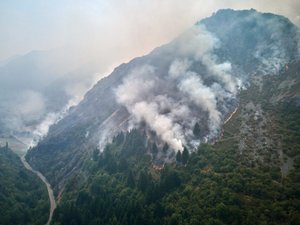
The forest fires that have struck the western regions of Spain are starting to stabilize, according to the country’s civil protection authorities.
Over the past 48 hours, a large number of residents have been able to return home, although many villages remain evacuated. The situation regarding the fires in Spain seems to be evolving towards a resolution. Virginia Barcones, the Director General of Civil Protection, stated during an interview on public television, TVE, “There is not much left and the end is getting closer.” This positive sentiment, however, is tempered with caution as officials continue to monitor the conditions closely.
A Searing Heat Wave
The fires initially broke out during an exceptional heat wave that persisted for sixteen days, with temperatures soaring to 40 °C across the nation, and even reaching 45 °C in certain southern areas. Regions such as Galicia, Castile-et-León, and Estrémadure were particularly affected. These extreme weather conditions created a volatile environment, facilitating the rapid spread of the flames.
Despite the stabilization efforts, caution is paramount, as Barcones reminds citizens, “Even if the general feeling is to improve, we must make a last effort to put an end to this terrible situation.” The message is clear: optimism must not lead to complacency. As soon as one fire appears to be under control, another may ignite, posing renewed risks to residents.
The Current Situation
As of now, eighteen forest fires remain active, with seventeen classified as being in operational situations level 2—a classification that indicates a significant risk to both populations and properties. Particularly concerning is the Iguena fire, located in Castile-et-León, which authorities have flagged as “particularly worrying.”
Several key factors—wind, temperature, and humidity—have recently contributed to slowing the fires’ spread. Officials note a slight increase in temperatures, but insist that it is nothing compared to the earlier heat wave. “We observe a slight increase in temperatures, but nothing like it compared to the heat wave that we have suffered,” Barcones remarked, emphasizing the need for sustained vigilance.
Firefighting Efforts
Firefighters across the affected regions are working tirelessly to extinguish the blazes that have already charred more than 350,000 hectares and claimed the lives of four individuals. Despite their valiant efforts, the recurring issue of political accusations has emerged. The People’s Party has been vocal in criticizing the national government, claiming that it has not provided the “requested resources” necessary for effective firefighting operations.
In a parallel situation, Portugal has dealt with its own catastrophic fires, losing around 60,000 hectares to flames. Thankfully, the nation has also seen a reduction in fire activity recently. However, tragedy struck when the Portuguese presidency announced the death of a firefighter from injuries sustained while battling the flames in Sabugal.
Moving Forward
The landscape of both Spain and Portugal is marked by devastation from these forest fires. Yet, amid this destruction lies a collective hope for recovery and rebuilding. The communities affected will undoubtedly need time to heal and reconstruct their lives, but they are resilient.
One crucial lesson from these tragic events is the pressing importance of preventive measures and resource allocation in managing forest fire risks. Climate change has made wildfires more frequent and severe, and as conditions continue to shift, it is imperative that governments and communities work together to invest in better firefighting technology and techniques, as well as public awareness campaigns about fire safety and prevention.
As we witness the devastating effects of these forest fires, the need for solidarity, preparedness, and improved infrastructure will be more crucial than ever. Local communities, along with national and international aid, must take actionable steps toward a safer future—one where the threat of wildfires can be managed, and the suffering of those affected can be minimized.
In the wake of this disaster, hope remains strong for recovery and regrowth, but the road ahead will require unity and determination. As the affected areas begin to stabilize, the resolve to improve safeguards against future incidents will be a unifying goal, serving both as a tribute to those lost and a commitment to protect future generations.