
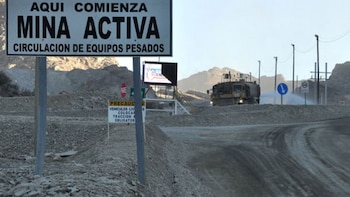
In recent years, Argentina has increasingly recognized the importance of copper in the global economy, particularly in the context of the energy transition . With rising demands for renewable energy technologies , the country is embracing mining as a vehicle for economic growth. As a testament to this trend, eleven out of twenty investment projects that have sought to participate in Argentina’s Investment Incentive Regime for Large Investments (Rigi) are focused on mining, specifically copper production.
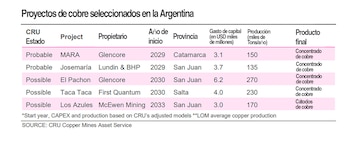
Among these projects, substantial investments are being proposed. For instance, three major contenders including Los Azules by McEwen Copper Inc. , as well as Pachón and Agua Rica led by the Swiss-based Glencore , collectively foresee investments of approximately USD 15,972 million . This figure accounts for nearly half of the total projected investment of USD 33,000 million from the twenty projects that have applied under Rigi.
Additionally, the Vicuña project , a partnership between Canada’s Lundin and Australia’s BHP , anticipates investments of around USD 15,000 million over three decades. This indicative trajectory signifies copper’s rising prominence in Argentina’s economic landscape, with expectations that investments in copper projects could exceed 50% of the total under Rigi by the time the Vicuña project is operational.
The copper boom is further driven by the government’s initiatives, such as the establishment of a 0% export duty on 231 mining products , which notably includes copper. This measure aims to attract direct investments and resultant export revenues, marking a shift in strategy that seeks to enhance the external balance of the country.
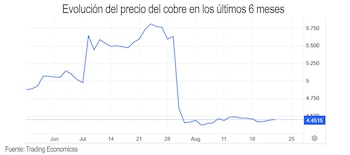
However, the ongoing geopolitical tension and new tariff restrictions may challenge these optimistic projections. Former US President Donald Trump’s policies regarding copper imports have created uncertainty, as they exempt refined copper cathodes from tariffs. This strategic shift complicates market dynamics and carries repercussions for global copper pricing.
In the United States, the introduction of tariffs was aimed mainly at semi-finished products, such as pipes and cables. The investigation into copper imports initiated under Section 232 has led to a substantial increase in U.S. copper reserves, with inventories ballooning by 165% since early February. Analysts have noted that the U.S. is heavily reliant on copper imports to meet its internal demand, with refined copper constituting a significant portion of imports due to heightened needs for electric vehicles and renewable energy infrastructure.

Despite these challenges, the U.S. remains the second-largest consumer of copper globally, second only to China. In 2024, it is estimated that the major copper-producing countries will include Chile and the Democratic Republic of the Congo , followed by Peru and China .
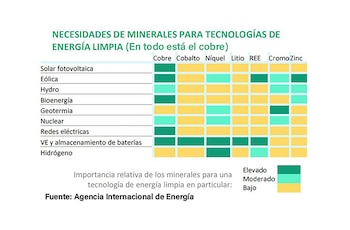
The evolution of Argentine copper mining has taken a promising turn as the market anticipates a potential doubling of global copper consumption by 2040. Supporting this growth is evidence from the International Energy Agency , which underscores copper’s definitive role in the sustainability arc of clean technology .
With an annual production close to one million tons , five prominent copper projects in Argentina could potentially generate revenues of over USD 4,000 million per year between 2031 and 2040 . The overall anticipated investments under Rigi may surpass USD 50,000 million , reinforcing optimistic projections regarding the sector’s economic contributions.
Yet challenges remain. While previously invested primarily in the Vaca Muerta region, the balance has now tipped towards mining investments, with projects such as El Pachón and Agua Rica coming to the forefront. As of now, Argentina’s copper industry awaits recommencement of large-scale operations since the closure of the last operational copper mine in 2018.
The Rigi initiative highlights the potential of significant investments in local mining projects. Currently, notable projects include expansions, exploration ventures, and copper and lithium productions, with total projected investments nearing USD 13,000 million . The trajectory of the copper industry, burdened with historical challenges but buoyed by new investment incentives, indicates a hopeful future for Argentina’s mining sector.