
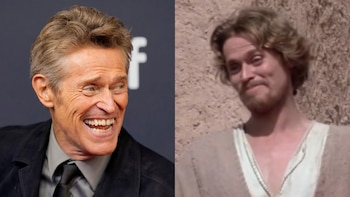
Willem Dafoe Reflects on His Controversial Role in *The Last Temptation of Christ*
Willem Dafoe, now 70 years old, recently had a chance to reflect on his controversial role as Jesus in the 1988 film *The Last Temptation of Christ*, directed by the acclaimed Martin Scorsese. The film was showcased during the Sarajevo Film Festival on August 21, creating a platform for Dafoe to discuss the impact the film had on his life and career.
In an interview with The Hollywood Reporter, Dafoe expressed that he was profoundly “impacted” by the public’s reaction to the film when it was released. Despite ambitious storytelling and artistic merit, the film struggled at the box office, which, according to Dafoe, was surprising considering the cinematic landscape of the time filled with “super-violent movies, pornography, and murders.” He emphasized that *The Last Temptation of Christ* aimed to “deepen the nature of faith,” a narrative shift that some viewers found unsettling.

The Challenges of Portraying a Complex Jesus
As Dafoe reflected on his role, he described *The Last Temptation of Christ* as having “the strongest reaction you can remember.” He acknowledged that it is viewed as one of the most controversial films he has ever participated in. Dafoe noted that a significant portion of the criticism at the time came from individuals who “hadn’t even seen the film.” Their unease stemmed from the portrayal of a more human and existential perspective of Jesus, which provoked backlash from the ultra-conservative right.
The release of the film coincided with a politically charged atmosphere, where critics saw an opportunity to leverage the controversy to challenge Hollywood. Dafoe expressed disappointment over this, saying, “the movie is beautiful.” He felt that the film, which delved into the emotional and spiritual dimensions of Jesus’s journey, deserved a fair chance.
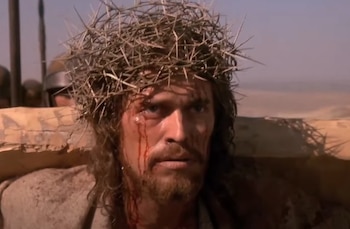
Plot Overview and Cultural Impact
*The Last Temptation of Christ* portrays the story of Jesus of Nazareth succumbing to worldly temptations . After rejecting his divine mission, he lives a life marked by ordinary human experiences—having children and engaging in a romantic relationship with Mary Magdalene , played by Barbara Hershey. This unconventional portrayal ignited considerable outrage, with some branding it “heresy” before many had even seen the film, resulting in “huge protests.”
Dafoe mentioned that discussions regarding the film had taken a bizarre turn, delving into discussions about Jews in Hollywood. This sparked anti-Semitic rhetoric, creating a “snowball” effect that ultimately affected the film’s distribution. Despite a budget of 7 million dollars, it grossed just over 8 million worldwide, reflecting the negative impact of the backlash.
Co-starring significant talents of the era, *The Last Temptation of Christ* features Harvey Keitel as Judas and David Bowie as Pontius Pilate, further emphasizing the film’s stellar casting.

Released on August 12, 1988, under Universal Pictures and Cineplex Odeon Films, the film is an adaptation of the homonymous novel by Nikos Kazantzakis, with a screenplay penned by Paul Schrader. Though it faced considerable backlash from certain segments of society, the film was nonetheless acclaimed by critics who praised its “audacity,” earning Martin Scorsese an Oscar nomination for Best Director.
In reflecting on his experiences with this groundbreaking yet contentious film, Dafoe reveals the complexities not just of his character but also of the societal context in which The Last Temptation of Christ was released.