
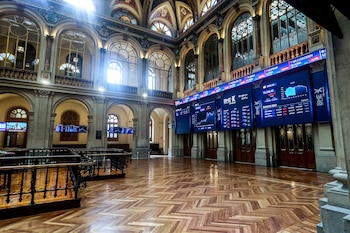
The IBEX 35 has finally closed the session with a slight decrease of 0.08% , leading it to fall below the crucial level of 15,300 integers that it managed to surpass just yesterday. This decrease reflects the current volatility in the European and US financial markets, influenced by recent data and geopolitical events.
Wall Street’s Impact
The opening of Wall Street has not provided the anticipated boost for the Madrid selective or the main European indexes. Aside from London , which advanced by 1.08% , the rest recorded varying degrees of declines. Notably, Frankfurt lost 0.60% , Milan fell by 0.36% , and Paris saw a negligible decrease of 0.08% . Meanwhile, Dow Jones fell by 0.16% , while the S&P 500 dropped 0.46% , and the Nasdaq plummeted by more than 1% during the European session.
Focus on Economic Indicators
Today’s market movements are overshadowed by the upcoming publication of the minutes from the July meeting of the United States Federal Reserve (FED) . This release, scheduled for after the closure of European markets, serves as a precursor to the annual summit of central bankers commencing in Jackson Hole (Wyoming, USA) tomorrow. Investors are keenly anticipating insights into future monetary policy adjustments, which could significantly impact market conditions.
In addition, several crucial macro-economic indicators were released today. Eurostat indicated that the final year-on-year inflation rate for the Eurozone remained unchanged at 2% in July, aligning for the second consecutive month with the medium-term stability target set by the European Central Bank (ECB) . In the broader EU , prices increased by 2.4% , a rise of one more tenth.
Conversely, the UK recorded a Consumer Price Index (CPI) of 3.8% in July, which is two tenths above the 3.6% recorded in June and represents the highest inflation level since January 2024. This indicates a tightening inflationary environment that could influence the Bank of England’s upcoming policy decisions.
Central Bank Updates
Adding to the financial discourse, Christine Lagarde , President of the ECB , has spoken at the International Business Council of the World Economic Forum in Geneva, forecasting a slowdown in the economic activity of the Eurozone in the third quarter. This anticipates the effects of newly agreed tariffs with the US and the normalization of trade flows following measures implemented earlier this year.
Sector Performance in IBEX 35
Amidst this backdrop, the IBEX 35 has seen mixed performance across its constituent companies. The highest increases have been recorded by Redeia (+1.46%), Iberdrola (+1.28%), Repsol (+1.26%), Enagás (+1.25%), IAG (+1.20%), Endesa (+1.18%), and Ivy Energy (+1.18%). These companies are likely benefiting from sector-specific developments and global trade conditions.
On the contrary, the largest descents have been witnessed by Arcelormittal (-2.14%), Fluidra (-1.61%), IAG (-1.60%), BBVA (-0.91%), Santander (-0.80%), and Sabadell (-0.80%). Such declines reflect market sentiment and potential concerns about unique operational challenges within these firms.
Commodity and Currency Movements
In terms of commodities, the price of Brent crude oil , a reference for Europe, increased by 1.58% , reaching $66.83 per barrel. Concurrently, West Texas Intermediate (WTI) crude rebounded 1.52% , settling at $63.30 . These fluctuations in oil prices can be attributed to global supply dynamics and geopolitical tensions affecting energy markets.
On the currency front, the euro against the US dollar is trading at 1.1648 , while the interest required on 10-year bonds continues to moderate at 3.292% . Additionally, the risk premium remains stable at 57 basis points , reflecting the current market confidence.
In conclusion, the current fluctuations in IBEX 35 and other European markets highlight the ongoing challenges posed by inflation, economic forecasting, and geopolitical influences. Investors are advised to stay alert as new data and policy decisions loom on the horizon, potentially shaping market trends in the weeks to come.