
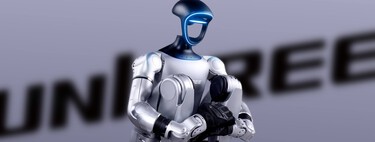
Last weekend, Beijing hosted the first-ever “Olympic Games” for humanoid robots . This event took place in the National Speed Skating Oval, a facility constructed for the 2022 Winter Olympics . Over three days, attendees were treated to mesmerizing displays of football , table tennis , boxing , martial arts , and even athletics tests featuring these robotic competitors.
Participants ranged from private companies across 16 countries to 280 university teams , showcasing the global interest in humanoid robotics. One event that caught international attention was the Unitree robot’s astonishing performance on the athletics track. You can see it in action in this clip:
In this competition, the robots were not autonomous; they were operated remotely by human handlers. This does not diminish the accomplishment of Unitree’s H1 model, which set an impressive speed record by completing 1,500 meters in just 6 minutes and 34 seconds .
The H1 achieved a speed of 4.78 m/s , surpassing the previous record of 3.3 m/s that it had claimed just months earlier. This feat even eclipsed the 2.5 m/s mark held by Boston Dynamics’ Atlas robot. Although this speed pales in comparison to Norwegian Jakob Ingebrigtsen , who holds a record of 3:29.63 , many non-professional human runners would find themselves outpaced by this robotic athlete.
Adding a humorous twist to the proceedings, a moment that generated buzz was when the H1 accidentally ran over an operator from another team. The operator, while controlling their own robot, misjudged the space and ended up colliding with the H1. This incident—the “fun” highlight of the event—adds a layer of intrigue to the serious competition.
While it may be amusing to consider incidents like this, it’s crucial not to overlook the significance of these robotic Olympics. Robots like the H1 utilize artificial intelligence systems and even have internal language models designed for various tasks. However, it’s important to note that the H1 was not fully autonomous in this event, being entirely reliant on its operators for control.
The Bigger Picture: Advancing Robotics
These games not only showcased the capabilities of humanoid robots but also highlighted the technological advancements many countries are making in this field. In particular, China has made it a national priority to lead the world in humanoid robotics. The recent 14th Five-Year Plan outlines ambitious goals aimed at achieving over 20% annual growth in the robotics sector.
This year marked a significant milestone with the introduction of the first national standards for robots in China. These regulations encompass everything from environmental perception to movement control and task execution. To further bolster the industry, the Chinese government has allocated nearly $140 billion for technological startups, cementing Unitree’s position as one of the favored enterprises.
Estimates suggest that by 2025 , China will produce over 10,000 humanoid robots , with specialized educational programs being developed aimed at training these machines in specific tasks like cleaning and manufacturing . The vision is for these robots to execute tasks requiring refined mobility, making them invaluable across various sectors.
In addition to traditional sports, this year’s Olympics featured competitions for medical material classification and cleaning tasks, serving as a platform for companies to demonstrate both their technological capabilities and the increasing specialization of humanoid robots.
China believes that humanoid robots herald the next technological revolution , following the advancements of smartphones and electric vehicles. They are seen as essential tools not only in industry but also in addressing demographic challenges faced by countries struggling to find workers for certain tasks.
Emerging from a fountain of innovation, cities like Shanghai , Shenzhen , Beijing , Suzhou , and Guangzhou are becoming hubs for humanoid robotics research and development. These regions are responsible for the bulk of industry investment and leadership in this rapidly evolving field.
In conclusion, events like the World Humanoid Robot Games serve as much more than just entertaining spectacles; they offer a window into the future of technology where humanoid robots are likely to become commonplace. As these robots begin to coexist with humans—whether as guide robots for individuals with disabilities or in roles performing essential tasks in both homes and workplaces—the promise of a revolutionary change in how we interact with technology continues to unfold. Unitree has already hinted that the remarkable speed of its H1 model has been surpassed in internal tests, foreshadowing even greater advancements to come.
Images | UNITREE