
Political Tensions in the Canary Islands: A Call for Change
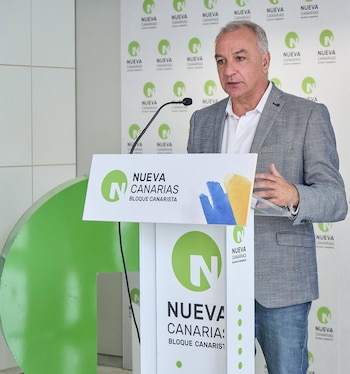
The Canary Islands are currently facing significant political tensions as their local government grapples with ongoing issues related to governance and social responsibility. Recent statements made by the National Secretary of Nueva Canarias-Canarista Bloque (NC-BC), Luis Campos, have brought these challenges into sharp relief, particularly in his criticism of the interactions between Canarian President Fernando Clavijo and the Spanish Prime Minister Pedro Sánchez.
Clavijo’s Meetings with Sánchez: Progress or Protocol?
Luis Campos highlighted that the majority of Clavijo’s requests to Sánchez have been met with rejection not only by the Spanish Socialist Workers’ Party (PSOE) but also by the political partners PP (People’s Party) and Vox. Campos remarked that the meetings, particularly the latest one held on Monday, where the president proposed a ‘Canarian law’ to solve ongoing issues, have become more a matter of protocol than genuine efforts to address the pressing needs of the Canarian people.
He asserted that such meetings lack the intentionality necessary to bring about real change, often serving merely as a facade for political negotiations that do not benefit the islands’ citizens. “These discussions are not translating into fruitful outcomes for the Canarian agenda,” Campos noted in his statement.
Rejection of Proposed Decree Law
The NC-BC leader pointed out that the recent proclamation of a decree law overlooks vital antecedents. Specifically, many of the demands presented to the Congress of Deputies have already been dismissed by Clavijo’s coalition partners, the PP and Vox. Campos firmly stated, “While we will analyze the proposal’s development when the time comes, we will not tolerate any smoke screens that aim to deflect attention from the failures of the political agreements between CC and PSOE.”
In expressing his dissatisfaction, Campos emphasized that the public institutions of the Canary Islands should not be used to save face for political parties engaging in compromised agreements.
Discontent Over Policy for Unaccompanied Minors
Beyond the criticism of political negotiations, Campos addressed another pressing issue— the treatment of unaccompanied minors arriving in the Canary Islands. He characterized the current policy as a significant failure on the part of both the Canarian government and the Spanish administration. This matter showcases the islands’ struggle to manage complex social issues, further complicating the political landscape.
His remarks reflect a broader sense of urgency regarding the local government’s ability to respond to humanitarian issues while also addressing political and economic concerns. Campos believes that mismanagement in handling social challenges undermines governance and diminishes public trust.
Multiannual Financial Framework of the European Union
Looking towards the broader European context, Campos discussed the upcoming multiannual financial framework proposed by the European Union. He aligned his perspectives with those of the Canary Islands government, advocating for Spain’s commitment to maintaining the current status and resisting any attempts at recentralization of resources management. This issue underlines the complex interplay of local, national, and European politics that shape the Canary Islands’ future.
As Campos explains, “It is imperative that we uphold local autonomy in managing resources to effectively address the unique challenges we face in these islands.” His assertion highlights the ongoing struggle for self-governance within a larger national framework.
The rising tensions among political players in the Canary Islands indicate a broader need for unity and collaboration to address pressing issues. As leaders like Luis Campos challenge existing norms and advocate for transparency and genuine dialogue, the future of Canarian politics hangs in the balance. Resolving these tensions will require significant effort, not only from government officials but also from the community itself, to assert the needs and rights of the people and forge a sustainable, prosperous path forward.