
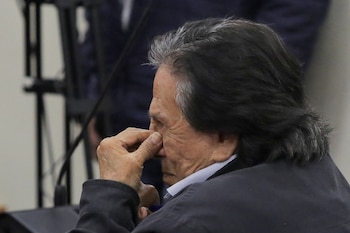
Alejandro Toledo’s Health Crisis: A Call for Medical Attention Amidst Legal Battles
The former president Alejandro Toledo has recently made headlines as he urgently requested a transfer to a specialized clinic in Lima, citing a deteriorating health condition. The request was made to the First National Appeals Criminal Chamber and has sparked discussions regarding both his health and his ongoing legal troubles. Toledo’s health has reportedly worsened over the past days, characterized by intermittent bleeding and severe anxiety.
Toledo, visibly affected and speaking with a tremulous voice, addressed the court during a hearing concerning his appeal against a 20-year and six-month prison sentence. This sentence was issued for his involvement in collusion and money laundering, specifically related to bribes from the notorious Brazilian construction firm, Odebrecht. “Now I am very complicated with health,” Toledo disclosed, stressing that his medical issues did not stem from Barbadillo prison, where he is currently held. Instead, he stated that symptoms surfaced during his time in the USA, before his imprisonment.
During his court appearance, Toledo shared dire health statistics, revealing that he has reached alarming levels of cardiac blood pressure at 190 degrees. He also disclosed a cancer diagnosis, emphasizing that a bleeding process has begun which he described as severe and distressing. He indicated a hefty medication regimen, taking 16 medications daily to address his health issues.
Moreover, Toledo recalled that two years ago, he filed a habeas corpus petition without receiving any response. “I am scared of bleeding,” he expressed. His mention of a recent order from the Constitutional Court seeking his transfer to San Pablo Clinic further highlights his urgent medical needs, which he believes have not been met in prison.
Legal Background: Toledo’s Conviction
Toledo’s case is deeply intertwined with the massive corruption scandal tied to Odebrecht, which has implicated various figures across Latin America. In October 2024, the Second National Collegiate Criminal Court concluded that Toledo favorably influenced Odebrecht’s bidding for segments 2 and 3 of the Interoceanic Highway, a significant infrastructure project connecting Peru and Brazil.
The conviction was grounded in claims that Toledo colluded with the company, accepting bribes amounting to 35 million dollars. Judge Inés Rojas, who read the ruling, highlighted the damages inflicted upon the state due to Toledo’s actions. The ruling described how Toledo allegedly convinced his friend, Josef Maiman, a deceased Israeli entrepreneur, to act as an intermediary to receive funds from Odebrecht through various companies he had created.
This framework of collusion not only led to Toledo’s conviction but also resulted in significant penalties for others involved, including nine-year sentences for two former officials of the Private Investment Promotion Agency (Proinversion) and a 14-year sentence for businessman José Castillo Dibós. Toledo’s conviction marks a pivotal moment in Peru’s ongoing fight against corruption, as he was the first sitting president to ever be convicted in connection to the Odebrecht scandal.
The Urgent Need for Medical Care
The former president has continued to assert his innocence, claiming that he possesses compelling evidence to support his case. “I hope they will resolve my appeal,” he stated, reiterating his concerns over his health. He emphasized the importance of receiving adequate medical attention, especially given his deteriorating condition.
The confluence of Toledo’s health concerns and legal struggles raises significant questions about the treatment of inmates who require specialized medical care. The case has drawn attention not only as a matter of justice but also as a humanitarian issue, prompting discussions about prison conditions and the rights of incarcerated individuals to receive necessary medical care.
As the First National Appeals Criminal Chamber prepares to deliver its verdict regarding the appeal against his conviction, Toledo’s health situation remains precarious. His request for transfer to a medical facility underscores the pressing need for timely and appropriate medical intervention.
With Toledo’s troubling health narrative and its juxtaposition against his legal troubles, one can only hope for a resolution that prioritizes both justice and well-being.
The former president Alejandro Toledo has faced a series of challenges in recent months, primarily focusing on his fragile health condition and ongoing legal battles. As his situation develops, it is clear that both the legal and medical issues surrounding his case deserve careful scrutiny and attention.