
The Enigma of the Mayan Civilization’s Collapse: Unraveling the Secrets of Drought
The saying goes, “the devil is in the details,” and this holds particularly true in the world of archaeology . As experts delve into the enigma of the Mayan civilization’s decline, they continuously seek answers to long-standing questions: Was it changes in trade routes, internal conflicts, or environmental factors, such as prolonged droughts ? Recent studies have shed light on this crisis, confirming that the Maya endured significant water shortages between the 9th and 10th centuries. This revelation comes thanks to an unexpected source: a stalagmite found in a remote Yucatán cave.
Researchers now have a clearer understanding of this pivotal period in history. Archaeologists have provided crucial insights into the reasons behind this grand civilization’s downfall, marking one of the most captivating chapters in Mayan history : the collapse of the classical period. This era, which lasted from the 9th to the 10th centuries , witnessed the gradual abandonment of southern limestone settlements and the shift of the Maya towards northern territories, resulting in the loss of significant political and economic influence.
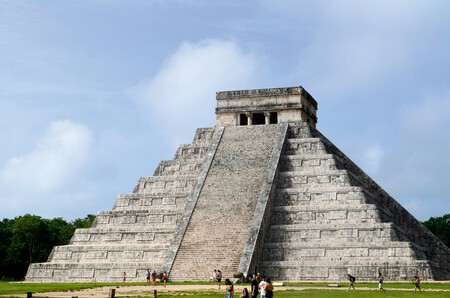
Documenting Drought: New Discoveries from Stalagmites
The research team has discovered that between 871 and 1021 CE , there were up to eight significant droughts in the Yucatán Peninsula. These periods of water scarcity were likely *critical factors* that affected the population. While the duration of each drought varied, experts estimate that the impact of these droughts lasted at least three years per occurrence, with one notably extending for a staggering 13 years.
Defining “extreme droughts” does not imply the complete absence of rain. Rather, it refers to intervals of *at least three continuous years* during which dry seasons were noticeably longer than usual, or in which the wet season might be nearly non-existent. Dr. Daniel H. James, co-author of the study, indicated that this kind of prolonged drought could have had a *devastating effect* on Mayan society , despite their advanced water management practices.
Significance of the Findings
The recent study, published in the journal Science Advances , reveals vital information about the potential role of prolonged drought in the decline of the Mayan civilization . “This period of Mayan history has fascinated us for centuries,” notes Dr. James, emphasizing a growing understanding of how climate evidence merges with archaeological findings to reveal truths about the Maya’s collapse .
While previous research has touched on the effects of drought on the Mayan civilization, the new study distinguishes itself through its *innovative methodology*. Indeed, experts collected samples from stalagmites, which provided insights on annual rain patterns, a substantial advancement over earlier sediment studies. This approach gives researchers a more detailed understanding of the climatic conditions affecting the Maya at specific times, something traditional methods lacked.
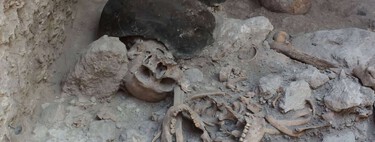
Impact on Mayan Society
The findings align with the inscriptions found at significant ruins like Chichén Itzá , where records become noticeably sparse during drought periods. “While this doesn’t necessarily imply that the Maya left these areas, it signifies that their priorities shifted dramatically ,” Dr. James points out. During those harsh times, the focus may have likely turned to survival rather than monumental construction.
Despite previous hypotheses regarding the decline of the Maya civilization, the new study emphasizes the cumulative impact of severe environmental conditions. Researchers are now equipped to offer more precise climatic data , allowing for a deeper understanding of the *societal consequences of sporadic droughts*, especially in terms of agricultural output.
Advancements in Archaeological Research
What sets this study apart is its innovative use of stalagmites. By analyzing the layers of these formations, scientists isolated data pertaining to both dry and rainy seasons, finally providing detailed insights into annual rainfall variations. This method provides researchers the ability to accurately assess the rainfall during critical seasons—essential for determining crop success or failure.
Such advancements represent a turning point in understanding how ancient civilizations, particularly the Maya , interacted with their environment. The research implies that deeper insights into tropical storm frequencies and other climate patterns may soon emerge, adding additional layers to our comprehension of the Mayan civilization’s collapse .
Final Thoughts
As archaeologists continue to sift through artifacts and remnants of the past, the discovery of detailed climatic records from stalagmites serves as a crucial piece in the puzzle of Mayan history . Understanding the complex interplay between environmental changes and societal evolution will remain a significant area of study. The collaboration of various disciplines, from archaeology to climatology, will ultimately provide not just answers but a more nuanced view of how ancient civilizations adapted, survived, and, eventualy, faced decline.
Images | Álex Azabache (UNSPLASH), Hoyt Roberson (UNSPLASH) and Max Böhme (UNSPLASH)
In Xataka | Archaeologists believed to know the Maya. Until they discovered a city of more than 2,800 years in Guatemala.