
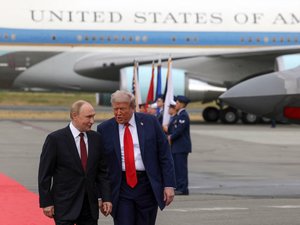
Vladimir Putin has recently found a strategic ally in Donald Trump as the geopolitical dynamics surrounding the war in Ukraine shift following a summit in Alaska. The discussions between the two leaders were prescriptive for Russia, marking a potential turning point in international relations, with profound implications for Ukraine’s sovereignty and global political landscapes.
Key Takeaways from the Summit
Putin successfully persuaded Trump to abandon the idea of a ceasefire, instead advocating for a more comprehensive peace agreement.
While the summit was framed as a diplomatic win for Putin, economic sanctions remain unlifted, with Trump indicating trade discussions are linked to resolving the conflict.
Russian military operations have steadily advanced in Donbass , amidst U.S. calls for Ukraine to reassess territorial negotiations.
In just a few hours, Putin managed to shift the narrative surrounding the conflict in Ukraine. Rather than pushing for a simple ceasefire , the two countries now head towards discussions focused on a peace agreement . This revised stance not only affects Ukraine’s situation but also alters the delicate balance of power between the U.S. and Russia. Putin’s ability to navigate this meeting successfully illustrates his adeptness in international diplomacy, particularly as he emerges from a phase of Western isolation.
The summit—widely reported in Russian state media as a triumph for Putin—was noticeably presented in a manner that highlighted Trump’s role as somewhat beleaguered. American state media portrayed the meeting as an unceremonious capitulation, pointing to the grand gestures such as the red carpet welcome and military escorts by American fighter jets accompanying Putin. Russian officials seized upon these optics to bolster domestic narratives of Putin’s strength on the world stage.
Maria Zakharova, the spokesperson for the Russian Foreign Ministry, remarked on the hypocrisy of Western commentary surrounding Russia’s supposed isolation. “Three years of narratives about the isolation of Russia have been countered by the sight of the red carpet unrolled for the Russian president in the United States,” she commented, capturing the sentiment of triumph felt in Moscow.
Beyond optics, the discussions required a substantial pivot from Trump’s previous stance. Initially advocating for a rapid ceasefire, Trump left the summit signaling a definitive shift in focus towards direct peace negotiations, echoing Putin’s vision. Notably, he advocated that the discussions on ending the war must eschew any previous notions of a mere truce, despite the West’s inclination to favor a ceasefire as a first step.
Economic Conditions and Limitations
Despite these diplomatic overtures, the consequences of the summit on the Russian economy remain ambiguous. While Putin attained some reprieve from sanctions, Trump remained steadfast in linking any trade agreements to a resolution of the ongoing conflict. The summit’s very occurrence could be considered a victory, yet it fell short of delivering the economic reset that Putin desperately seeks as Russia grapples with the fallout from years of sanctions and ongoing military expenditures.
Dmitri Medvedev, former Russian president and close ally of Putin, spoke positively about the chances of restoring U.S.-Russia relations, a sentiment not entirely mirrored in Trump’s stance. The American leader emphasized that any discussions around economic cooperation would be contingent on concrete progress toward a peaceful resolution regarding Ukraine. This implies a highly fragile diplomatic environment where all parties remain skeptical.
Further complicating the scenario, Trump’s comments suggest a potential to exert pressure on Ukraine’s President, Volodimir Zelensky . Trump indicated that the resolution to the ongoing conflict would hinge upon Ukrainian concessions, particularly regarding the recognition of Russian claims in occupied territories. As tensions escalate, Zelensky faces increasing pressure to navigate these demands carefully while ensuring Ukraine’s sovereignty remains intact.
The Situation in Donbass
Discussions are unfolding against the backdrop of Russian troop movements in Donbass , a region of crucial strategic importance to both sides. As Russian forces continue their advance, they threaten cities critical to Ukraine’s defensive posture. Alarmingly, Trump’s endorsement of recognizing these regions as Russian territories could drastically reshape the conflict’s future. Analysts note that such a shift could facilitate negotiations but at an alarming cost to Ukrainian sovereignty.
Kyiv’s rejection of proposals to withdraw from Donetsk and Luhansk regions underscores the complexities of reaching a potential settlement. The crisis perpetuates amidst continued U.S. support for Ukraine, promising security guarantees while also pressuring Kyiv to entertain Putin’s terms. As the geopolitical landscape evolves, it remains vital for Ukraine to stand firm against any semblance of territorial concession.
Overall, the summit in Alaska has unveiled layered complexities in U.S.-Russia relations, particularly concerning the ongoing war in Ukraine. While Putin may emerge with a perceived victory in diplomatic engagement, the road ahead remains fraught with challenges. The interplay between military maneuvers and diplomatic negotiations will be crucial as all parties navigate this precarious terrain.