

Carlos, who prefers to keep his real name private, takes his three children to the Colegio Madrid-Fundación Santa María. This institution follows an educational model aligned with the philosophy of the Institución de Libre Enseñanza. Last year marked their first term at this private school located in an affluent area of the Chamartín district in Madrid, where they aim to significantly limit screen usage until Compulsory Secondary Education (ESO). The family made the switch from a Catholic state school because their eldest daughter, gearing up for fourth grade, was required to study all subjects on a tablet instead of traditional textbooks.
“Having a ten-year-old stare at a screen for five or six hours a day is not healthy. It creates an addiction,” Carlos asserts, firmly believing in the impact of screen time. “Attending Colegio Madrid is a substantial financial investment. Though both of us work, we’re not in a secure financial situation,” he admits.
“But we need to act now. It’s better to prevent addiction at this stage. Children grow up fast, and we can’t correct issues when they’re 15 because it might be too late,” he emphasizes, underscoring that he is not an “Amish regarding technology” since his family does engage with it in daily life.
Carlos explains that they used to pay around 600 or 700 euros monthly at their previous state school for all three children, including lunch and association fees. Now, they are shelling out 1,700 euros without a meal plan—monthly fees at Colegio Madrid range from 580 euros per child in early education to 876 euros in the second year of high school.
If they opted for a public school, they would only need to cover lunchtime costs. In Madrid, the rate stands at 5.50 euros per student per day, totaling roughly 300 euros monthly, along with AMPA fees—usually between 20 and 30 euros a year for each child—and additional costs for extracurricular activities.
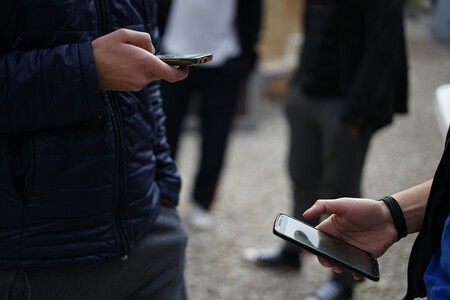
Every school is now accustomed to this scenario. (Unsplash)
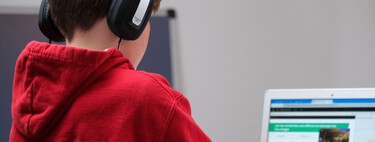
More parents, like Carlos, are worried about screen use in classrooms. Reports such as the one published by El País last May highlighted trends in the PISA report, showing that regions heavily utilizing technology in classrooms—like the Basque Country, Navarra, and Catalonia—have seen a decline in educational outcomes over the past decade.
However, scientific consensus on the effects of screen time in education remains elusive. Regardless, various studies have surveyed children and adolescents across multiple countries without yielding definitive conclusions regarding the impact of digital resources on education.

A contrasting pair of studies presents a snapshot of this ongoing debate. One study published in 2023 by professors from the University of Valencia, highlighted in The Review of Educational Research, concluded that reading comprehension suffers when students engage with texts on screens, particularly in primary school settings.
In contrast, a research piece in The Lancet Regional Health last April, studying 1,127 students across 30 English schools—some where smartphones were banned—found no significant differences in mental well-being or emotional disorders between the groups.
Despite the variability in findings, there is a clearer consensus among healthcare professionals regarding the mental health implications of excessive digital exposure for children and adolescents. A report released by the Spanish Pediatric Association (AEP) in late 2024 warned against the excessive use of screens in youth, linking it to sleep deprivation, changes in behavior, depression, and physical health issues like obesity.
The AEP recommends restricting screen time for children aged 7-12 to less than one hour daily, including schoolwork, and advises zero screen usage for children under six.
The Growing Demand for Screen-Free Schools
As of the upcoming academic year, Carlos’s experience of switching schools should theoretically no longer occur in public or state-supported institutions in Madrid. A decree approved on July 23 mandates the elimination of individual digital devices for students in early childhood and primary education across public institutions.
This regulation specifies that teachers cannot assign homework requiring screen use outside of school and restricts classroom digital device use to shared, pedagogical purposes only.

In the first stage of preschool (up to 3 years), screen usage will be avoided entirely; in the second stage (ages 3-6), shared screen time will be limited to one hour per week . In primary schools, first and second graders will only have one hour weekly, while third and fourth graders will have one and a half hours, and up to two hours weekly for the final two grades.
“In recent years, most new families arriving with young children in preschool are actively seeking screen-free schools,” explains Elena Flórez, director of Colegio Madrid, during an interview in late June while the Madrid decree was still being processed.
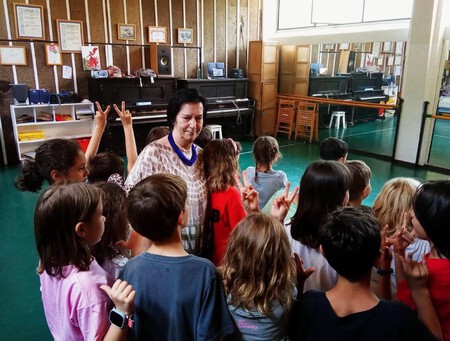
Elena Flórez, director of Colegio Madrid, with a group of students in music class. (Juan Calleja)
At this school, children from families like Carlos’s attend—where both parents work and the family lives primarily in neighborhoods like Chamberí , Chamartín , Centro , and Retiro . “We don’t typically have families with very high incomes; there may be some exceptions, but generally, they are families making a concerted effort because they believe in the project,” Flórez states.
With 900 students enrolled from preschool to high school, Colegio Madrid doesn’t use traditional textbooks. Instead, students create their own handwritten notebooks filled with notes, clippings, or drawings to reflect what their teachers cover in class. Flórez explains that this method encourages attention, organization, research, and critical thinking development.
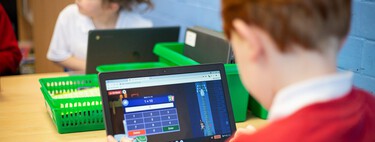
However, the students are not completely screen-free. In preschool, it’s zero screens—no digital whiteboards are used. In primary school, the 22 iPads the school owns are only utilized twice a week for 15 minutes each session for Smart Tik, an application focusing on abstract mathematical concepts.
Once students reach secondary school, they use the computer lab during technology classes and may watch educational films or documentaries in certain subjects. Furthermore, the use of mobile phones is prohibited during school hours; if students bring them, they are deposited in bins upon arrival and returned at the end of the day.
During our tour of the facilities, we visited a technology classroom filled with drones created by ESO students and several music rooms filled with instruments. The director points out how artistic subjects play a vital role in their educational model: “This is one reason why professionals from the film and theater industries send their children here.”
Increasingly Mobilized Parents
In the garden, secondary students rehearse romances they will perform publicly. As the school day nears its end, a young student carries a tray of mobile phones to return them to their owners. “Some first-year secondary students (12 years old) already have cell phones, but over the past couple of years, we’ve noticed that students are generally arriving with fewer phones,” Flórez notes.
The director mentions that some students who commute alone to school carry basic phones without internet connectivity, like the early Nokia models, allowing parents to stay in touch.
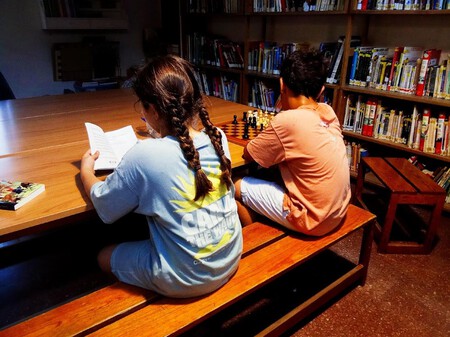
Two children in the library of Colegio Madrid, a private educational institution in Chamartín. (Juan Calleja)
In 2023, a group of parents with children in fourth grade at this school created a WhatsApp group called ‘Minors and Internet.’ A mother, who prefers to remain anonymous, shares that they were concerned about the consequences of excessive mobile usage among adolescents and were anxious about the moment they would need to hand over their children’s first smartphones .
A similar concern emerged among several families in Poblenou (Barcelona), who also began sharing their worries about smartphone impacts on their children through the popular messaging app. This led to the formation of the association Adolescencia Libre de Móviles, active across Spain.
To date, around 200 families have joined the Colegio Madrid group. They have established a “family pact” aiming to delay giving their children smartphones until they are 12 years old. “Another thing is the second year; we’ll see what happens,” comments one mother. “Most of us want to delay it until at least the age of 16, though some parents feel uncertain about achieving this.”
“Let’s postpone it for as long as possible. Ultimately, we’re giving a tool to a child who neurobiologically lacks the capability to self-manage,” argues María Salmerón, coordinator of the AEP’s Digital Health program, responsible for creating guidelines for screen usage in children and adolescents.
<pSalmerón continues, “The prefrontal cortex [the brain region involved in decision-making and emotional regulation] typically matures by age 25. Yet, we expect children to use technology responsibly, manage their digital identities, and differentiate between real and fake information, despite lacking the cognitive maturity to do so.”
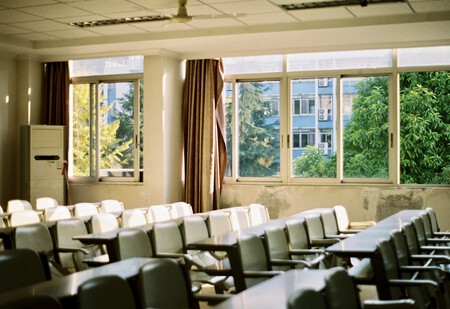
Fully screen-free classrooms have typically been a “privilege” not accessible to all families. (Unsplash)
Before we conclude our discussion, we ask Elena Flórez if she has noticed any differences between students today compared to the pre-smartphone era: “It’s harder to keep a group focused for 30 minutes. Attention spans are shorter, and you must diversify activities to engage them.”
The experienced educator, with 50 years of professional experience, acknowledges that even students at Colegio Madrid face challenges related to mobile addiction and expresses concern about the influence of social media. “They have complicated matters significantly for educators and parents.” Recently, she’s observed a “return of machismo online” mirrored in messages some of her female students encounter.
Waldorf Communities Against Excessive Use
Several years ago, media outlets around the world highlighted how leaders and founders from Silicon Valley tech companies favored Waldorf schools for their children—schools that largely avoid screen exposure. In Las Rozas, Madrid, about 40 kilometers from Colegio Madrid, you can find the Escuela Libre Micael—Spain’s first Waldorf school, now boasting over 77 centers throughout the country.
Established in 1975 by a group of parents and educators, this school embraces an educational methodology initiated in 1919 in Germany by philosopher Rudolf Steiner. Besides minimal screen usage throughout its various stages, this approach focuses on the developmental stages of each child , promoting autonomy in learning, nurturing artistic sensibilities, social expression, and fostering a connection with nature.

This school has about 450 students enrolled through high school, sharing educational principles with Colegio Madrid. Students create their notebooks, generally avoid exposure to screens, and those who possess phones store them in a box upon arrival, only retrieving them at the end of the day.
“In first-year secondary, we have projectors available as teachers may occasionally show films or documentaries. From third year onward, they go to the computer lab to learn programming but without internet access, except for research purposes. At the high school level, students sometimes use their phones for specific subjects when necessary,” explains Alfredo Sánchez, the director and an alumnus of the school.
As students move between classrooms, they’re carrying their wooden chairs and desks to the next year’s class. Walls filled with drawings, filing cabinets, and lots of paperwork characterize the primary education environment.
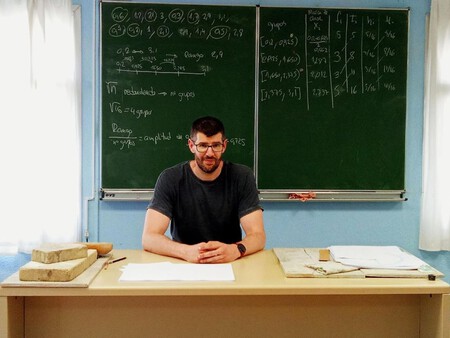
Alfredo Sánchez, director of Escuela Libre Micael, in one of the high school classrooms. (Juan Calleja)
Through the windows of one classroom, you can see a large garden filled with greenery and big trees, while there’s also a vegetable garden. “Children need to observe their environment, and nature is a tremendous learning source. We want to experience it as purely as possible,” explains Sánchez.
“Here, we recognize that society is as it is and that children will encounter stressors inappropriate for their age. That’s why we try to preserve environments suitable for each developmental stage as much as possible,” he adds. Sánchez observes that they notice children returning on Mondays appearing more agitated or distracted depending on their weekend experiences, from spending time in shopping malls to being exposed to screens.
Like Flórez, Sánchez finds that some adolescents demonstrate traumatic behaviors , likely linked to inappropriate online content accessible outside school. Nevertheless, he proudly shares that by fostering critical thinking, he has had students openly acknowledge that prolonged time on platforms like Instagram or TikTok leaves them feeling “unsettled” or somewhat depressed.
“It Changed Our Lives”
Sánchez shares with Flórez the observation that more families are arriving seeking not only a unique educational approach but also an environment for raising their children screen-free “with the support of like-minded parents.” These families come from varied economic backgrounds: some can afford to pay ten times more than the school fee, while others make genuine sacrifices to enroll their children.
Marta Machín is one of the mothers who sends her two children to the school directed by Sánchez. During pandemic months, she had to rely on one of the scholarships offered by the Waldorf institution to assist families experiencing economic hardship. “We were left with nothing,” she shares, sitting at a commercial venue in Las Rozas. She and her husband are self-employed photographers.
Today, their situation is stable: “We pay around 1,000 euros monthly for both kids [the tuition fees are comparable to those of Colegio Madrid], but they don’t stay for lunch,” she notes, explaining how this expense prevents them from saving for a home, forces them to cut back on vacations, and limits their ability to replace their car. Yet she acknowledges that, similar to many families, they are “well above the average” economically when it comes to educational expenses.
They live in a rental property near Las Matas, just a short drive from the school they found years ago when their eldest child—now 11—was unhappy in his public school in Majadahonda after second grade.
“When I came to pick him up, they were watching YouTube videos on a digital whiteboard and were given chocolate cookies. That was their daily routine,” she reflects. “I really didn’t like the screen scenario. I could see it wasn’t benefiting him,” she continues, explaining the moment she realized her son “was not himself”: “When the teachers showed us a video from the year, I felt like I was looking at a different person. He was quieter, timid…”
The sensitivity of her son’s teacher was also lacking, and she was discontent with a strictly worksheet-based teaching approach. They decided to look for schools offering alternative pedagogies, seeking an environment where he could be more free , leading them to discover the Escuela Libre Micael . Years later, they see their son thriving and growing in a way that nurtures his authentic self, “He has become someone who confidently engages with others and goes everywhere,” they testify.
“The Waldorf community has changed our lives,” she maintains. Besides avoiding screens, the choice of educational model notably influenced their decision to relocate: “I believe the absence of screens in education has led to a simpler lifestyle, reducing stimuli and increasing our contact with nature.”
However, like Carlos, the father sending his children to Colegio Madrid, she is not against technology per se. Instead, she advocates for a sensible and balanced approach that considers developmental appropriateness. Her children, aged eight and an older son, have access to two old iPads devoid of internet browsing capability, online gaming apps, or YouTube. They use them occasionally for podcasts about history, music, or stories. Whenever they request her phone to send messages, she accommodates them.
When asked about their child’s next transition into a more conventional educational setting, she admits to feeling aware that they are “in a bubble that needs to expand, especially in preparation for university.” “But not the full-on bombardment of high school, you know?”
In summary, the journey through educational funding and screen exposure demonstrates the evolving parental sentiments around student engagement in learning. With new regulations and ongoing discussions regarding the role of technology in education, families in Spain find themselves at a pivotal crossroads.