
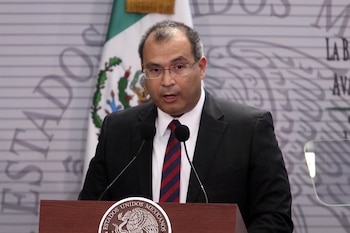
The president of Mexico , Claudia Sheinbaum, made a significant announcement on Thursday regarding a high-profile arrest in the United States. The former general director of Petróleos Mexicanos (Pemex), Carlos Alberto Treviño, was detained amidst an ongoing investigation linked to bribery related to the notorious Odebrecht case. This revelation comes at a critical juncture, highlighting the persistent issues of corruption within the Mexican political landscape.
Details of the Arrest
Sheinbaum confirmed that Treviño’s arrest on Wednesday was part of the wider alerts set forth by the Mexican judiciary. “Yesterday, a former director of Pemex was arrested,” she stated during a press conference. She further emphasized that Treviño would soon be deported back to Mexico, where he will face trial for serious corruption charges . The urgency of this case is evidenced by the extradition request that had been pending for over five years.
The Odebrecht Scandal
The accusations against Treviño primarily stem from the testimony of his predecessor, Emilio Lozoya , who alleged that Treviño received a staggering four million pesos in kickbacks in exchange for granting a lucrative contract to Odebrecht . This contract was aimed at operating a polyethylene plant, a critical component for Petrochemical operations. The revelations have sent shockwaves through Mexican society, revealing long-standing issues of corruption that have plagued the nation at various levels of governance.
Lozoya’s Role and Impact
Emilio Lozoya, who was arrested on February 12, 2020, in Malaga , Spain, serves as a crucial figure in this intricate web of corruption. Following his extradition to Mexico five months later, Lozoya faced multiple charges, including money laundering, bribery , and forming an criminal association tied to Odebrecht. His statements have provided a pivotal basis for launching investigations against several high-ranking officials, including Treviño. The connection between Lozoya and Treviño amplifies the implications of this scandal, revealing a network of corruption that extends deep into Mexico’s political system.
Judicial Proceedings and Future Implications
In light of the recent developments, the Attorney General’s Office (FGR) had previously requested Interpol to issue a ‘red alert’ against Treviño. This indicated the authorities’ determination to address corruption at the highest level. Treviño’s failure to attend a critical court hearing raised further suspicions regarding his potential culpability in various illicit activities, including money laundering and criminal association . Following his arrest, many are questioning the judicial proceedings that will unfold and their impact on Mexico’s reputation concerning governance and the fight against corruption.
The Need for Comprehensive Reforms
The Odebrecht scandal has accentuated the urgent need for sweeping reforms within the Mexican government. As investigations continue, many citizens hope that these arrests herald a new chapter in the fight against corruption. Sheinbaum’s willingness to confront powerful figures in the political sphere represents a commitment towards restoring integrity in governance. The unfolding situation could serve as a blueprint for future reforms aimed at improving transparency and accountability within governmental institutions.
The involvement of high-ranking officials such as Treviño also raises critical questions about the oversight mechanisms in place within Pemex and other state-operated entities. Investors and citizens alike are watching closely as these proceedings progress, hoping for a judicial response that signifies a break from the cycle of impunity that has historically characterized Mexican politics.
As this situation unfolds, the eyes of the international community remain fixed on Mexico. The potential implications for trade, bilateral relations, and investment will likely hinge on the government’s ability to effectively tackle corruption and restore public trust. The coming months will be pivotal in determining whether the recent arrests are just a temporary response to pervasive malfeasance or the beginning of a more profound transformation in governance. With heightened scrutiny both domestically and abroad, the pressure is on for President Sheinbaum to deliver on her promises of accountability and reform.
In conclusion, the implications of these arrests extend far beyond individual culpability. They point to an ongoing struggle within Mexican society to reclaim integrity and trust in public institutions. As the legal battles play out, the hope for systemic change remains alive, supported by an increasingly vigilant populace demanding accountability from their leaders.