
Discovering History: The Restoration of the Parish Church of San Cipriano
The restoration works at the Parish Church of San Cipriano in the Palencia Municipality of Pedraza de Campos have unveiled an extraordinary historical artifact . On August 11, during the careful removal of a 16th-century oil painting depicting the martyrdom of St. Andrew , restorers stumbled upon a hidden sketch. This sketch, executed in tempera, dates back to the same era as the canvas but predates it, adding invaluable insights into the church’s artistic heritage.
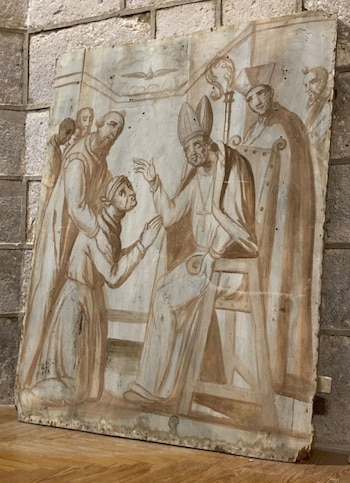
The newly discovered sketch portrays Bishop St. Cipriano , the church’s patron saint, shown seated in a majestic chair. In a moment rich with symbolism , he is depicted forgiving an ‘lapi’, a Christian depicted on his knees, desperately seeking readmission to the faith after a period of apostasy. This poignant scene reflects the doctrinal themes of forgiveness and redemption prevalent in the era. Alongside Bishop St. Cipriano are two other figures, further enriching the narrative of this striking visual.
Adding to the sketch’s theological significance, the Holy Spirit is represented above in the form of a dove, emerging from cloud-like formations. This depiction serves as a reminder of divine presence and guidance, which is a fundamental theme in Christian iconography . The dimensions of this remarkable work stand at 185 centimeters high and 150 centimeters wide , making it a prominent feature of the church’s altarpiece.
The implications of this finding are substantial from both ecclesiological and artistic perspectives. According to the Palencia diocese, sketches from this period are remarkably rare, making this discovery particularly valuable for historical scholarship. The diocese reports that the sketch encourages further investigation into its origins, especially regarding the transition in subjects and styles informed by the Council of Trent (1545-1563). This council prompted significant changes in Catholic doctrine, which often reflected in the art produced during that period.
The diocesan delegate for Heritage remarked on the significance of the find, emphasizing the need to examine the reasons behind the shift in iconography. As Bishop St. Cipriano’s image was replaced with other representations, it opens avenues for exploring how religious doctrines influenced artistic expression during and after the Reformation . The sketch will undergo a detailed analysis and pending restoration, promising to unveil even more about its artistry and the context in which it was created.
While the focus is primarily on this significant sketch, the investigation does not end there. Upon further inspection of the altarpiece, it was noted that several other paintings may reside behind the church’s existing canvases. This revelation suggests that the Parish Church of San Cipriano could hold even more hidden treasures waiting to be unveiled. Each painting serves as a historical document, offering insights into the community’s values, beliefs, and the artistic trends of the time.
As the restoration commences, the church community in Pedraza de Campos stands on the threshold of a new understanding of their heritage . The unveiling of the sketch will likely resonate within the wider community, bridging a connection between the past and present. Engaging with such historical artifacts can foster a deeper appreciation for the rich tapestry of cultural history present in the region.
The continued preservation and study of the Parish Church of San Cipriano will not only shed light on its own history but also contribute to the broader narrative of Renaissance art and the impact of religion on artistic traditions. As we patiently await the completion of the restoration work, the excitement surrounding this discovery continues to grow, reminding us that history is often concealed just beneath the surface, awaiting the right moment to shine once again.