
US Offers $5 Million Reward for Haitian Gang Leader Jimmy Cherizier
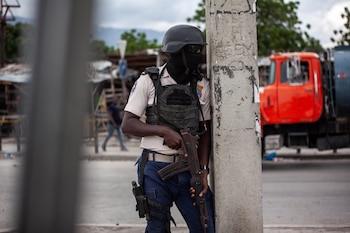
In a bold move to combat gang violence in Haiti, the United States government has announced a $5 million reward for information leading to the capture of Jimmy Cherizier, the leader of the notorious Vivi Ansanm gang, widely known as ‘Barbecue’ . This decision highlights the escalating security crisis in Haiti, where Cherizier’s actions have been described as terroristic by U.S. officials.
The reward initiative, part of the U.S. State Department’s rewards program, underscores the seriousness of Cherizier’s alleged crimes. Tammy Bruce , a spokesperson for the State Department, released a statement detailing Cherizier’s violent activities, emphasizing his direct involvement in mass murder and atrocities against innocent Haitian civilians. Bruce’s comments reinforced the U.S. commitment to protect human rights and restore stability in the region.
Cherizier has been designated as a key player in the prevailing violence that has plagued Haiti for years. He is accused of engaging in activities that undermine the nation’s stability and contributing to the human rights violations that have left many citizens in fear. The U.S. Justice Department has also indicated that Cherizier, along with an accomplice, is implicated in a conspiracy to funnel money intended for gang operations from the U.S., which further entrenches the challenges facing Haiti.
John Eisenberg , an Assistant Attorney General, emphasized that “the National Security Division will not tolerate the collection of funds from criminal gangs in the United States.” This statement highlights the American government’s steadfast resolve to track and prosecute anyone assisting Cherizier in financing his violent criminal organization. The implications of this case extend beyond Haitian borders, illustrating the international dimensions of gang-related violence.
The issue of gang violence in Haiti has hit critical levels, particularly since the assassination of former President Jovenel Moise in July 2021. Following this tragedy, the Haitian government, under Prime Minister Ariel Henry , has faced mounting pressure to reassess its strategies for dealing with escalating crime. Henry’s administration has been widely criticized for its inability to maintain order and protect citizens from rampant gang-related violence.
Amidst this turmoil, a Transitional Presidential Council was established to manage the country’s governance during this precarious period. Its objectives include pacifying the country and organizing elections, though attempts to stabilize the situation have, thus far, proved futile. The deployment of an international force, led by Kenya, has yielded limited success in curbing gang activities, leaving many citizens to question the effectiveness of such interventions.
As the U.S. government increases its involvement in trying to alleviate the situation in Haiti, it remains focused on holding key figures like Cherizier accountable. The $5 million reward symbolizes a serious attempt to disrupt the cycle of violence that has characterized Haiti’s recent history, sending a clear message to those involved in similar activities.
The international community has been urged to pay attention to the ongoing crisis in Haiti, emphasizing the need for collaborative efforts to address the root causes of gang violence. By investing in reforms and security measures, there is hope that stability can eventually be restored in this beleaguered nation.