
The Beauty of Samsung’s Smartwatch Cycle
There is something beautiful about the upgrade cycle of Samsung smartwatches. From my perspective, the Classic models are among the most attractive smartwatches you can buy, but they only release every two years. Samsung skips a generation between Classic and Classic. These watches are larger and feature a rotating bezel , a hallmark of the brand.
As a user of the Galaxy Watch7 , I was eager to try the new Galaxy Watch8 Classic firsthand. After all, it’s a strong contender for the best smartwatches in 2025. While it has proven not to be a perfect device—with decisions we could (and will) discuss—the experience has been good overall. However, let’s start from the beginning.
Technical Specifications of the Samsung Galaxy Watch8 Classic
Samsung Galaxy Watch8 Classic | |
|---|---|
Dimensions and Weight | 46.4 x 46 mm x 10.6 mm |
Display | Super AMOLED 1.34 inches |
Processor | Exynos W1000 |
RAM | 2 GB |
Internal Storage | 64 GB |
Sensors | Samsung BioActive Sensor |
Battery | 445 mAh |
Connectivity | WiFi 2.4/5 GHz |
Geopositioning | Integrated GPS chip |
Resistance | MIL-STD-8710H |
Buttons | 2x Side buttons |
Compatibility | Android 12 or higher |
Operating System | Wear OS 6 with One UI 8 Watch |
Others | Automatic brightness |
Price | From 529 euros |
Samsung Galaxy Watch8 Classic: Our Experience
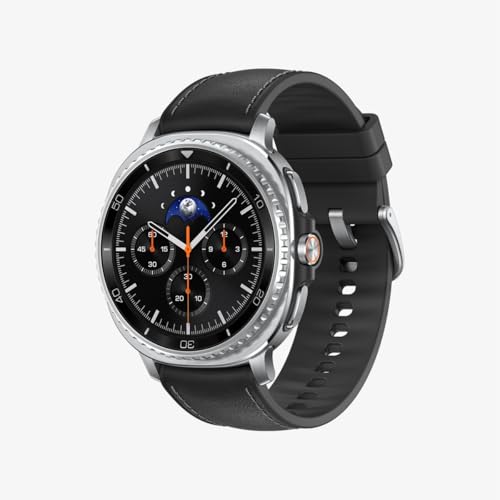
Design: A Bold Statement. If the Galaxy Watch6 Classic and the Galaxy Watch Ultra had a child, its name would be Galaxy Watch8 Classic. Samsung has revamped the design of its watches to make them all resemble the Ultra model, resulting in a bulky watch with a 46mm stainless steel case, over a centimeter thick, and weighing more than 60 grams. It’s a masculine design , perfect for larger wrists but not necessarily suitable for everyone.
The padded design is polarizing; people either love it or hate it. Personally, I find it beautiful and elegant, although I feel the extra space gained in the corners isn’t fully utilized. While it feels substantial and gives the sensation of wearing a watch, it can feel cumbersome during sleep or physical activities.
Despite having a 46mm case, the Galaxy Watch8 Classic features the same screen size as the 40mm Galaxy Watch8. The 44mm Galaxy Watch8 offers more display in a smaller space. It is worth noting that the Classic gets the rotating bezel, which is a significant advantage.
The Buttons. The Classic model inherits the Quick Start button from the Ultra Watch, providing three side buttons. They are well-made but can feel slippery if your hands are wet or moist. While the Quick Start button is helpful for sports, I wish there were more customization options.
For non-athletes, the button feels less relevant. If I’m able to map any app to other buttons, why not this one? Personally, being able to map Google Wallet to that button would be quite beneficial. For athletes, this button allows you to launch your preferred sport mode quickly, and while the implementation works well, it could still be improved.
The Bezel: A Game-Changer. The rotating bezel is a delight, providing an audible “click” that is soul-soothing. Its tactile feedback makes navigating menus and side screens incredibly enjoyable. Using it for several days builds muscle memory, helping you recall how far to turn it to get to a specific screen. The bezel outperforms any touchscreen gestures.
Yes, other watches emulate a rotating bezel through software, but it doesn’t compare to the tactile experience. I’ll miss it when it’s gone for another two years.
The Strap. Another questionable decision is the replacement of the standard strap attachment with a proprietary system. Traditionally, Galaxy Watches used a 20mm pin, allowing the use of straps from any brand. This changes with the Watch8 Classic, requiring a strap specifically designed for it. Unfortunately, this means your collection of straps becomes useless if they don’t fit the new mechanism.
The default strap, while not bad, is silicone and looks like leather. In a premium watch exceeding 500 euros, we’d expect at least a leather strap.
Display Quality. The only downside of the display is that it seems small relative to the case size. It performs admirably in bright daylight, with a maximum brightness of 3,000 nits, suitable for outdoor sports.
Operating System and Performance. The watch operates on Wear OS 6 , coupled with One UI 8 Watch, creating a user-friendly interface. This integration not only provides a familiar environment but also includes all the advantages of Wear OS. The integration of Google Gemini into this smartwatch is noteworthy, offering a powerful AI assistant right on your wrist.
Health and Sports Features. The watch measures heart rate, sleep, blood oxygen levels, and more, presenting detailed reports that are surprisingly useful. New features include suggestions for bedtime based on your sleep patterns.
Samsung has done a great job with its health features, presenting overall fitness in a simple format that encourages users to maintain a healthy lifestyle through visual feedback.
While the sports mode includes a new “trainer” functionality that assesses your running level and creates personalized plans, those not passionate about running may find it less relevant. Still, the watch accurately measures heart rates during workouts, providing satisfactory results.
Battery Life. Unfortunately, there’s nothing revolutionary in terms of battery life. It remains adequate at about two days on moderate use, with more intensive use requiring nightly charging. While the charging speed is decent, it can’t compete with other brands that offer extended battery life.
Final Opinion on the Samsung Galaxy Watch8 Classic
The Samsung Galaxy Watch8 Classic is undoubtedly one of the best Wear OS watches available today. Its elegant design, excellent performance, and precise health monitoring make it a strong contender. Still, it has limitations; the default strap is subpar for its price point, and the battery life doesn’t match competitors.
Samsung has succeeded in creating a beautiful and functional smartwatch that integrates seamlessly with their ecosystem. However, if you’re looking for extensive smart features and good battery life, you may want to explore options from competing brands.
Imágenes | Xataka