
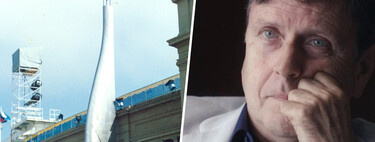
1992 was a year that will be remembered for many years in Spain. More than thirty years ago, but the economic and social footprint left by the Olympics of Barcelona , the Expo de Sevilla , and everything that surrounded both events still does not blur at all. Although we already know that “There was trick” even in details as memorable as the flame arrow lighting the pebetero at the opening ceremony of the Olympics.
What (We Thought) Happened
The torch entered the stadium in the hands of the largest Spanish medalist at that time, Palist Herminio Menéndez. Juan Antonio San Epifanio -EPI-, player of the Spanish Basketball Team, was in charge of taking it to the point where the Paralympic Arch Arch of Antonio Rebollo champion was waiting for him. The torch turned on an athlete’s arrow, which fired it through 86 meters from the stadium until it fell into the pebetero, lighting the Olympic flame amid the clamor of the crowd of 50,000 people who crowded the stadium (plus 3.5 billion watching on television).
What Really Happened
Rebollo faced a series of challenges that on television were not entirely clear. To start, the stadium was dark, so he had to take the dark shot, with the sole exception of a reflection indicating the direction in which the Pebetero was. The truth is that the arrow not only had to land in the pebetero but should not do it: it had to pass a few meters away. The camera shot would make the rest, in a triquiñuela of perspectives that film directors know well and that makes it very complicated for the viewer to measure the distances. That is why there was an expert from the cinema.
A Film Trick
To carry out the trick, there was Ábades Reyes, a veteran special effects designer and absolute reference of the sector in our cinema. He collaborated in more than 350 feature films, but it is in this event where he led to his most watched trick on a global scale. He won nine Goya awards, and his effects can be seen in films like ‘Oh, Carmela!’.
It Turns On Yes or Yes
Abades placed two of his collaborators outside the enclosure to pick up the arrow that would not have impacted the pebetero. Meanwhile, he would ensure that the gas released from the pebetero became inflamed, something that would have happened in any case. That is, even if Rebollo had failed by many more meters than planned, and the camera perspective had been useless, the flame would have ignited.
Test and Error
Of course, it was not the first time Rebollo shot the arrow. There were a series of trials in which Ábades could experiment with different materials for projectiles and find one that would not extinguish during flight. They could also verify that it was not recommended for the arrow to directly impact the supposed target, as it could damage the gas outlet. These precautions proved unnecessary, as the illusion was simply perfect.
The intricate fabric of storytelling behind the iconic Olympic flame incident at the 1992 Barcelona Olympics serves not only as a fascinating testament to creativity and innovation but also showcases the lengths to which artists and experts go to create unforgettable moments. Spanish society was aglow with pride during this landmark event, which was a turning point not only for Spain but also for the global perception of Olympic traditions. The fusion of art, cinema, and real-life athletic accomplishment exposed audiences worldwide to a new dimension of what the Olympics could represent. The flames of that magical evening continue to resonate, reminding us that sometimes, reality and illusion can blur to create the extraordinary.