
I have been using the Oakley Meta HSTN for almost two weeks now, and the experience has been anything but straightforward.
It’s not that they are poor intelligent glasses—in many ways, they surpass their competitors, such as the Ray-Ban Meta. However, there is an underlying issue with their overall concept that feels off. It seems as if they aimed to include too many features and, in doing so, lost some of their unique identity.
Initially, I was quite excited. Having used Oakley sunglasses for running over the past few years, I anticipated that these smart glasses would be a perfect fit for my needs. But the reality has turned out to be more complicated .
Technical Specs of the Oakley Meta HSTN
Oakley Meta HSTN | |
|---|---|
Dimensions and Weight | 145 x 51 x 22 mm |
Image Capture | 3024 x 4032 pixels |
Video Capture | 1440 × 1920 pixels or 2203 × 2938 pixels at 30 fps |
Audio System | 2x micro-speakers |
Voice Assistant | Goal AI |
Controls | Tactile |
Memory | 32 GB Flash (+1,000 or +100 photos of 30 seconds) |
Battery | Up to 8 hours with intermittent use |
Connectivity | WIFI 6E |
Compatibility | iOS 15.2 or Android 10 onwards |
Price |
The full product name is Oakley Meta HSTN .
Not Your Typical Wayfarers
Ray-Ban’s Meta glasses achieved immense success by merging electronics with an iconic design. The Wayfarers remain timeless, whether they incorporate cameras or not. Personally, I found them impressive from the moment I started wearing them. In contrast, the Oakley Meta seems to be caught in a limbo:
- They aren’t sporty enough for comfortable running.
- Yet, they lack the elegance for casual urban wear.
The design is *peculiar*, not overtly masculine or feminine, featuring pronounced angles that demand attention. Interestingly, a product that should ideally blend in does quite the opposite.
I’ve worn them in various settings: on the street, while running, and even on the beach, and they consistently draw attention. However, it’s not the admiration you hope for; instead, you often receive curious looks as if to ask, “What are those glasses?” People are suspiciously aware that something isn’t quite right. This leads me to another point.
The Challenge of Color and the Obvious Camera
The white color , designated as “warm gray,” isn’t the most fashionable choice. It accentuates the camera’s visibility, making it apparent even before the LED indicator lights up.
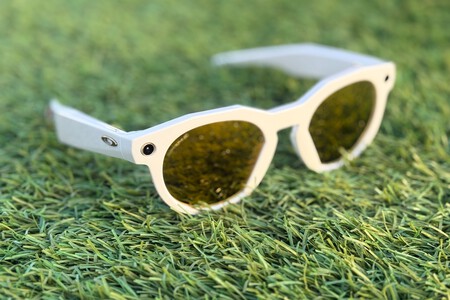
With the white mount, the camera becomes too evident and may intimidate others. Image: Xataka.
Unlike the black-target Ray-Ban , which effectively camouflages its camera, the Oakley Meta arouses suspicion even before anyone makes a recording.
This brings to mind an unsettling incident. I was sitting on a Valencian beach when, directly in front of me, a mother began changing her daughter, who couldn’t have been more than six years old. My discomfort was palpable, and I swiftly removed my glasses. The potential for misunderstanding in such a situation can be serious. Should someone have perceived that I was wearing glasses equipped with a camera near a child, it could lead to grave implications.
The technology raises questions beyond mere functionality:
- With a phone, the act of recording is clearly intentional: you lift it, aim, and press a button.
- With smart glasses, merely looking can be perceived as capturing footage, even if the intent is benign.
These social challenges are aspects we must address collectively as technology continues to advance. We’ve seen troubling incidents occur, even in Spain.
The Sports Experience that Falls Short
I’ve run various distances with the Oakley Metas, from six-kilometer sprints to long twenty-one-kilometer workouts, all while incorporating them as a two-in-one: sunglasses and bone conduction headphones. The idea of merging these functionalities sounded excellent in theory.
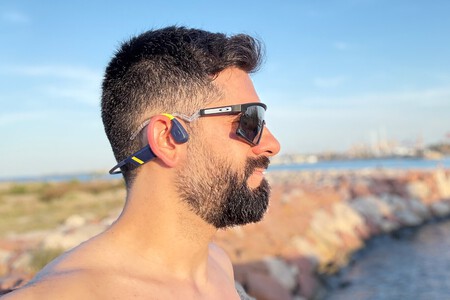
This is my usual running setup: conventional Oakley glasses paired with bone conduction headphones. The Oakley Meta tries to merge both but hasn’t convinced me. Image: Xataka.
Unfortunately, the reality fell short of expectations.
The weight becomes noticeable after a few kilometers, leading to minor vibrations with each stride that normal Oakley glasses do not produce. The audio quality is acceptable , although it performs better in stationary situations than while in motion.

When running slowly, there are no problems. However, at higher speeds, the Oakley Meta tends to slide forward, causing minor discomfort on the nose. GIF: Xataka.
While they do resist sweat, rain, and splashes thanks to their IPX4 certification, they can’t be submerged. At least they withstand sweat effectively!
It feels as if they attempted to cater to the sports enthusiast without fully committing. Consequently, they seem to inhabit a grey area and thus lose their strong identity: they want to perform multiple functions but end up doing each one only adequately.
That said, the gold-polarized Prizm lenses are outstanding . They impart a breathtaking gold-yellow tint reminiscent of visuals in films set under the New Mexico sun, making it feel as though you’re perpetually gracing the “Breaking Bad” landscape.
Here is a comparative image showcasing how the lenses alter perspectives:

On the left, the standard image. On the right, the effect when wearing the Oakley Metas. Image: Xataka.
The colors appear more vibrant, and contrast enhances significantly. They work wonderfully for driving, although at times the effect arguably resembles a constant Instagram filter .
For Digital Creators and Nostalgic Souls
These glasses truly excel in the spontaneous capture of moments. They allow for quicker photography than traditional smartphones: just lift your hand to your temple and press a button. It’s a more immediate solution than fumbling with your phone, unlocking it, and launching the camera app.
Ironically, the shutter response time is slower. When you already have the phone’s camera open, capturing a shot is faster than with the glasses. This illustrates the critical difference between catching a fleeting moment—like a child’s expression that lasts only half a second—and losing it entirely.
Despite not being a TikTok or Instagram user myself and lacking any ambitions as a content creator , I discovered that these glasses are particularly useful for capturing daily moments from my unique perspective .
Simple family gatherings, game nights with the kids, and other seemingly inconsequential moments may become invaluable treasures decades down the line. These glasses make it easier than ever to immortalize those memories from a distinct point of view .
Minor Features that Work
The gesture controls on the temple of the glasses are intuitive and functional. Swiping forward or backward allows you to change songs, while a long press activates Goal AI (which can also be triggered by voice).
Additionally, the improved battery life over the Ray-Ban models (8 hours compared to 4) is noticeable, especially if you use them intermittently throughout the day. The charging case, although less aesthetically pleasing than Ray-Ban’s, functions well.
The photo quality matches that of Ray-Ban, focusing on vividness through a degree of saturation that suits this type of product well. Prioritizing vibrancy over fidelity is entirely reasonable.
However, it’s important to note that many pictures may be tilted . We humans often misjudge how straight our posture appears. A little touch-up with editing software can go a long way here. Additionally, capturing images in high-contrast situations can make balancing lights and shadows tricky, often resulting in suboptimal exposure. Here are a few examples:

Photo taken with the Oakley Meta. Image: Xataka.

Photo taken with the Oakley Meta. Image: Xataka.
Finally, the 3K video quality significantly outshines the 1080p from the Ray-Ban, but it comes at a cost to the battery life: filming five two-minute clips can drain approximately 25% of the charge. While stabilization is acceptable, don’t expect miracles.
One last consideration, if someone you know ends up purchasing them, your friends will certainly benefit from the interesting footage you record.
Goal AI: The Assistant You Might Never Use
The Goal AI integration mirrors that of Ray-Ban’s offering, which isn’t surprising. Yet, after two weeks, I’ve found my utilization of this feature to be quite low. The real-time translation function works impressively when conditions are right, but both parties need to wear the glasses for an effective conversation—which is a tall order right now.
I even asked it basic questions, like the height of the Eiffel Tower, only to receive a prompt suggesting that I point the camera for further input. Overall, my experience with the assistant has been underwhelming.
What it does well is integrate with messaging applications, particularly WhatsApp. It can notify you of messages and reads them aloud as they arrive. This feature is easily customizable, making it appealing for those who rely heavily on WhatsApp—an ever-growing demographic.
Perhaps future updates will broaden its functionalities, but I doubt anyone will be enthralled by the Goal AI feature when considering a purchase.
A Verdict from No Man’s Land
After spending two weeks with the Oakley Meta, it’s clear that while they are a technologically competent product, they struggle with an identity crisis. Priced at 549 euros —which is 220 euros more than the standard model— the incremental enhancements offered do not sufficiently justify the higher cost for most users.
- If you’re on the hunt for smart glasses, the Ray-Ban Meta still reign supreme: more versatile, discreet, and provide superior value for money.
- The Oakley Meta seems designed for a niche user that they fail to clearly define: someone athletic but not too extreme, modern yet not overly bold, and willing to pay extra for minimal enhancements.
This product exemplifies how an attempt to cater to multiple demographics can result in failing to satisfy any particular one fully. The Ray-Ban Meta understood a critical principle: they’re primarily glasses , with smart features as a secondary consideration. In contrast, the Oakley Meta appears unsure of its primary focus.
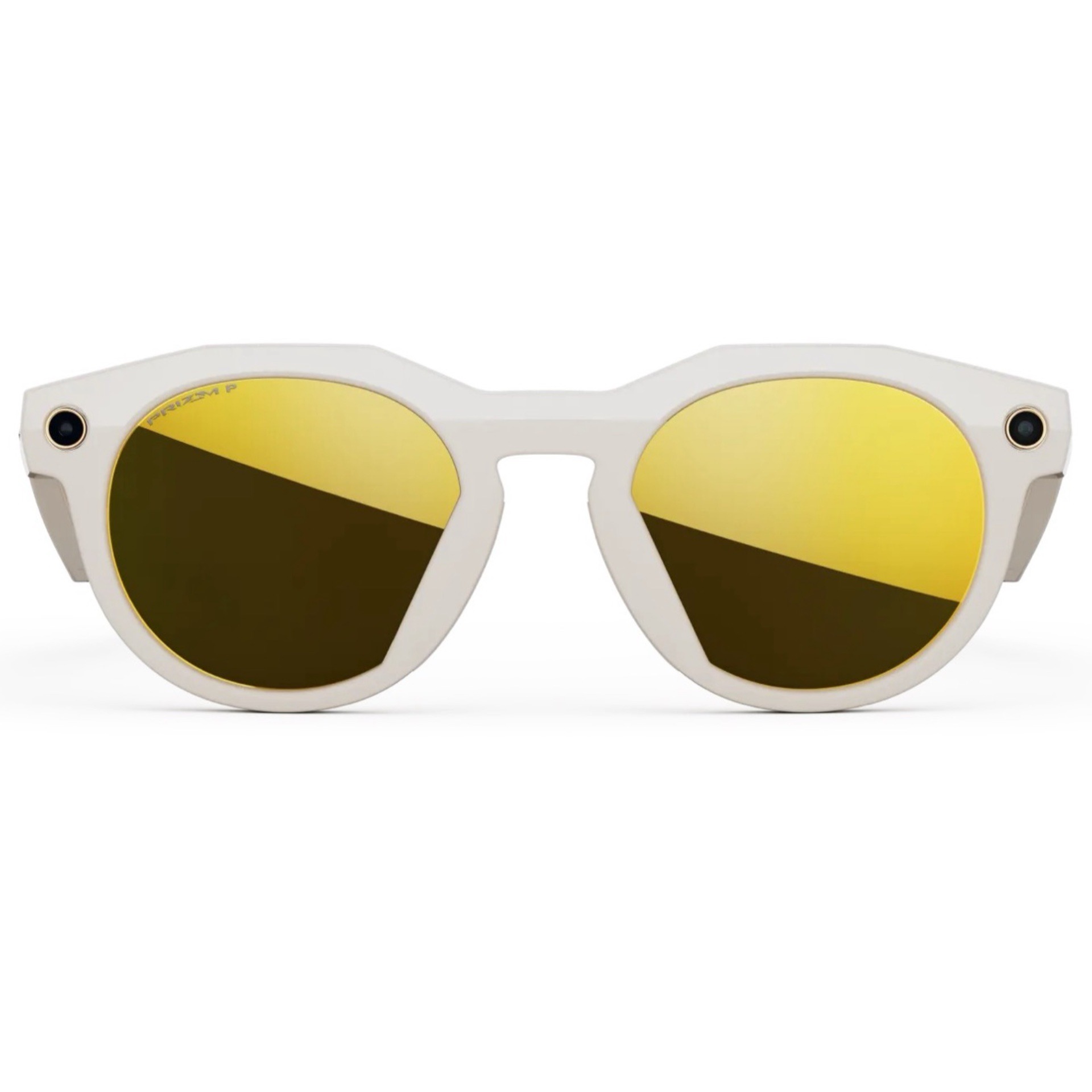
Oakley Meta HSTN
In Xataka | The Xiaomi AI Glasses offer much more than smart functionality; they constitute a comprehensive platform.
Outstanding image source: Xataka
This device has been provided for review purposes. To learn more, please consult our review guidelines and our business relations policy.